AI estimate as of September 11, 2025 · verify with a professional before acting
AI-Generated · Verify before acting
Everything on this page is generated by AI for informational purposes only. AI can make mistakes — the AI may misidentify items or misattribute them (artist, maker, brand, designer, origin, era). This is not an official valuation and should not be used for insurance, sale, tax, estate, legal, or lending purposes — or any decision requiring a certified appraisal. It is not an authoritative claim about any person, brand, or rights holder — do not share or rely on it as a factual statement about a third party. Always consult qualified professionals before making financial decisions.
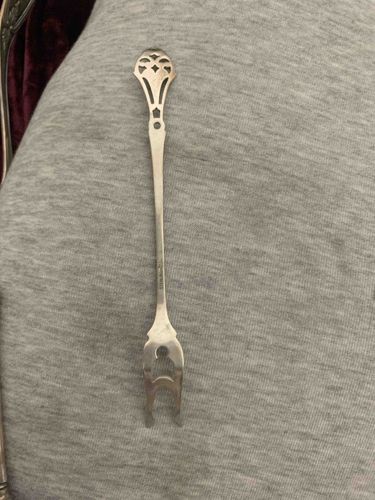
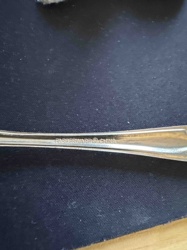
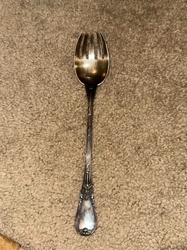
This item is a slender, polished sterling silver fork, likely designed for serving pickles or lemon slices due to its specific tine configuration. It measures approximately 6 to 7 inches in length and has a bright, reflective metallic silver color. The most striking physical characteristic is the handle, which terminates in an ornate, openwork design reminiscent of Art Nouveau or Art Deco aesthetics, featuring stylized floral or geometric cutouts that create visual interest. Directly below this elaborate top, the handle narrows significantly, maintaining a simple, unadorned shaft. Towards the base of the handle and before the tines, there is a visible stamp that appears to read "STERLING," confirming the material composition. The tines themselves are distinctive: there are two primary, relatively short tines, flanked by a central, crescent-shaped cut-out, creating a unique structure potentially designed to grip slippery items. There are no obvious signs of significant damage such as bends, breaks, or deep scratches, though very minor surface wear consistent with age and gentle use may be present, indicated by a subtle, soft patina rather than a harsh, newly polished gleam. The craftsmanship appears to be of good quality, with precise cutouts in the handle and a well-formed body, showing attention to detail typical of silverware from the early to mid-20th century. The elegant design suggests it was intended for formal dining or tea service.
AI Appraisal Report
Upon my virtual examination of this sterling silver pickle/lemon fork, I note its elegant design measuring approximately 6 to 7 inches. The handle's ornate openwork, suggestive of Art Nouveau/Deco styles, is a key aesthetic feature, along with the distinct central crescent-shaped cut-out between the two primary tines. The 'STERLING' stamp visible near the base confirms its material composition, indicating good authenticity for sterling silver.
The condition appears very good. The description notes a bright, reflective metallic silver color with no significant damage, only minor surface wear and a soft patina, which is consistent with age and gentle use. This condition enhances its marketability. The craftsmanship, evident in the precise cutouts and well-formed body, suggests quality typical of early to mid-20th-century silverware.
In terms of market conditions, single sterling silver specialized serving pieces like this typically command a moderate value. Comparables from online antique and silverware dealers, as well as auction results for similar sterling pickle or lemon forks with decorative handles, range from $40 to $150 depending on the specific pattern, maker, and condition. While there is steady demand for functional and decorative sterling silverware, these individual pieces are not exceedingly rare, unless they belong to a highly sought-after pattern or designer.
Factors significantly impacting value include its sterling composition and good condition. The ornate handle design adds to its decorative appeal, potentially increasing its desirability to collectors of specific design eras. However, its individual nature, rather than being part of a complete set, limits its top-tier valuation.
The primary limitation in this appraisal is the lack of physical inspection. While the 'STERLING' mark is visible, a hands-on examination would allow me to verify the authenticity of the stamp, assess the silver's precise purity with a test (if necessary), and feel the item's weight and balance, offering a more nuanced understanding of its craftsmanship. I would also look for a maker's mark beyond 'STERLING', which could significantly influence value if it's from a renowned silversmith. Provenance documentation, if available, could also add to its historical context and authenticity.