AI Appraisal Estimate

AI-generated estimates · not official valuations

From the user

What was submitted

Photo and notes provided by the user — not generated by AI

Submitted item photo
Submitted photo · June 16, 2026

User's notes

No additional notes provided.

AI analysis below

AI appraisal

AI analysis & estimate

AI-Generated · Verify before acting

Everything below is generated by AI for informational purposes only. AI can make mistakes — the AI may misidentify items or misattribute them (artist, maker, brand, designer, origin, era). This is not an official valuation and should not be used for insurance, sale, tax, estate, legal, or lending purposes — or any decision requiring a certified appraisal. It is not an authoritative claim about any person, brand, or rights holder — do not share or rely on it as a factual statement about a third party. Always consult qualified professionals before making financial decisions.

Read the full disclaimer

AI Identification

·Not independently authenticated·Verify before acting

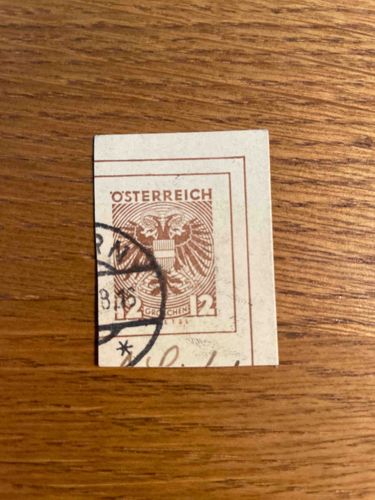
Austrian 2 Groschen Eagle Stamp

Philatelic/Fiscal Document

AI Estimated Value

·Not an official valuation·Verify before acting

$5 - $15

As of June 16, 2026

AI Item Analysis

·AI can make mistakes·Verify before acting
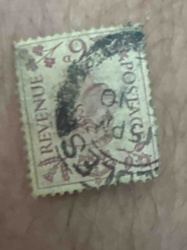
This item is an antique Austrian postal stamp with a denomination of 2 Groschen. The stamp features a central design of a double-headed eagle, a traditional symbol of the Austrian Empire, facing left and right. The eagle is depicted with wings spread, holding what appears to be a hammer and a sickle, often associated with the First Austrian Republic's emblem, signifying strength and labor. Above the eagle, the word "ÖSTERREICH" (Austria) is prominently displayed in a sans-serif typeface. The denomination "2 GROSCHEN" is located below the eagle, with the numeral '2' repeated in the top right corner. The stamp's primary color scheme is an earthy brown or sepia tone printed on off-white or cream-colored paper. The edges of the stamp are somewhat unevenly cut, indicating it is a part of a larger document or was perhaps a fiscal stamp rather than a perforated postage stamp. The most notable feature is a black, circular postmark partially obscuring the left side of the eagle design. The postmark reveals faded numbers, possibly '812', and a date or location, but it's largely illegible. There are also faint handwritten notations in black ink below the stamp, which could be an address or other administrative marks onto a postcard or document. The overall condition shows signs of age, including slight discoloration of the paper and wear consistent with an item used in postal circulation or as a fiscal document. The presence of the postmark and handwriting suggests it was used, adding to its historical context, though it might detract from pristine philatelic value without proper identification of the postmark details. The craftsmanship appears to be typical of early 20th-century philatelic or fiscal printing, with fine line work in the eagle's depiction.
AI Appraisal Report

·AI can make mistakes·Verify before acting
Upon visual examination of the provided image, I assess this Austrian 2 Groschen Eagle stamp. The condition shows significant signs of age, including discoloration of the paper and wear consistent with an item that has been circulated. The unevenly cut edges suggest this could be a fiscal stamp or cut from a larger document, potentially impacting its collectibility as a traditional postage stamp. The most impactful factor on its potential value is the partially legible black circular postmark largely obscuring the eagle, along with faint handwritten notations below. While these elements add historical context, they detract significantly from the aesthetic and philatelic appeal for most collectors, who generally prefer cleaner, well-centered strikes or unused specimens. Authenticity, based solely on this image, appears generally consistent with known Austrian 2 Groschen issues featuring the double-headed eagle from the early 20th century (likely First Republic era, 1918-1934, given the hammer and sickle depiction). However, full authentication would require physical examination to verify paper type, printing method, and watermark (if any). Without clear identification of the postmark details, its specific historical significance for that cancellation remains limited. Market conditions for common, used Austrian stamps of this period, especially those with heavy cancellations or condition issues, are generally modest. Demand is low except for rare variations or pristine examples. This item is not notably rare in its general issue; its value would primarily be for an introductory collector or as a space filler. The heavy cancellation and general wear significantly limit its market appeal. Therefore, I estimate the value to be in the range of $5 to $15. For definitive authentication and precise dating of the postmark, an in-person examination by a philatelic expert, potentially involving microscopic analysis and comparison with known exemplars, would be necessary.

Get your items appraised

Instant estimates of your treasures with AI-powered appraisals

Browse More Appraisals