AI estimate as of August 21, 2025 · verify with a professional before acting
AI-Generated · Verify before acting
Everything on this page is generated by AI for informational purposes only. AI can make mistakes — the AI may misidentify items or misattribute them (artist, maker, brand, designer, origin, era). This is not an official valuation and should not be used for insurance, sale, tax, estate, legal, or lending purposes — or any decision requiring a certified appraisal. It is not an authoritative claim about any person, brand, or rights holder — do not share or rely on it as a factual statement about a third party. Always consult qualified professionals before making financial decisions.
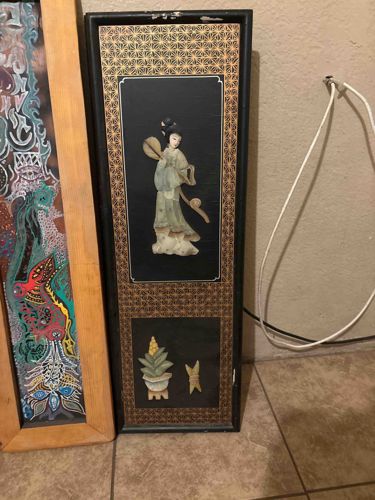
This appears to be a framed Asian-style decorative panel, likely a form of picture art or a relief art piece. The panel is rectangular and vertically oriented, encased in a dark, possibly black, wooden frame. The frame shows signs of wear, particularly at the top where chipping or paint loss is visible, suggesting age or handling. The main body of the artwork is divided into two sections. The upper and larger section features a central black background with an intricate border pattern of interlocking geometric shapes, possibly resembling fretwork, in a golden or light brown hue. Within this section, a three-dimensional figure of an Asian woman or deity is depicted, seemingly made from carved or applied materials such as colored stone, jade, or various hardstones. The figure is gracefully rendered, holding a fan, with detailed traditional attire and an elaborate hairstyle. The lower, smaller section of the panel also has a black background with a similar golden geometric border. This section features two smaller applied elements: one depicting a potted plant, likely a succulent or similar botanical form, also crafted from natural materials, and another abstract or symbolic form next to it. The materials' natural variations in color and translucence give depth and texture to the figures. The craftsmanship, particularly in the detailed rendering of the figures and the precise application of the materials, indicates a certain level of artistry. The overall style suggests an East Asian origin, possibly Chinese, from the mid-to-late 20th century. The condition shows surface dirt and expected age-related wear, but no obvious significant damage to the applied elements themselves.
AI Appraisal Report
I have examined the provided image of this Asian hardstone and mixed media decorative panel. Based on the visual evidence, the panel appears to be an authentic example of mid-to-late 20th century East Asian decorative art, likely Chinese. The craftsmanship, particularly the detailed rendering of the figural and botanical elements from what seems to be various hardstones, suggests a good quality piece.
The condition appears fair to good. I note the visible wear and chipping on the frame, consistent with age and handling. However, the applied elements themselves seem largely intact, though surface dirt is apparent. A full assessment of authenticity would require in-person examination to verify the true material composition (e.g., jade, soapstone, other hardstones) and to check for hidden repairs or damage. Provenance documentation, if available, would also be crucial for a definitive authentication and to trace its history.
In terms of market conditions, this type of framed hardstone relief art has a consistent, albeit niche, demand. Comparables in the market typically range, with values heavily influenced by material quality, intricacy of detail, size, and overall condition. Larger, finer examples incorporating genuine jade or highly prized stones command higher prices. While not exceptionally rare, well-executed pieces like this retain their decorative appeal.
Key factors impacting value include the actual material quality (e.g., if substantial jade is present vs. dyed marble), the overall condition of both the artwork and frame, and the artistic merit of the composition. Without physical inspection, I cannot confirm the exact materials or rule out minor losses or repairs not visible in the image. I also cannot assess the clarity or vibrancy of the stones which greatly affects visual appeal and value.
Given these limitations, this piece would appeal to collectors of Asian decorative arts or those seeking unique wall decor. Scientific testing would be needed to definitively identify the stone types, and an in-person physical inspection is essential for a thorough condition report and to confirm the true nature of the materials used.