AI Appraisal Estimate

AI-generated estimates · not official valuations

From the user

What was submitted

Photo and notes provided by the user — not generated by AI

Submitted item photo
Submitted photo · June 9, 2026

User's notes

No additional notes provided.

AI analysis below

AI appraisal

AI analysis & estimate

AI-Generated · Verify before acting

Everything below is generated by AI for informational purposes only. AI can make mistakes — the AI may misidentify items or misattribute them (artist, maker, brand, designer, origin, era). This is not an official valuation and should not be used for insurance, sale, tax, estate, legal, or lending purposes — or any decision requiring a certified appraisal. It is not an authoritative claim about any person, brand, or rights holder — do not share or rely on it as a factual statement about a third party. Always consult qualified professionals before making financial decisions.

Read the full disclaimer

AI Identification

·Not independently authenticated·Verify before acting

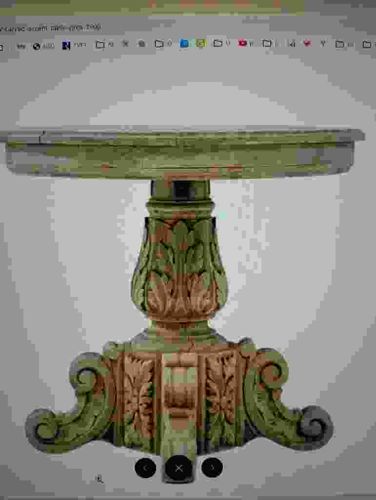
Italian Hand-Painted Neoclassical Style Pedestal Table

Furniture - Tables

AI Estimated Value

·Not an official valuation·Verify before acting

$1,200 - $1,850

As of June 9, 2026

AI Item Analysis

·AI can make mistakes·Verify before acting
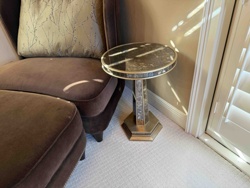
This is a circular pedestal-style accent table featuring heavy hand-carved ornamentation. The table is constructed from wood, likely walnut or fruitwood, and finished with a distinctive distressed polychrome paint decoration. The central baluster pedestal is adorned with deeply carved acanthus leaf motifs, while the substantial tripod base consists of scrolled volute feet also accented with foliate carvings. The color palette is composed of an antiqued sage green primary finish with terracotta and pale ochre highlights used to emphasize the relief carvings. Measuring approximately 30 inches in height, the piece exhibits a high degree of intentional distressing to mimic age, including simulated paint loss, surface abrasions, and a dark umber glaze used for patina. The craftsmanship displays Neoclassical influences typical of late 19th-century to mid-20th-century Italian furniture design. Visible condition includes some minor chipping along the table-top rim and consistent craquelure across the painted surfaces, which appears to be part of the original decorative intent to create a 'found' antique aesthetic. No maker's marks are visible in the provided view, but the complexity of the scrollwork suggests a professional workshop production.
AI Appraisal Report

·AI can make mistakes·Verify before acting
Based on my visual examination of this Neoclassical style pedestal table, I have identified it as a high-quality 20th-century Italian decorative piece. The construction features elaborate hand-carved acanthus and volute motifs consistently seen in mid-to-late 20th-century 'Grand Tour' revival furniture. The polychrome finish, utilizing a sage green and terracotta palette with an intentional umber glaze, is designed to mimic an 18th-century patina. While the 'craquelure' and surface abrasions suggest age, they appear to be artistic distressing typical of high-end workshops such as those found in Florence or Venice. The condition is good for a piece of this style; the minor chipping on the rim and surface craquelure are consistent with the intended 'found antique' aesthetic and do not significantly detract from the value. Market demand for Italian painted furniture remains stable, particularly for pieces with such architectural presence and substantial carved detail. Comparable sales of mid-century Italian accent tables range from $900 to over $2,000 depending on the complexity of the carvings. Critically, a definitive determination of age and origin is limited by the digital nature of this inspection. From images alone, I cannot verify joinery techniques (such as hand-cut tenons vs. modern machine cuts) or timber species behind the paint. To provide a conclusive authentication, an in-person examination is required to inspect the underside for maker’s stamps and assess the wood oxidation. Provenance documentation or an original purchase invoice would further solidify its market position. Without these, the value is based on its high decorative appeal and craftsmanship rather than verified antiquity.

Get your items appraised

Instant estimates of your treasures with AI-powered appraisals

Browse More Appraisals