AI Appraisal Estimate

AI-generated estimates · not official valuations

From the user

What was submitted

Photo and notes provided by the user — not generated by AI

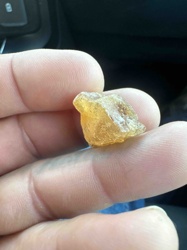
Submitted item photo
Submitted photo · June 12, 2026

User's notes

No additional notes provided.

AI analysis below

AI appraisal

AI analysis & estimate

AI-Generated · Verify before acting

Everything below is generated by AI for informational purposes only. AI can make mistakes — the AI may misidentify items or misattribute them (artist, maker, brand, designer, origin, era). This is not an official valuation and should not be used for insurance, sale, tax, estate, legal, or lending purposes — or any decision requiring a certified appraisal. It is not an authoritative claim about any person, brand, or rights holder — do not share or rely on it as a factual statement about a third party. Always consult qualified professionals before making financial decisions.

Read the full disclaimer

AI Identification

·Not independently authenticated·Verify before acting

Raw Rose Quartz Specimen

Minerals and Gemstones

AI Estimated Value

·Not an official valuation·Verify before acting

$45.00 - $65.00

As of June 12, 2026

AI Item Analysis

·AI can make mistakes·Verify before acting
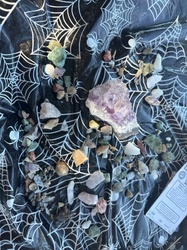
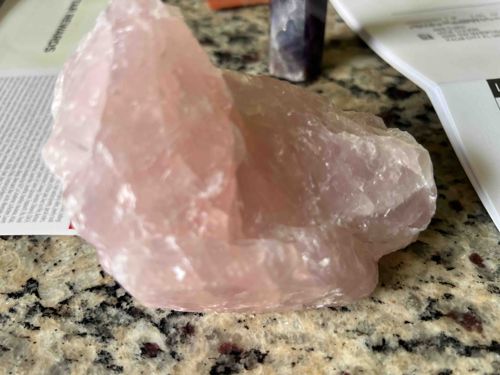
This is a natural, unpolished specimen of Rose Quartz, a variety of the mineral quartz characterized by its pale pink to rose-red hue. This specific piece demonstrates a massive growth habit rather than distinct crystal faces, which is typical for Rose Quartz. The color is a soft, translucent milky pink that appears relatively consistent throughout the mass, though it shows some internal fractures and white clouding typical of the mineral's crystalline structure. The texture is rough and uneven, featuring conchoidal fractures where the stone has been chipped or broken from a larger vein. It has a vitreous or waxy luster that catches the light on its flatter planes. In terms of condition, being a raw mineral, it shows jagged edges and some minor surface abrasions or contact marks naturally occurring from extraction and handling. There are no signs of artificial dyes, which can sometimes be found in lower-quality specimens. The internal veining suggests a solid structure with decent translucency when backlit. At the top of the frame, a smaller polished amethyst point is also partially visible, providing a scale and color contrast to the primary specimen. This type of raw material is commonly sourced from large deposits in Brazil, South Africa, or Madagascar and is frequently used in decorative displays, metaphysical collections, or as lapidary rough for carving and polishing.
AI Appraisal Report

·AI can make mistakes·Verify before acting
I have carefully examined the provided high-resolution imagery of this raw rose quartz specimen. The piece exhibits a desirable deep-to-medium pink hue with a massive crystalline structure characteristic of high-quality deposits often found in Madagascar or Brazil. Upon visual inspection, the specimen appears completely natural; I find no evidence of surface staining or quenching, which are common indicators of artificial dye. The translucency is particularly notable, with internal light play suggesting a solid core despite common surface-level conchoidal fractures and white clouding. Market demand for raw pink quartz remains steady within the metaphysical and interior decor sectors. This specimen is valued higher than smaller 'tumbled' variants due to its size and color saturation. Comparable retail sales for specimens of this size and translucency typically range between $40 and $70. The primary factors driving this value are the specimen's aesthetic appeal and the lack of significant iron-oxide staining or muddy inclusions. However, it is vital to note the limitations of a digital appraisal. I cannot perform a physical scratch test to confirm the Mohs hardness or use a refractometer to verify its optical properties. While the luster and fracturing are consistent with quartz, a definitive authentication would require in-person inspection to rule out high-grade pink glass or lab-synthesized substitutes. To confirm origin and maximize potential value, provenance documentation from the mining site or a chemical analysis from a certified lapidary laboratory would be necessary. This valuation assumes the specimen is a natural mineral of the specified size and weight.

Get your items appraised

Instant estimates of your treasures with AI-powered appraisals

Browse More Appraisals