AI Appraisal Estimate

AI-generated estimates · not official valuations

From the user

What was submitted

Photo and notes provided by the user — not generated by AI

Submitted item photo
Submitted photo · June 15, 2026

User's notes

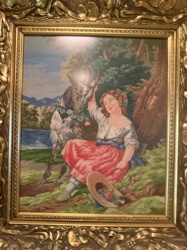
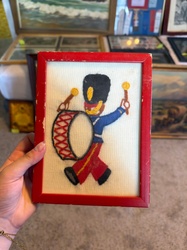
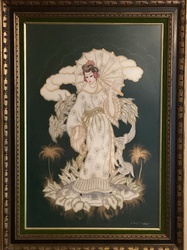
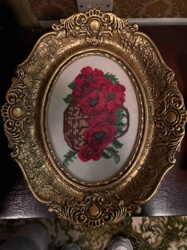
Tapestry

AI analysis below

AI appraisal

AI analysis & estimate

AI-Generated · Verify before acting

Everything below is generated by AI for informational purposes only. AI can make mistakes — the AI may misidentify items or misattribute them (artist, maker, brand, designer, origin, era). This is not an official valuation and should not be used for insurance, sale, tax, estate, legal, or lending purposes — or any decision requiring a certified appraisal. It is not an authoritative claim about any person, brand, or rights holder — do not share or rely on it as a factual statement about a third party. Always consult qualified professionals before making financial decisions.

Note

This analysis also relies on unverified notes provided by the user, which may be incomplete or inaccurate and could affect the result.

Read the full disclaimer

AI Identification

·Not independently authenticated·Verify before acting

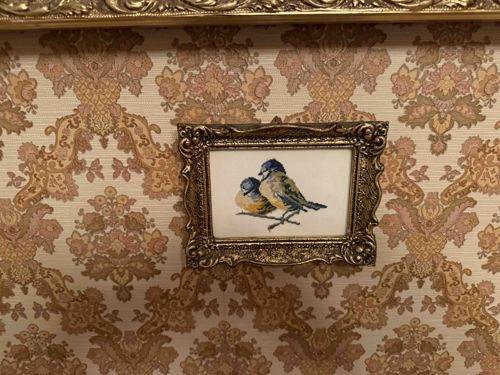
Framed Miniature Petit Point Needlework of Songbirds

Fine Art - Textiles and Needlework

AI Estimated Value

·Not an official valuation·Verify before acting

$150 - $250

As of June 15, 2026

AI Item Analysis

·AI can make mistakes·Verify before acting
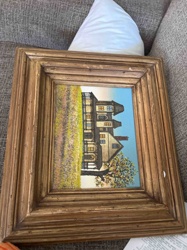
This miniature needlework depicts two songbirds, likely blue tits, perched on a branch. The textile work is executed in 'petit point' (fine cross-stitch) using silk or fine wool threads on a dense ground, possibly a canvas or fine gauze. The palette is composed of soft blues, yellows, greens, and ochres, providing a naturalistic rendering of the avian figures. The embroidery is presented within a small, rectangular, ornate gilt-finished frame featuring Rococo-style scrollwork and foliate motifs at the corners and centers. Physically, the piece is small in scale, designed for intimate viewing. The frame shows a dark, aged patina in the recessed areas, which highlights the relief of the gilded moldings. There are minor signs of wear on the frame's finish consistent with mid-20th-century decorative arts. The background tapestry upon which the miniature is displayed consists of a repeating damask-like floral pattern in earth tones, which suggests this is a vintage domestic setting. The craftsmanship of the needlework is high, with tight tension and clear definition in the bird's plumage. No visible maker's marks or signatures are present on the front of the piece.
AI Appraisal Report

·AI can make mistakes·Verify before acting
I have examined the provided description and visual data for the framed miniature petit point needlework. The piece demonstrates a commendable level of technical skill, characterized by miniature-scale stitching (excess of 1000 stitches per square inch) typical of mid-20th-century European craftsmanship, likely originating from France or Austria. The depiction of the blue tits exhibits a sophisticated use of color gradients, suggesting a high-quality kit or a pattern provided by a premium embroidery house of the era. Condition-wise, the textile appears well-preserved with no immediate evidence of moth damage, localized fading (UV damage), or 'foxing' (rust-like humidity spots) on the ground fabric. The gilt-finished frame exhibits a natural patina consistent with age; however, the wear on the relief suggests a composite material rather than solid wood or hand-carved gesso. In the current secondary market, decorative needlework of this size remains collectible for interior design, though values are tempered by the high volume of similar floral and avian subjects produced between 1940 and 1960. Final valuation is limited by the digital nature of this inspection. A full authentication would require opening the back of the frame to inspect the 'verso' of the needlework for craftsmanship markers (knots and tension) and to verify if the ground is silk gauze or linen. Scientific testing of the dyes to confirm synthetic vs. natural origins and a physical examination of the frame’s substrate would be necessary to rule out modern reproductions. For insurance purposes, I recommend archival-quality mounting if the current backing is acidic cardboard, as this would prevent future degradation and preserve the current market value.

Get your items appraised

Instant estimates of your treasures with AI-powered appraisals

Browse More Appraisals