AI estimate as of December 15, 2025 · verify with a professional before acting
AI-Generated · Verify before acting
Everything on this page is generated by AI for informational purposes only. AI can make mistakes — the AI may misidentify items or misattribute them (artist, maker, brand, designer, origin, era). This is not an official valuation and should not be used for insurance, sale, tax, estate, legal, or lending purposes — or any decision requiring a certified appraisal. It is not an authoritative claim about any person, brand, or rights holder — do not share or rely on it as a factual statement about a third party. Always consult qualified professionals before making financial decisions.
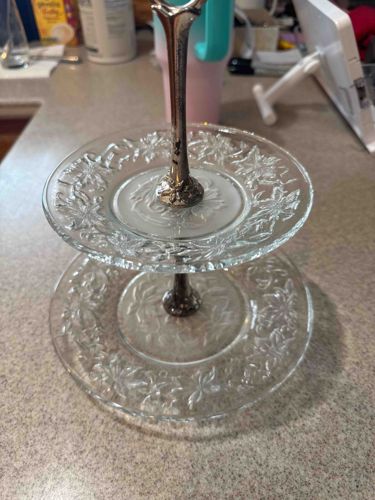
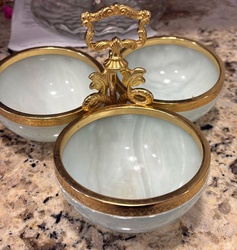
This is a two-tiered dessert stand, likely used for serving cakes, cookies, or other small pastries. It features two circular plates made of clear pressed glass, each adorned with an intricate, repeating floral or vine pattern embossed on the underside. The patterns are consistent across both tiers, indicating they are part of a matching set. Each glass plate has a smooth, flat center region where the silver-toned metal standard connects. The standard itself is composed of two fluted, bulbous sections that secure the plates and are connected by a slender, vertical rod with a decorative looped handle at the top for easy carrying. The metal components appear to be silver-plated or a similar silver-toned alloy, showing signs of tarnishing and some minor discoloration, particularly near the base of the handle and where it meets the lower tier. The craftsmanship of the glass appears to be good, with clear, consistent patterning, but the pressing technique suggests it is not hand-cut crystal. Given the style of the pressed glass and the decorative metalwork, this item likely dates from the mid-20th century, possibly 1950s-1970s. There are no immediately visible chips or cracks in the glass, but the metal shows a worn patina consistent with age and use. The overall construction is designed for stability and presentation, typical of serving ware from its period.
AI Appraisal Report
Upon visual examination of the provided image, I assess this two-tiered pressed glass dessert stand. The clear pressed glass plates exhibit intricate floral or vine patterns, characteristic of mid-20th century production (likely 1950s-1970s). The consistency of the pattern across both tiers and the method of production signify it's pressed glass, not hand-cut crystal, which impacts its value considerably. The silver-toned standard, appearing to be plated metal, shows signs of tarnishing and minor discoloration, particularly near the handle, indicating age and use. No chips or cracks are visible in the glass from the image, suggesting good preservation of the primary material, but a physical inspection would be crucial to confirm this. The worn patina on the metal is consistent with its age.
In terms of market conditions, items of this type are relatively common. While decorative, they are not rare. Demand is moderate, typically driven by collectors of vintage pressed glass or individuals seeking functional yet aesthetically pleasing serving pieces for entertaining. Comparables on online marketplaces and at antique shops typically range from $20 to $70, depending on condition, pattern uniqueness, and the quality of the metal standard. Factors impacting value positively include the good apparent condition of the glass; negative factors include the generic nature of pressed glass, the tarnishing on the metal, and the lack of a known manufacturer or exceptional design.
It is important to note the limitations of authenticity verification from images alone. A physical inspection would allow for a tactile assessment of the glass for any minute chips, flea bites, or internal flaws not visible in photographs. Furthermore, direct examination would confirm the exact metal composition of the standard and allow for proper cleaning to assess the extent of the tarnishing or plating loss. Provenance documentation, such as original purchase receipts or family history, could potentially add to its value, but is unlikely for an item of this type.