AI Appraisal Estimate

AI-generated estimates · not official valuations

From the user

What was submitted

Photo and notes provided by the user — not generated by AI

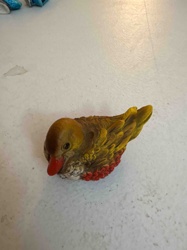
Submitted item photo
Submitted photo · June 18, 2026

User's notes

No additional notes provided.

AI analysis below

AI appraisal

AI analysis & estimate

AI-Generated · Verify before acting

Everything below is generated by AI for informational purposes only. AI can make mistakes — the AI may misidentify items or misattribute them (artist, maker, brand, designer, origin, era). This is not an official valuation and should not be used for insurance, sale, tax, estate, legal, or lending purposes — or any decision requiring a certified appraisal. It is not an authoritative claim about any person, brand, or rights holder — do not share or rely on it as a factual statement about a third party. Always consult qualified professionals before making financial decisions.

Read the full disclaimer

AI Identification

·Not independently authenticated·Verify before acting

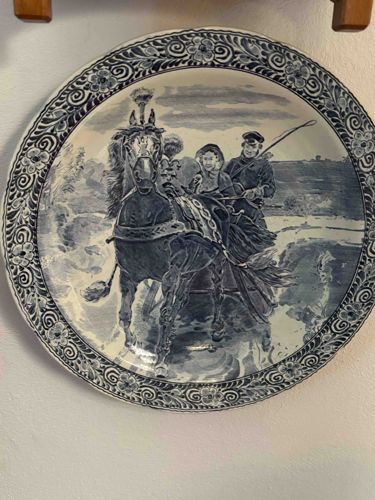
Gzhel Ceramic Decorative Plate featuring Troika Scene

Collectibles / Decorative Ceramics

AI Estimated Value

·Not an official valuation·Verify before acting

$35.00-$55.00

As of June 18, 2026

AI Item Analysis

·AI can make mistakes·Verify before acting
This is a circular decorative ceramic plate, approximately 10 to 12 inches in diameter, executed in the traditional Russian Gzhel style of blue-on-white underglaze painting. The central motif depicts a classic 'Troika' scene, though focusing prominently on a lead horse with a male and female figure seated behind in a sleigh or carriage. The artwork displays a characteristic folk-art quality with visible brushstrokes and varying shades of cobalt blue creating depth and shadow. The lead horse is adorned with traditional harness elements, including a distinctive 'duga' (arc) over the neck. The figures are dressed in period-style winter attire, suggesting a 19th-century rural Russian setting. The wide rim is decorated with a continuous floral and scrollwork border, featuring stylized five-petal blossoms and swirling leaf patterns typical of Gzhel craftsmanship. Physically, the plate is made of white-glazed earthenware or porcelain, exhibiting a high-gloss finish. The condition appears fair to good; there is a noticeable vertical crack or deep scratch running through the center of the horse's chest up toward the driver, and some light crazing or surface wear may be present given its age, which likely dates to the late 20th century (USSR era, circa 1970s-1980s). No maker's mark is visible on the front, though such pieces typically carry a factory stamp on the reverse.
AI Appraisal Report

·AI can make mistakes·Verify before acting
This Gzhel porcelain decorative plate, dating likely to the late Soviet period (1970s–1980s), features the classic 'cobalt-on-white' folk aesthetic traditional to the Ramenskoye District. Upon visual inspection of the image, the central Troika scene displays competent but standard brushwork, indicating it was likely produced for the mass decorative market rather than as a signed 'masterwork' or unique exhibition piece. The cobalt saturation shows the desirable range of 'blue-to-white' tonal variety characteristic of authentic underglaze application. The condition is a primary concern; the visible vertical line through the central motif appears to be a structural crack rather than a surface scratch. In the market for Russian ceramics, structural damage significantly depreciates value, typically by 50-70%. Similar undamaged plates from the Gzhel union currently trade in the $75–$120 range. The current valuation reflects a 'shabby chic' or study-collection price point due to the instability of the ceramic body. Authenticity appears consistent with authentic USSR-era Gzhel based on the glaze flow and floral border style. However, a definitive assessment requires physical examination to verify the underside factory stamp (such as the 'Gzhel' swan or 'Made in USSR' export mark) and to distinguish between a kiln crack and post-production impact damage. Scientific testing is rarely warranted for this era of production, but a 'ring test' to check for resonance would confirm the extent of the internal damage. Provenance documentation would not significantly alter the value of this specific item unless linked to a known historic collection.

Get your items appraised

Instant estimates of your treasures with AI-powered appraisals

Browse More Appraisals