AI Appraisal Estimate

AI-generated estimates · not official valuations

From the user

What was submitted

Photo and notes provided by the user — not generated by AI

Submitted item photo
Submitted photo · June 18, 2026

User's notes

Japan

AI analysis below

AI appraisal

AI analysis & estimate

AI-Generated · Verify before acting

Everything below is generated by AI for informational purposes only. AI can make mistakes — the AI may misidentify items or misattribute them (artist, maker, brand, designer, origin, era). This is not an official valuation and should not be used for insurance, sale, tax, estate, legal, or lending purposes — or any decision requiring a certified appraisal. It is not an authoritative claim about any person, brand, or rights holder — do not share or rely on it as a factual statement about a third party. Always consult qualified professionals before making financial decisions.

Note

This analysis also relies on unverified notes provided by the user, which may be incomplete or inaccurate and could affect the result.

Read the full disclaimer

AI Identification

·Not independently authenticated·Verify before acting

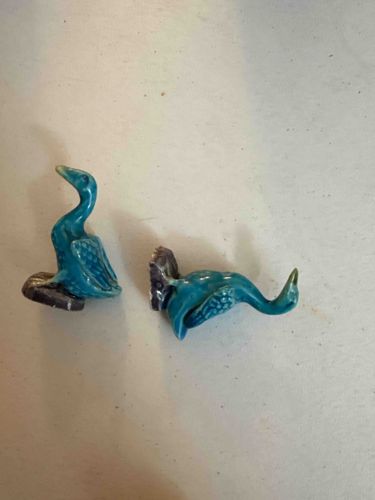
Japanese Turquoise Glazed Ceramic Goose Figurines

Collectibles / Decorative Ceramics

AI Estimated Value

·Not an official valuation·Verify before acting

$45.00 - $75.00

As of June 18, 2026

AI Item Analysis

·AI can make mistakes·Verify before acting
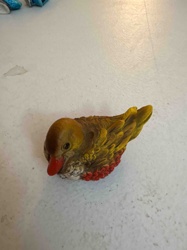
A pair of small, hand-crafted ceramic figurines depicting geese, finished in a vibrant turquoise or peacock blue lead-glaze. The figurines are likely Japanese in origin, consistent with Mid-Century export ceramics or traditional banko-ware styles. One goose is depicted in an upright, alert posture, while the second is in a horizontal, leaning position, suggesting movement. Both birds are mounted on dark, unglazed or dark-brown glazed rocky bases that provide stability. The physical characteristics include molded wing feather details and small indentations for eyes. The glaze is thick and exhibits a glass-like crackle or 'crazing' throughout the surface, which is a common characteristic of this style of kiln-fired pottery. In terms of condition, there is visible wear along the bottom edges of the bases and minor glaze thinning on the sharpest peaks of the molded details. No significant chips or structural repairs are immediately visible, though there appears to be some minor surface dust and grime settled into the textured areas. These pieces likely date from the mid-20th century (1950s-1960s) and represent the mass-produced yet charming decorative wares exported from Japan during the post-war era.
AI Appraisal Report

·AI can make mistakes·Verify before acting
Based on my visual examination of this pair of turquoise-glazed ceramic geese, I have identified them as mid-20th-century Japanese decorative wares, likely post-WWII export pieces (c. 1950s-1960s). The vibrant peacock-blue glaze and stylized rocky bases are characteristic of the 'Moriage' or 'Banko-style' kilns of the era, though these specifically lack the heavy slip decoration, focusing instead on the translucency of the lead-glaze and its subsequent crackle pattern. The condition appears consistent with their age; the crazing is an intended aesthetic result of the cooling process rather than a defect, though surface grime and base wear are present. The market for mid-century Japanese ceramics remains steady but is currently saturated with animal figurines of this type. Their value is driven by their decorative appeal and color rather than rarity or a specific maker’s mark, as these were mass-produced for the Western giftware market. Comparable sets typically realize prices in the $40 to $80 range at boutique vintage shops or online marketplaces. Factors impacting value include the lack of significant chips to the delicate wing tips and the presence of the complete pair. Limitations of this appraisal include the inability to inspect the underside for 'Made in Japan' ink stamps or 'Japan' embossed marks, which would confirm their origin. A physical inspection would also be required to check for 'flea bites' hidden in the glaze crackle or professional restorations to the necks. For definitive authentication, one would look for specific kiln signatures or original export stickers.

Get your items appraised

Instant estimates of your treasures with AI-powered appraisals

Browse More Appraisals