AI Appraisal Estimate

AI-generated estimates · not official valuations

From the user

What was submitted

Photo and notes provided by the user — not generated by AI

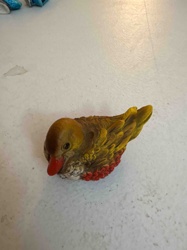
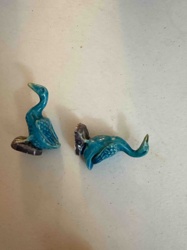
Submitted item photo
Submitted photo · June 12, 2026

User's notes

No additional notes provided.

AI analysis below

AI appraisal

AI analysis & estimate

AI-Generated · Verify before acting

Everything below is generated by AI for informational purposes only. AI can make mistakes — the AI may misidentify items or misattribute them (artist, maker, brand, designer, origin, era). This is not an official valuation and should not be used for insurance, sale, tax, estate, legal, or lending purposes — or any decision requiring a certified appraisal. It is not an authoritative claim about any person, brand, or rights holder — do not share or rely on it as a factual statement about a third party. Always consult qualified professionals before making financial decisions.

Read the full disclaimer

AI Identification

·Not independently authenticated·Verify before acting

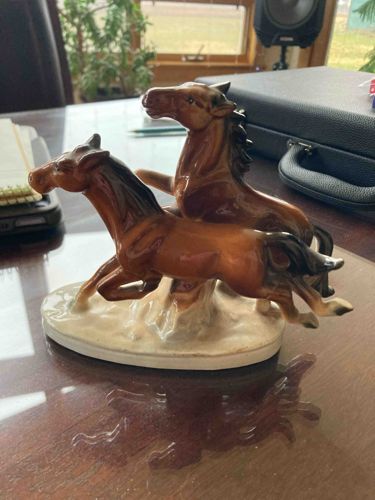
Mid-Century Porcelain Double Horse Galloping Figurine

Collectibles / Decorative Ceramics

AI Estimated Value

·Not an official valuation·Verify before acting

$45.00 - $85.00

As of June 12, 2026

AI Item Analysis

·AI can make mistakes·Verify before acting
This is a vintage glazed porcelain figurine featuring two horses in a dynamic galloping pose, mounted on a single integral base. The piece is crafted from ceramic with a high-gloss finish. The horses are decorated in a rich chestnut or bay brown color palette, with darker accents on the manes and tails, likely achieved through an airbrushed or hand-painted underglaze technique. The base is an off-white or cream color, sculpted to represent rough or uneven terrain. This style of decorative ceramic was highly popular during the mid-20th century (circa 1950s–1960s) and bears hallmarks of exports from Japan or manufacturers like Royal Copley or McCoy, though no bottom stamp is visible. The craftsmanship shows stylized muscularity and fluid motion, typical of mid-century animalier collectibles. The condition appears fair to good; there is a visible high shine across the surface, but close inspection reveals possible minor crazing in the glaze consistent with age. There do not appear to be large visible chips or cracks from this angle, though the narrow legs and tails of such figurines are common points for professional repairs. The anatomical proportions are slightly elongated to emphasize the sensation of speed, and the glass-like finish provides a strong reflective quality.
AI Appraisal Report

·AI can make mistakes·Verify before acting
I have conducted a visual examination of the Mid-Century Porcelain Double Horse Galloping Figurine. This piece is a classic example of mass-market decorative ceramics from the 1950s–1960s. The airbrushed underglaze and high-gloss finish are characteristic of Japanese imports or Ohio-based potteries like Royal Copley. The 'animalier' style here prioritizes fluid motion and stylized anatomy over realism, reflecting the mid-century aesthetic for home decor. Condition-wise, the figurine appears in fair to good condition. The presence of surface crazing is expected for domestic ceramics of this age due to thermal expansion differences between the clay body and glaze. While no catastrophic breaks are visible, the thinness of the legs makes them high-risk areas for previous repairs. The lack of a visible backstamp or maker's mark suggests this was a generic production piece rather than a premium art pottery item from a studio like Haeger or Royal Haaga, which slightly limits its ceiling on the secondary market. The market for mid-century animal figurines is currently stable but saturated. Comparables for unsigned double-horse figurines of similar scale frequently sell between $35 and $100 depending on the vibrancy of the glaze. Factors negatively impacting value include the lack of a brand mark and the commonality of the mold. Limitations: My assessment is based solely on the provided image. A physical inspection is required to check for 'ringing' (sound test for hidden cracks) and to inspect for professional restorations using UV light. To fully authenticate the manufacturer, I would need to examine the unglazed foot rim for specific clay color and texture markers. No scientific testing is recommended given the item's market value, but original provenance documentation would be necessary to increase the valuation toward the higher end of the spectrum.

Get your items appraised

Instant estimates of your treasures with AI-powered appraisals

Browse More Appraisals