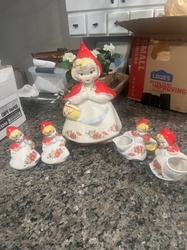
These notes were written by the person who submitted this item. Appraiser.AI has not verified them, and the AI's identification and estimate may rely on them.
AI Estimated Value
Not an official valuation
$75-125
AI estimate as of July 20, 2025 · verify with a professional before acting
AI-Generated · Verify before acting
Everything on this page is generated by AI for informational purposes only. AI can make mistakes — the AI may misidentify items or misattribute them (artist, maker, brand, designer, origin, era). This is not an official valuation and should not be used for insurance, sale, tax, estate, legal, or lending purposes — or any decision requiring a certified appraisal. It is not an authoritative claim about any person, brand, or rights holder — do not share or rely on it as a factual statement about a third party. Always consult qualified professionals before making financial decisions.
This analysis also relies on unverified notes provided by the user, which may be incomplete or inaccurate and could affect the result.
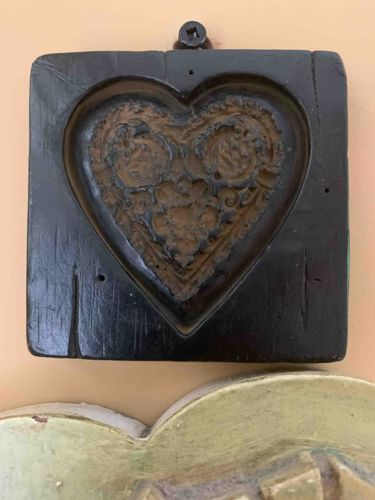
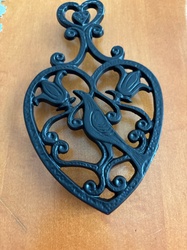
This item is a vintage or antique heart-shaped butter mold, carved from dark-stained wood. The mold features a recessed, heart-shaped cavity, approximately 3 inches wide and 3 inches high, with an intricately carved design within. The design appears to be a floral or foliate motif, possibly with stylized scrolling elements, indicating a decorative rather than purely functional purpose for the molded item. The wood is dark, likely stained or aged to a deep brown or black, showing visible grain and some surface wear, particularly along the edges and raised areas. The background of the mold, framing the heart, is a squared board, approximately 6 to 7 inches per side, suggesting a robust construction. A small, dark screw eye or similar hanging mechanism is visible at the top center of the square board, indicating it was designed for wall display, perhaps after its practical use. The texture within the carved heart appears somewhat rough, consistent with hand-carving or significant age and use. There are no discernible maker's marks or signatures visible in the provided image. The overall condition shows a rich patina commensurate with age and use, including minor scratches and slight discoloration, but no obvious cracks or repairs are evident. The craftsmanship, particularly the detailed carving within the heart, suggests a quality piece, likely from the late 19th or early 20th century, common in European folk art traditions.
AI Appraisal Report
Upon examination of the provided images, this heart-shaped wooden butter mold presents as a fine example of late 19th or early 20th-century European folk art. The dark-stained wood exhibits a deep, authentic patina, and the surface wear, particularly around the edges, is consistent with its age and utilitarian history. The recessed heart carving, featuring an intricate foliate motif, is well-executed and suggests skilled craftsmanship. The addition of a screw eye for hanging indicates a dual purpose as both a kitchen tool and a decorative wall piece, which adds to its charm and historical narrative.
The market for antique and vintage kitchenalia, especially decorative folk art pieces like this, remains strong among collectors. Similar carved wooden butter molds from this period typically sell in a consistent range. Demand is driven by collectors of folk art, kitchen antiques, and those seeking rustic decorative items. The heart shape and detailed carving make this piece particularly desirable.
While the item appears authentic based on visual characteristics, a definitive authentication without physical inspection is limited. An in-person examination would be necessary to confirm the type of wood, assess the carving tool marks more closely, and search for hidden maker's marks. Without provenance documentation or physical analysis, its specific origin and maker remain speculative. However, its visual appeal and excellent antique condition are the primary drivers of its current market value.