AI Appraisal Estimate

AI-generated estimates · not official valuations

From the user

What was submitted

Photo and notes provided by the user — not generated by AI

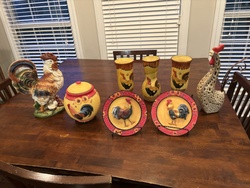
Submitted item photo
Submitted photo · June 10, 2026

User's notes

Trivet

AI analysis below

AI appraisal

AI analysis & estimate

AI-Generated · Verify before acting

Everything below is generated by AI for informational purposes only. AI can make mistakes — the AI may misidentify items or misattribute them (artist, maker, brand, designer, origin, era). This is not an official valuation and should not be used for insurance, sale, tax, estate, legal, or lending purposes — or any decision requiring a certified appraisal. It is not an authoritative claim about any person, brand, or rights holder — do not share or rely on it as a factual statement about a third party. Always consult qualified professionals before making financial decisions.

Note

This analysis also relies on unverified notes provided by the user, which may be incomplete or inaccurate and could affect the result.

Read the full disclaimer

AI Identification

·Not independently authenticated·Verify before acting

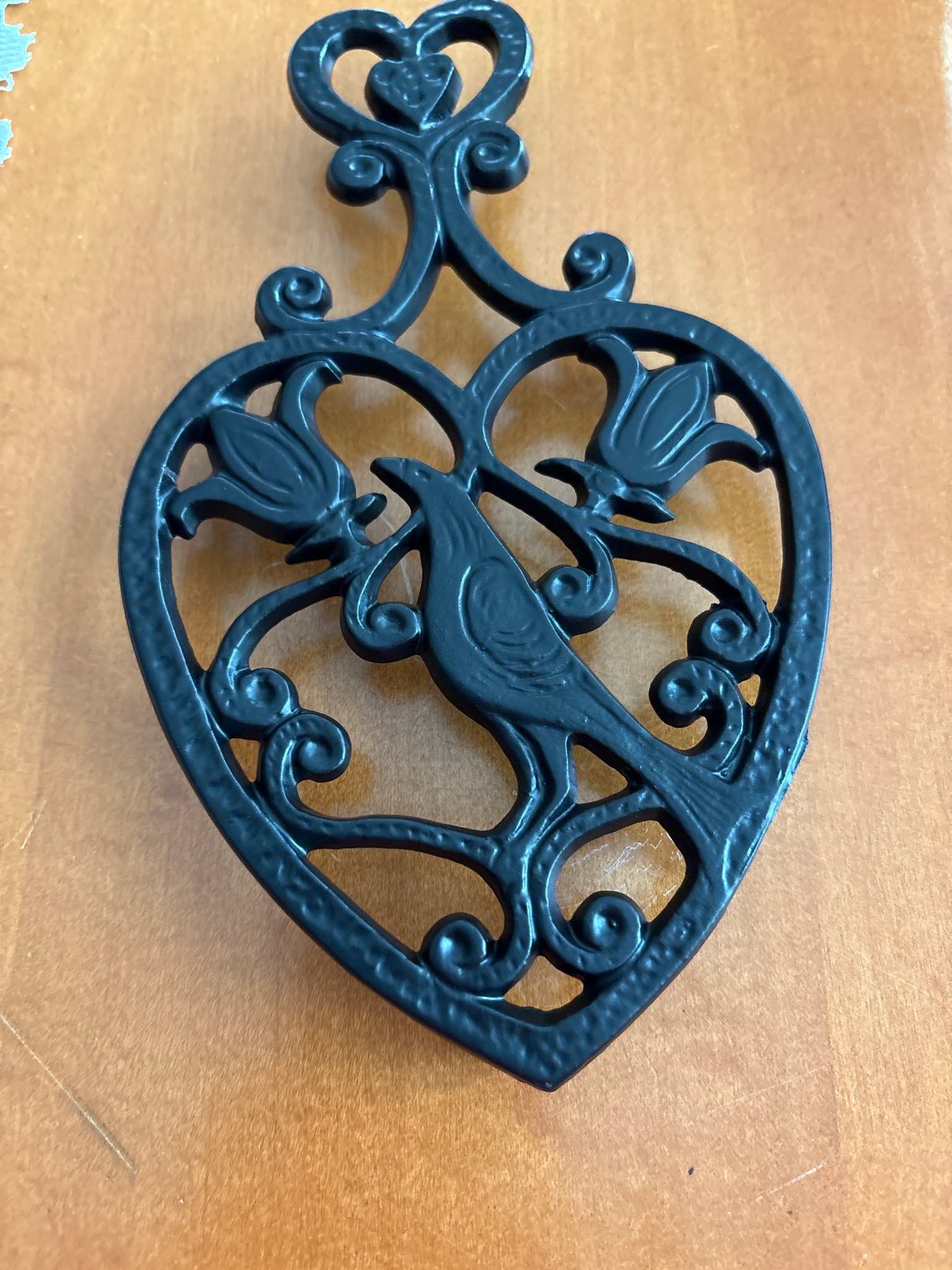
Cast Iron Heart-Shaped Distelfink and Tulip Trivet

Kitchenware / Folk Art Decor

AI Estimated Value

·Not an official valuation·Verify before acting

$15.00 - $25.00

As of June 10, 2026

AI Item Analysis

·AI can make mistakes·Verify before acting
This is a decorative kitchen trivet crafted from heavy cast iron, featuring a matte black finish. The design is indicative of Pennsylvania Dutch folk art, showcasing a 'Distelfink' (bird of good luck) centered within a large heart border. The bird is flanked by two symmetrical tulips, and the entire piece is embellished with scrollwork and filigree. The handle at the top incorporates a smaller secondary heart design with a centered floral or leaf motif, suggesting it could be hung for display. Physically, the item exhibits an even, sand-casted texture with rounded edges. Structurally, the casting appears robust without visible cracks or pitting. The finish is consistent, though there are minor signs of surface wear at the high points, typical of a mid-to-late 20th-century reproduction or utilitarian piece. There are no clearly visible maker's marks or signatures on the front, and the craftsmanship reflects high-volume production quality with clean filigree lines. The style is traditional Americana/Folk Art, likely dating from the 1960s to 1980s, serving both a functional purpose to protect surfaces from heat and an aesthetic one as wall decor.
AI Appraisal Report

·AI can make mistakes·Verify before acting
I have examined the digital representation of this cast iron Heart-Shaped Distelfink and Tulip Trivet. Based on the visual evidence, the item appears to be in very good condition, exhibiting a well-maintained matte black finish with minor surface wear on the high points, consistent with light utilitarian use or display. The casting is clean with minimal flash, though the sand-cast texture and common Pennsylvania Dutch motif suggest this is a mid-to-late 20th-century production piece rather than a 19th-century antique. The pattern, specifically the 'Distelfink' and heart-within-heart handle, was popularized by manufacturers like Wilton or Virginia Metalcrafters during the Americana revival of the 1960s-80s. The market for these specific trivets is currently saturated, as they were produced in high volumes. They remain popular for 'country kitchen' decor but lack the rarity to command premium prices. Similar examples frequently sell within the $15 to $25 range at antique malls or online auctions. The lack of a specific maker's mark prevents attribution to a premium foundry, which limits its value to that of a decorative/functional object rather than a collector's investment. Note: This appraisal is based on image analysis and descriptions. Verification of the item's age and foundry source is limited without a physical inspection of the reverse side for embossed marks or grinding scars. A physical examination could confirm weight and casting quality, while provenance regarding its purchase history would be necessary to definitively rule out modern imports. No scientific testing is required for an item of this class, though checking for magnetic properties and weight density would help confirm alloy composition.

Get your items appraised

Instant estimates of your treasures with AI-powered appraisals

Browse More Appraisals