AI estimate as of December 13, 2025 · verify with a professional before acting
AI-Generated · Verify before acting
Everything on this page is generated by AI for informational purposes only. AI can make mistakes — the AI may misidentify items or misattribute them (artist, maker, brand, designer, origin, era). This is not an official valuation and should not be used for insurance, sale, tax, estate, legal, or lending purposes — or any decision requiring a certified appraisal. It is not an authoritative claim about any person, brand, or rights holder — do not share or rely on it as a factual statement about a third party. Always consult qualified professionals before making financial decisions.
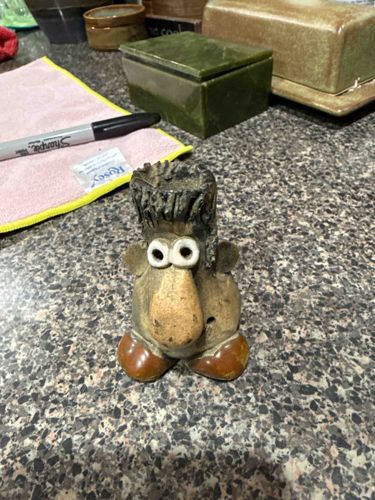
This is a small, whimsical figurine crafted from ceramic, characterized by its anthropomorphic 'stump face' design. The primary body of the figurine is a textured, earthy brown, resembling a tree stump with vertical grooves on the top and sides, simulating bark or rough-cut wood. Two prominent white eyeballs with black pupils are affixed to the upper 'face' area, giving it a surprised or wide-eyed expression. Below the eyes is an oversized, protruding nose in a lighter, sandy beige color, contrasting with the main body. On either side of the body, small, ear-like protrusions are visible. The base features two round, bulbous 'feet' or 'boots' in a glossy, reddish-brown glaze, providing stability. A small, circular indentation or hole is present on the right side of the face, possibly intended as a nostril or a design element. The overall construction suggests a handmade or studio pottery origin, with visible irregularities and a rustic finish. There are no discernible maker's marks or signatures visible from the provided image. The style suggests it could be a piece from the mid-20th century to contemporary, likely intended as a decorative accent or perhaps a small planter or holder given its rough opening at the top, though its primary function appears to be decorative. The visible condition appears good, with no obvious cracks or chips, though minor dirt or patina is present in the crevices of the textured areas, consistent with age and display.
AI Appraisal Report
Based on my visual examination of the provided image, this Whimsical Ceramic 'Stump Face' Figurine appears to be in good overall condition. I observe no significant cracks, chips, or repairs, which is positive for its value. There is some minor dirt or patina in the textured crevices, consistent with age and display, but this is superficial and does not detract from its appeal. Authenticity, based solely on visual cues, suggests a handmade or studio pottery origin due to its visible irregularities and rustic finish. However, without a maker's mark or signature, definitively authenticating its origin or specific artist is impossible from images alone. A physical inspection would be crucial to confirm the ceramic type, glazes, and potential hidden marks.
In terms of market conditions, whimsical ceramic figurines of this nature, especially unsigned ones, typically fall into the decorative arts category with a broad appeal. Comparable items, often found in artisan markets, online craft sales, or vintage shops, range widely depending on artist recognition, uniqueness, and size. This piece has a distinct character with its 'stump face' design, which could appeal to collectors of quirky or folk art ceramics. Demand for such items is generally moderate. While its unique aesthetic contributes to its desirability, the lack of known provenance or a recognized artist limits its top-tier market potential, preventing it from reaching higher values typically associated with established studio potters.
Rarity is difficult to assess without knowing the artist or production volume; however, its handmade appearance suggests it's not a mass-produced item. Factors significantly impacting value include its good condition and charming visual appeal. The primary limitation in providing a more precise valuation or authentication is the lack of physical examination. An in-person inspection would allow for tactile assessment of the ceramic, closer scrutiny for any hidden marks, analysis of the firing process, and potential comparison to known pottery styles. Provenance documentation (e.g., date of creation, artist information, purchase history) or scientific testing (e.g., thermoluminescence dating for older pieces) would be needed for full authentication and a more definitive historical context, which could potentially increase its value significantly if a notable artist or heritage were confirmed.