AI estimate as of June 27, 2025 · verify with a professional before acting
AI-Generated · Verify before acting
Everything on this page is generated by AI for informational purposes only. AI can make mistakes — the AI may misidentify items or misattribute them (artist, maker, brand, designer, origin, era). This is not an official valuation and should not be used for insurance, sale, tax, estate, legal, or lending purposes — or any decision requiring a certified appraisal. It is not an authoritative claim about any person, brand, or rights holder — do not share or rely on it as a factual statement about a third party. Always consult qualified professionals before making financial decisions.
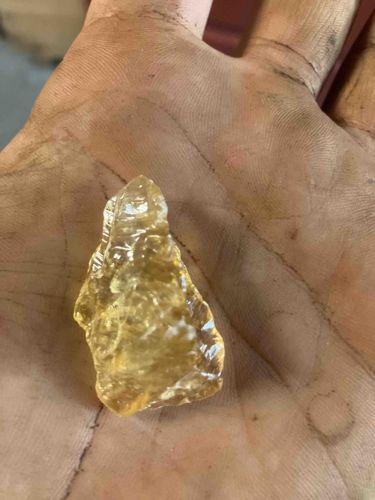
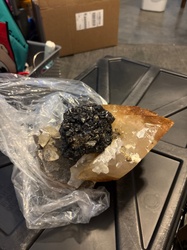
This item is a small, irregularly shaped piece of transparent crystalline material, which strongly resembles a rough specimen of Citrine quartz. It appears to measure approximately 3-5 centimeters in its longest dimension, fitting comfortably within the palm of an average adult hand, as depicted in the image. The material exhibits a captivating golden to light yellowish-brown hue, with subtle variations in color intensity and clarity throughout its structure. Internally, the specimen displays areas of good transparency alongside regions with a somewhat milky or cloudy appearance, indicative of natural inclusions or veiling that are common characteristics of unpolished quartz.
The crystal's surfaces are predominantly rough and unworked, showcasing natural terminations, cleavage planes, and conchoidal fractures typical of a raw mineral. One end of the specimen appears slightly more pointed, suggesting a natural crystal growth habit, though it is not a complete or perfectly formed crystal point. Light interacts with its irregular facets and internal structures, creating appealing reflections and highlights. There are no visible signs of artificial cutting, polishing, or synthetic alteration, confirming its natural, raw state. As a natural geological formation, there are no discernible manufacturing marks, signatures, or identifiable style periods; its age is ancient, formed over geological millennia. The specimen appears to be in its natural, unearthed condition, with no observable damage, chips, or repairs. Its quality as a mineral specimen is assessed based on its natural color, clarity, and overall aesthetic form.
AI Appraisal Report
Based on my examination of the provided image and description, this item strongly presents as a natural, rough specimen of Citrine quartz. Its golden to yellowish-brown hue, internal variations in clarity, and unworked surfaces with natural terminations and fractures are consistent with a genuine mineral formation. I observe no signs of artificial cutting, polishing, or synthetic alteration, placing it in its natural, unearthed state with no apparent damage or repairs. Its condition appears very good for a raw specimen.
Market analysis indicates that rough citrine quartz specimens of this size (3-5 cm) and quality are readily available across various retail channels, including mineral shows, online platforms, and specialty stores. Demand exists among collectors, energy healers, and artisans, but the material itself is not rare. Factors influencing its value are its natural color, internal clarity, and overall aesthetic form. The irregular shape and presence of natural inclusions make it more of a decorative specimen rather than gem-grade material.
The primary limitation of this remote appraisal is the inability to perform a physical examination. While its appearance is consistent with natural citrine, distinguishing naturally colored citrine from heat-treated amethyst (which is common) typically requires laboratory testing or a verifiable geological provenance. Without in-person inspection to assess details like specific gravity, refractive index, and crystal habit more closely, or advanced spectroscopic analysis, definitive authentication of origin and treatment status remains limited. Such verification would significantly impact its value if proven to be rare, untreated, natural citrine. Therefore, the appraisal value reflects its current apparent status as a typical, attractive, rough citrine quartz specimen.