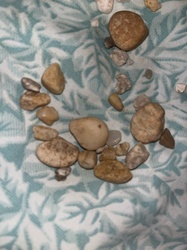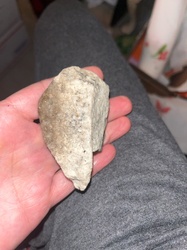
AI identification & appraisal estimate

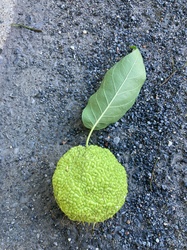
Deciduous Tree Leaf (possibly Oak species)

Submitted photo of Deciduous Tree Leaf (possibly Oak species)
Photo submitted by the user — not generated by AI

AI Estimated Value

Not an official valuation

$0.00 - $0.05

AI estimate as of March 27, 2026 · verify with a professional before acting

AI-Generated · Verify before acting

Everything on this page is generated by AI for informational purposes only. AI can make mistakes — the AI may misidentify items or misattribute them (artist, maker, brand, designer, origin, era). This is not an official valuation and should not be used for insurance, sale, tax, estate, legal, or lending purposes — or any decision requiring a certified appraisal. It is not an authoritative claim about any person, brand, or rights holder — do not share or rely on it as a factual statement about a third party. Always consult qualified professionals before making financial decisions.

Read the full disclaimer

AI Item Analysis

This specimen is a single, detached deciduous leaf resting on a patterned textile surface. It exhibits a broad, lobed shape characteristic of certain oak or maple varieties. The leaf displays a bi-color appearance, featuring a vibrant green hue on the upper/undivided portion and a transition to a brownish, tan, or copper tone on the lower/dried section. This suggests it is in a natural state of senescence or partial dehydration. The margins appear slightly serrated or lobed, though the low resolution of the image obscures fine vein details. Its biological construction is organic, consisting of plant cellulose and chlorophyll that is currently breaking down. The leaf appears to be approximately 3 to 5 inches in length with a small petiole (stem) visible on the left side. No synthetic markings, stamps, or human-made signatures are present on the organic material. In terms of condition, the leaf shows signs of natural curling at the edges and a lack of turgidity, indicating it has fallen from its source branch. The presence of the brown color indicates necrotic tissue, which is typical for seasonal shedding. This is a common botanical specimen with no industrial manufacturing details, likely dating to the current seasonal cycle.
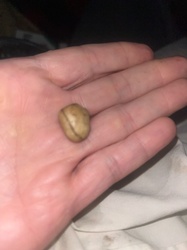
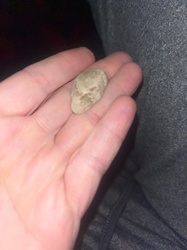
AI Appraisal Report

I have virtually examined this deciduous leaf specimen, likely of the Quercus (Oak) genus, currently situated on a textile substrate. The specimen displays late-stage senescence, evidenced by the transition from chlorophyllous green to necrotic tan/brown tissue. The physical condition is poor from a preservation standpoint; the leaf exhibits curling, brittle margins, and a lack of turgidity, indicating it has naturally detached and is undergoing biological decomposition. This is a common botanical object found in abundance globally during the autumnal season. From a market perspective, this item lacks rarity, historical provenance, or artistic modification (such as pressing or taxidermy) that would imbue it with financial value. It is classified as an ubiquitous natural object with no secondary market demand among collectors of botanical specimens. Comparable sales for unpreserved, common leaves are non-existent in the professional auction or retail sectors. The primary limitation of this appraisal is the reliance on a single image. A physical examination would be required to confirm the presence of microscopic pests or fungi that might further degrade the specimen. To establish any potential value, documentation linking the leaf to a significant historical event or famous geographical location would be necessary. Without such provenance or a specific aesthetic application (e.g., as part of a signed work by a known floral artist), the item holds purely educational or sentimental value rather than monetary. In its current state, the specimen is a transient biological object with a market value of zero.

Keep exploring

More botanical specimens / natural objects appraisals

Get your items appraised

Instant AI-powered appraisal estimates from a photo

Browse More Appraisals