AI estimate as of December 11, 2025 · verify with a professional before acting
AI-Generated · Verify before acting
Everything on this page is generated by AI for informational purposes only. AI can make mistakes — the AI may misidentify items or misattribute them (artist, maker, brand, designer, origin, era). This is not an official valuation and should not be used for insurance, sale, tax, estate, legal, or lending purposes — or any decision requiring a certified appraisal. It is not an authoritative claim about any person, brand, or rights holder — do not share or rely on it as a factual statement about a third party. Always consult qualified professionals before making financial decisions.
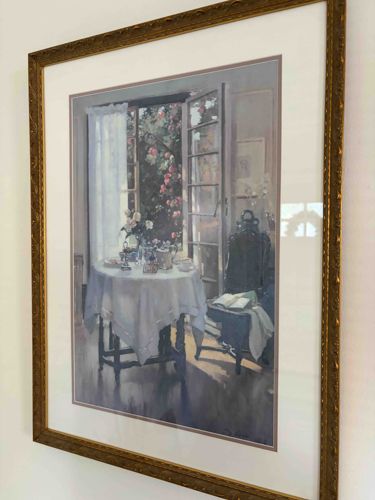
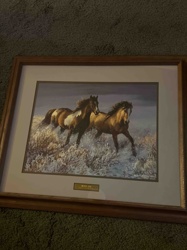
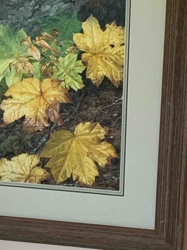
This item is a framed art print depicting an inviting interior scene. The print itself portrays a room with an open French window looking out onto a garden filled with pink roses. A sheer white curtain hangs delicately on the left side of the window, billowing slightly. Inside, to the left of the window, a round table draped with a white tablecloth is set for tea, featuring a teapot, teacups, and saucers. On the right, a dark, possibly wooden, chair with a book resting open on its arm or a nearby surface is visible, bathed in a warm patch of sunlight streaming through the window. The style of the artwork appears to be a realistic or impressionistic painting, likely reproduced as a giclée or offset lithograph print. The colors are soft and warm, leaning towards blues, greens, and pinks, with strong contrasts of light and shadow, particularly on the floor. The print is housed in a substantial, ornate gold-toned frame with a textured, possibly gessoed and gilded, finish, showing some minor wear consistent with handling but no significant damage. A clean, off-white mat board with a thin inner border (possibly a fillet or a darker colored mat) surrounds the print, providing a visual separation and enhancing its presentation. The overall condition appears good, with no visible tears or significant discoloration on the print itself. The frame's detailing suggests a classical or traditional aesthetic, complementing the serene subject matter. The print is likely from the late 20th or early 21st century.
AI Appraisal Report
I have examined the provided image of the 'Interior Scene with Open Window and Tea Setting Print.' My assessment indicates this is a framed art print, likely a giclée or offset lithograph reproduction of a painting, from the late 20th or early 21st century. The print itself appears to be in good condition, with no visible tears or significant discoloration. The colors, soft and warm, contribute to its serene aesthetic. The ornate, gold-toned frame is substantial and shows minor wear consistent with handling, but no significant damage, complementing the traditional subject matter. A clean, off-white mat with a thin inner border enhances its presentation.
Market conditions for decorative art prints of this nature are generally moderate. While appealing and well-framed, such pieces are typically mass-produced reproductions rather than original artworks by noted artists, which limits their primary market value significantly. Comparables in the decorative print market, especially those found in home décor stores or secondary markets, usually range from $50 to $200 depending on the quality of the print, framing, and overall visual appeal. Demand is steady for aesthetically pleasing, well-framed decorative art, but rarity is not a factor here, as reproductions are inherently non-rare.
Factors impacting value include the good condition of both print and frame, and the attractive, classical framing which adds to its decorative appeal. However, as a print reproduction rather than an original artwork, its intrinsic art market value is limited. Without in-person examination, I cannot definitively determine the exact printing method (e.g., giclée vs. offset lithograph) or the precise quality of the paper. A physical inspection would allow for a closer assessment of print resolution, paper quality, and frame integrity. Provenance documentation or scientific testing would be necessary to identify the original artist, if unknown, and confirm it's not a rare or limited-edition print, though signs suggest it's a decorative reproduction.