AI Appraisal Estimate

AI-generated estimates · not official valuations

From the user

What was submitted

Photo and notes provided by the user — not generated by AI

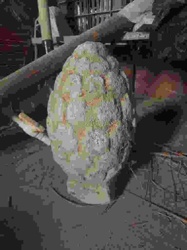
Submitted item photo
Submitted photo · May 28, 2026

User's notes

No additional notes provided.

AI analysis below

AI appraisal

AI analysis & estimate

AI-Generated · Verify before acting

Everything below is generated by AI for informational purposes only. AI can make mistakes — the AI may misidentify items or misattribute them (artist, maker, brand, designer, origin, era). This is not an official valuation and should not be used for insurance, sale, tax, estate, legal, or lending purposes — or any decision requiring a certified appraisal. It is not an authoritative claim about any person, brand, or rights holder — do not share or rely on it as a factual statement about a third party. Always consult qualified professionals before making financial decisions.

Read the full disclaimer

AI Identification

·Not independently authenticated·Verify before acting

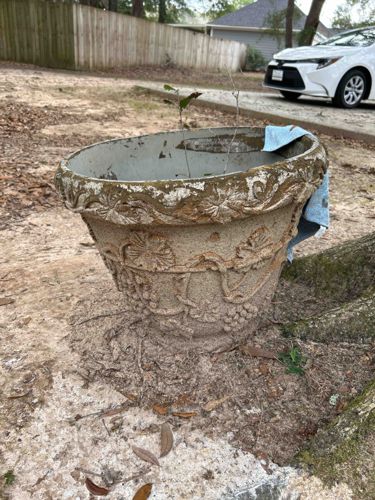
Vintage Grape Motif Concrete Garden Planter

Garden Ornaments and Architectural Antiques

AI Estimated Value

·Not an official valuation·Verify before acting

$150 - $250

As of May 28, 2026

AI Item Analysis

·AI can make mistakes·Verify before acting
This is a heavy, medium-sized garden planter constructed from cast concrete (cast stone), featuring a classic tapered rim shape. The exterior is ornately decorated with a wrap-around relief frieze depicting climbing grapevines, including detailed clusters of grapes and large palmate leaves. Below the thick, rolled rim is a secondary decorative band consisting of a floral or leaf scroll. The texture of the concrete is coarse and granular, indicative of traditional wet-cast methods. Currently, the piece exhibiting significant signs of age and outdoor exposure; there is a thick accumulation of moss, lichen, and organic patina along the upper rim and within the recessed areas of the relief carving. The original finish appears to have been a light gray or off-white, which is now heavily weathered with brown earth staining. There are several chips along the edges of the high-relief elements and some surface spalling on the interior and exterior surfaces. Despite the surface wear, the structural integrity appears sound. This style is consistent with mid-20th-century garden ornaments, likely produced between 1950 and 1980. The craftsmanship shows a high degree of detail in the casting mold, typical of mass-produced but quality architectural garden elements. A blue textile or cloth is seen draped over the side, but it is not part of the original object.
AI Appraisal Report

·AI can make mistakes·Verify before acting
I have virtually examined this cast concrete garden planter featuring a traditional grape and vine relief frieze. Based on the stylistic cues and casting technique, I estimate the piece was manufactured mid-20th century (circa 1950–1975). The condition is typical for outdoor architectural antiques; the moss, lichen, and 'living' patina actually add to the aesthetic appeal for many collectors, though the surface spalling and high-point chips slightly diminish the value. The market for mid-century concrete garden ornaments remains steady, particularly for motifs that evoke classical European vineyard aesthetics. Comparables for mass-produced cast stone planters of this size and condition typically range from $125 to $300 at garden specialty auctions or local antique malls. While not rare, the level of detail in the casting mold suggests a higher-quality production than modern polyethylene or thin-pour resin imitations. Key value drivers include the desirable organic weathering and the structural integrity, despite surface-level chips. However, my assessment is based solely on the provided description and image. A physical inspection is required to definitively distinguish this cast stone from lighter-weight GFRC (Glass Fiber Reinforced Concrete) and to confirm there are no internal structural cracks or hidden repairs. To fully authenticate its age, observing the depth of the carbonation in the concrete or examining any manufacturer’s stamps (often found on the underside or inner rim) would be necessary. Documentation regarding the original landscape or purchase provenance would further solidify its historical context and valuation.

Get your items appraised

Instant estimates of your treasures with AI-powered appraisals

Browse More Appraisals