AI estimate as of July 9, 2025 · verify with a professional before acting
AI-Generated · Verify before acting
Everything on this page is generated by AI for informational purposes only. AI can make mistakes — the AI may misidentify items or misattribute them (artist, maker, brand, designer, origin, era). This is not an official valuation and should not be used for insurance, sale, tax, estate, legal, or lending purposes — or any decision requiring a certified appraisal. It is not an authoritative claim about any person, brand, or rights holder — do not share or rely on it as a factual statement about a third party. Always consult qualified professionals before making financial decisions.
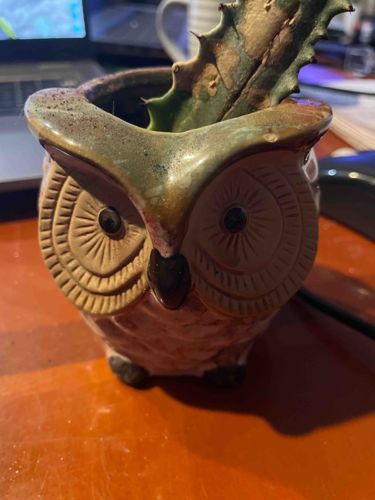
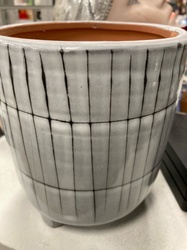
This item is a compact, owl-shaped ceramic planter, likely designed for succulents or small houseplants. The body of the owl is textured to mimic feathers, with concentric circles forming the large eyes, each featuring a prominent black pupil. The beak is also black and appears to be slightly raised from the surface. The dominant color for the owl's body is a matte, unglazed bisque or a very light, natural ceramic tone. The rim of the planter, which forms the owl's 'forehead' and 'ears', is coated in a reactive glaze that exhibits a mottled mix of rich browns, earthy greens, and subtle blues, suggesting a rustic or artisanal finish. This glazed portion extends slightly down the sides, blending into the unglazed body. The interior of the pot also appears to be glazed, coordinating with the rim colors. The base shows small, darker colored feet, which are integrated into the molded body of the owl, providing stability. There are visible specks of what appears to be dirt or dust clinging to the glazed rim and a slight discoloration or light staining on the unglazed body, indicative of regular use or storage in a dusty environment. No visible cracks, chips, or significant damage are apparent, suggesting good overall condition. The craftsmanship appears to be commercial grade, possibly mass-produced, but with an attention to detail in the molding and a desirable variance in the reactive glaze, giving it a somewhat unique appearance. The style is contemporary, likely from the last 10-20 years, aligning with popular trends in whimsical or nature-inspired home decor.
AI Appraisal Report
Upon examining the provided image of the Owl Ceramic Planter, I assess its condition as good. There are no visible cracks, chips, or significant structural damage. The minor specks of dirt on the glazed rim and slight discoloration on the unglazed body indicate typical use or storage, but do not detract significantly from its visual appeal or functionality. I can attest to its authenticity as a ceramic planter from visual cues; however, definitive authentication of its origin or specific manufacturer without physical inspection, provenance documentation, or maker's marks is limited. \n\nIn terms of market conditions, this item falls into the popular home decor category, specifically planters. Comparables in the retail market for similar new ceramic owl planters with reactive glazes typically range from $20 to $40, depending on size, brand, and retail outlet. The blend of a matte, bisque-like body with a rustic reactive glaze is currently fashionable, lending to its marketability. Demand for whimsical, nature-inspired home decor like this remains consistent, though not exceptional, as mass-produced items are widely available. Rarity is low; while the reactive glaze offers unique variations, the overall design and commercial-grade craftsmanship suggest it is not a limited edition or artisan-made piece. \n\nFactors impacting value include its good condition, appealing aesthetic, and functional design. The slight imperpections from use are minor. The primary limitation in full authentication lies in the inability to inspect maker's marks, assess the ceramic quality tactilely, or confirm its origin (e.g., kiln, production facility) without physical access. For full authentication and to ascertain if it's from a noted ceramic studio versus a mass-producer, a physical examination would be crucial.