AI estimate as of August 27, 2025 · verify with a professional before acting
AI-Generated · Verify before acting
Everything on this page is generated by AI for informational purposes only. AI can make mistakes — the AI may misidentify items or misattribute them (artist, maker, brand, designer, origin, era). This is not an official valuation and should not be used for insurance, sale, tax, estate, legal, or lending purposes — or any decision requiring a certified appraisal. It is not an authoritative claim about any person, brand, or rights holder — do not share or rely on it as a factual statement about a third party. Always consult qualified professionals before making financial decisions.
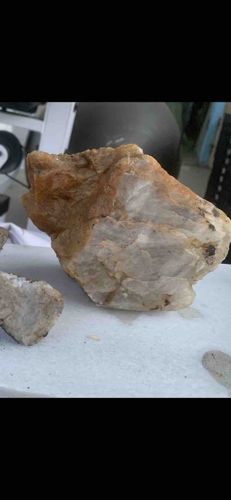
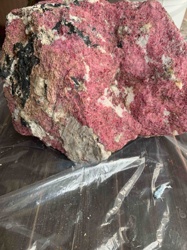
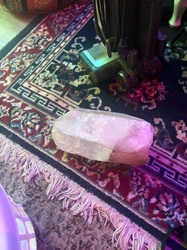
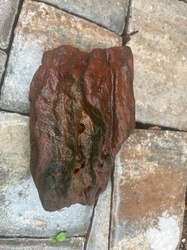
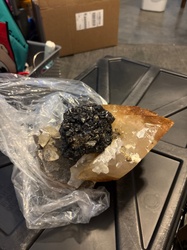
The item appears to be a raw, unpolished specimen of a mineral, likely a form of quartz. Its primary coloration ranges from a milky, translucent white to a rich, warm brown or orange-brown, suggesting the presence of iron inclusions or natural staining. The overall shape is irregular and angular, indicative of its natural formation or a recent fracture. Visible characteristics include multiple facets and crystalline structures, though most surfaces appear somewhat opaque rather than perfectly clear. There are visible fractures and uneven surfaces, which are typical of unprocessed mineral pieces. Some areas show a clearer, more glassy luster, while others are duller and more weathered. Darker specks or inclusions, possibly mineral impurities or dirt, are discernible on some surfaces. The size cannot be precisely determined without a reference, but it appears to be substantial enough to be held in one hand, potentially ranging from 4 to 8 inches in its longest dimension. There are no obvious signs of human alteration, such as polishing, cutting marks, or drilled holes, indicating it is in its natural state. Its condition seems typical for a raw mineral, with natural wear and weathering, but no apparent recent damage from mishandling. Without specific details on origin or precise mineralogical testing, its age is difficult to pinpoint beyond acknowledging its geological formation over an extensive period.
AI Appraisal Report
I have examined the provided image of this Raw Quartz Mineral Specimen with Iron Staining. Based on the visual characteristics, I assess this to be an authentic, naturally formed mineral specimen. Its irregular shape, varying translucency, and the presence of iron staining are consistent with raw quartz. The lack of polished surfaces, cut marks, or drilled holes further supports its natural, unaltered state. Its condition appears good for a raw specimen, showing natural wear and weathering rather than recent damage.
From a market perspective, raw quartz specimens of this size and coloration are relatively common. While the iron staining adds some aesthetic appeal, it does not suggest extreme rarity. Demand for such specimens typically comes from hobbyists, mineral collectors, and those interested in natural home decor. Comparables often sell in a modest price range, influenced by size, clarity, color intensity, and overall aesthetic appeal. Factors impacting value include the specimen's size (estimated 4-8 inches, which is substantial), the interesting color variation from white to deep orange-brown due to iron, and its natural, unadulterated form.
My primary limitation in this appraisal is the absence of a physical examination. I cannot definitively verify authenticity or specific mineral composition from images alone. A hands-on inspection would allow for tactile assessment, precise weight and dimension measurement, and examination under magnification for crystalline structure and inclusions. Further, a specific gravity test or professional mineralogical testing (e.g., X-ray diffraction) would confirm the exact mineralogy and rule out artificial enhancements. Provenance documentation, such as the location of discovery, would also add significant value and authenticity assurance.