AI estimate as of August 13, 2025 · verify with a professional before acting
AI-Generated · Verify before acting
Everything on this page is generated by AI for informational purposes only. AI can make mistakes — the AI may misidentify items or misattribute them (artist, maker, brand, designer, origin, era). This is not an official valuation and should not be used for insurance, sale, tax, estate, legal, or lending purposes — or any decision requiring a certified appraisal. It is not an authoritative claim about any person, brand, or rights holder — do not share or rely on it as a factual statement about a third party. Always consult qualified professionals before making financial decisions.
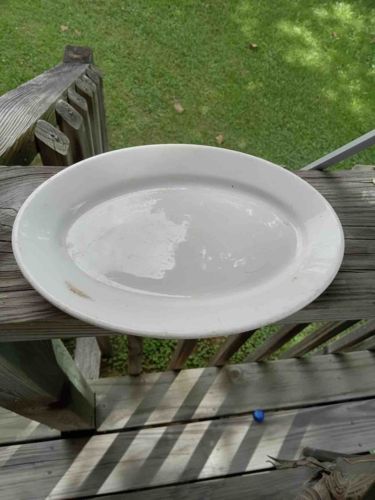
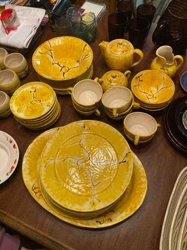
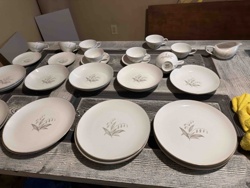
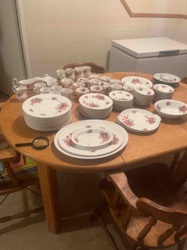
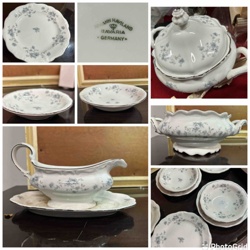
This is a large, oval-shaped ceramic serving platter, likely made of porcelain or a similar white earthenware. It features a straightforward, utilitarian design with a slightly raised rim and a shallow, flat serving area. The color is a uniform off-white or cream, consistent with unadorned institutional or restaurant-grade dinnerware. The finish appears to be a basic glaze, showing some reflectivity in direct sunlight, but it does not boast any decorative patterns or elaborate molding.
Observable condition issues include noticeable surface wear in the form of scuffs and what appears to be dirt or discoloration, particularly along the rim and within the central serving area. There are no clear cracks or chips visible from this angle, but the overall presentation suggests a well-used item rather than a pristine one. The underside, which might reveal maker's marks or stamps, is not visible. Based on its simple design and apparent durability, it likely dates from the mid-20th century, consistent with a robust, mass-produced item. The construction seems solid and functional, prioritizing utility over intricate craftsmanship. The quality is indicative of durable, everyday use rather than fine dining.
AI Appraisal Report
Upon examining the White Oval-Shaped Ceramic Serving Platter, I observe a utilitarian design consistent with mass-produced dinnerware, likely porcelain, from the mid-20th century. Its off-white, basic glazed finish and lack of decorative elements suggest function over form, characteristic of institutional or general household use. The observable condition shows noticeable surface wear, scuffs, and discoloration, particularly on the rim and serving area. This indicates significant past use but no immediate signs of cracks or chips, though a full inspection is limited to the visible surfaces.
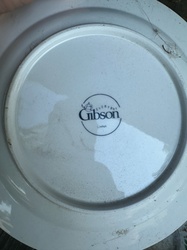
Authenticity, based purely on this image, seems straightforward for a common item; no red flags suggest it's anything other than what it appears to be – a sturdy, well-used ceramic platter. However, without inspecting maker's marks on the underside, full authentication of origin or specific manufacturer is impossible. Physical examination would reveal these crucial details.
Market conditions for such common, unadorned, used ceramic platters are generally low. Comparables are readily available in thrift stores, antique malls, and online second-hand markets. There is virtually no rarity associated with this type of item. Demand is also low, limited to individuals seeking replacement pieces for similar sets or those looking for inexpensive, durable serving ware. Factors significantly impacting value are the commonality of the item, its used condition, and the absence of any unique design, historical significance, or renowned maker. Without these, its value remains purely utilitarian.
For full authentication, in-person examination is critical to check for maker's marks, assess the true extent of wear, and detect any hairline cracks or chips not visible in the image. Provenance documentation, though unlikely for such an item, would be definitive. Scientific testing, like material analysis, would be excessive and unnecessary for an item of this type and value.