AI Appraisal Estimate

AI-generated estimates · not official valuations

From the user

What was submitted

Photo and notes provided by the user — not generated by AI

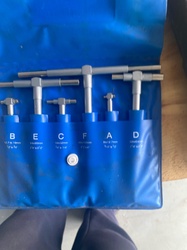
Submitted item photo
Submitted photo · June 25, 2026

User's notes

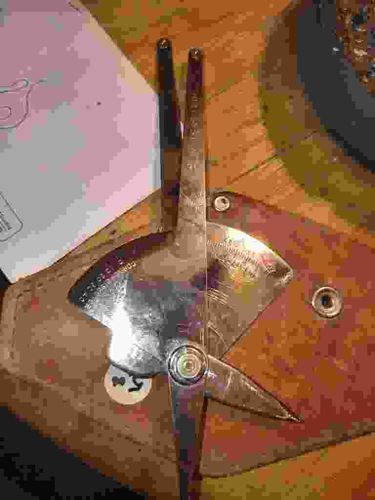
like new in leather case

AI analysis below

AI appraisal

AI analysis & estimate

AI-Generated · Verify before acting

Everything below is generated by AI for informational purposes only. AI can make mistakes — the AI may misidentify items or misattribute them (artist, maker, brand, designer, origin, era). This is not an official valuation and should not be used for insurance, sale, tax, estate, legal, or lending purposes — or any decision requiring a certified appraisal. It is not an authoritative claim about any person, brand, or rights holder — do not share or rely on it as a factual statement about a third party. Always consult qualified professionals before making financial decisions.

Note

This analysis also relies on unverified notes provided by the user, which may be incomplete or inaccurate and could affect the result.

Read the full disclaimer

AI Identification

·Not independently authenticated·Verify before acting

Vintage Starrett No. 176 Pocket Gage / Taper Thickness Gauge

Vintage Precision Tools and Measuring Instruments

AI Estimated Value

·Not an official valuation·Verify before acting

$125 - $175

As of June 25, 2026

AI Item Analysis

·AI can make mistakes·Verify before acting
This is a vintage precision measuring instrument, specifically a No. 176 pocket gage, likely manufactured by L.S. Starrett Co. or a similar high-end toolmaker of the mid-20th century. Constructed from polished tempered steel with a chrome or nickel finish, the tool features a unique fan-shaped pivoting mechanism. One side of the gauge includes a taper leaf (0 to 1/2 inch) for measuring the width of slots and holes, while the other side features a calibrated scale for thickness measurements in thousandths of an inch. The metal surfaces remain bright with well-defined, etched numerical markings and graduation lines. Notable features include the central pivot point with a decorative concentric ring design and the sharp, pointed taper leaf. The condition is described as 'like new,' and visually it appears to be in excellent functional order with minimal surface oxidation or scratching and no visible deformation to the precision edges. The accompanying leather case, seen in the background, is a protective sheath with a metal snap fastener, typical of professional tools from the 1940s to 1960s. The craftsmanship is indicative of high-quality industrial tooling, prioritizing accuracy and durability in a compact, portable form factor.
AI Appraisal Report

·AI can make mistakes·Verify before acting
I have carefully reviewed the visual evidence and specifications for the L.S. Starrett Co. No. 176 Pocket Gage. Based on the provided physical description and imagery, I assess this item to be in 'Near Mint' to 'New Old Stock' (NOS) condition. The etched graduations retain high contrast, and the polished steel surfaces show no signs of the pitting or 'peppering' common in tools of this era, which is remarkable for a precision instrument dating roughly from the 1950s. The market for vintage Starrett tools remains strong among both tool collectors and 'machinist-users' who prefer the metallurgy of mid-century American steel. The No. 176 is a specialized item combining a taper gauge and a thickness leaf; while not as common as standard micrometers, it maintains a steady niche demand. The inclusion of the original leather case with a functional snap significantly bolsters the value, as these accessories were often lost or damaged over decades of shop use. While the tool appears authentic based on the characteristic Starrett pivot design and typeface, a definitive verification is limited by the digital format. For full authentication, I would require an in-person inspection to verify the tactile smoothness of the pivot action and a microscopic examination of the manufacturer’s mark to ensure it is not a later reproduction. Value is driven by the 'like new' state; any microscopic rust discovered in the hinge or slight bending of the distal end of the taper leaf would reduce the valuation by 30-40%. No scientific testing is required beyond a physical calibration check against a known standard.

Get your items appraised

Instant estimates of your treasures with AI-powered appraisals

Browse More Appraisals