AI estimate as of November 21, 2026 · verify with a professional before acting
AI-Generated · Verify before acting
Everything on this page is generated by AI for informational purposes only. AI can make mistakes — the AI may misidentify items or misattribute them (artist, maker, brand, designer, origin, era). This is not an official valuation and should not be used for insurance, sale, tax, estate, legal, or lending purposes — or any decision requiring a certified appraisal. It is not an authoritative claim about any person, brand, or rights holder — do not share or rely on it as a factual statement about a third party. Always consult qualified professionals before making financial decisions.
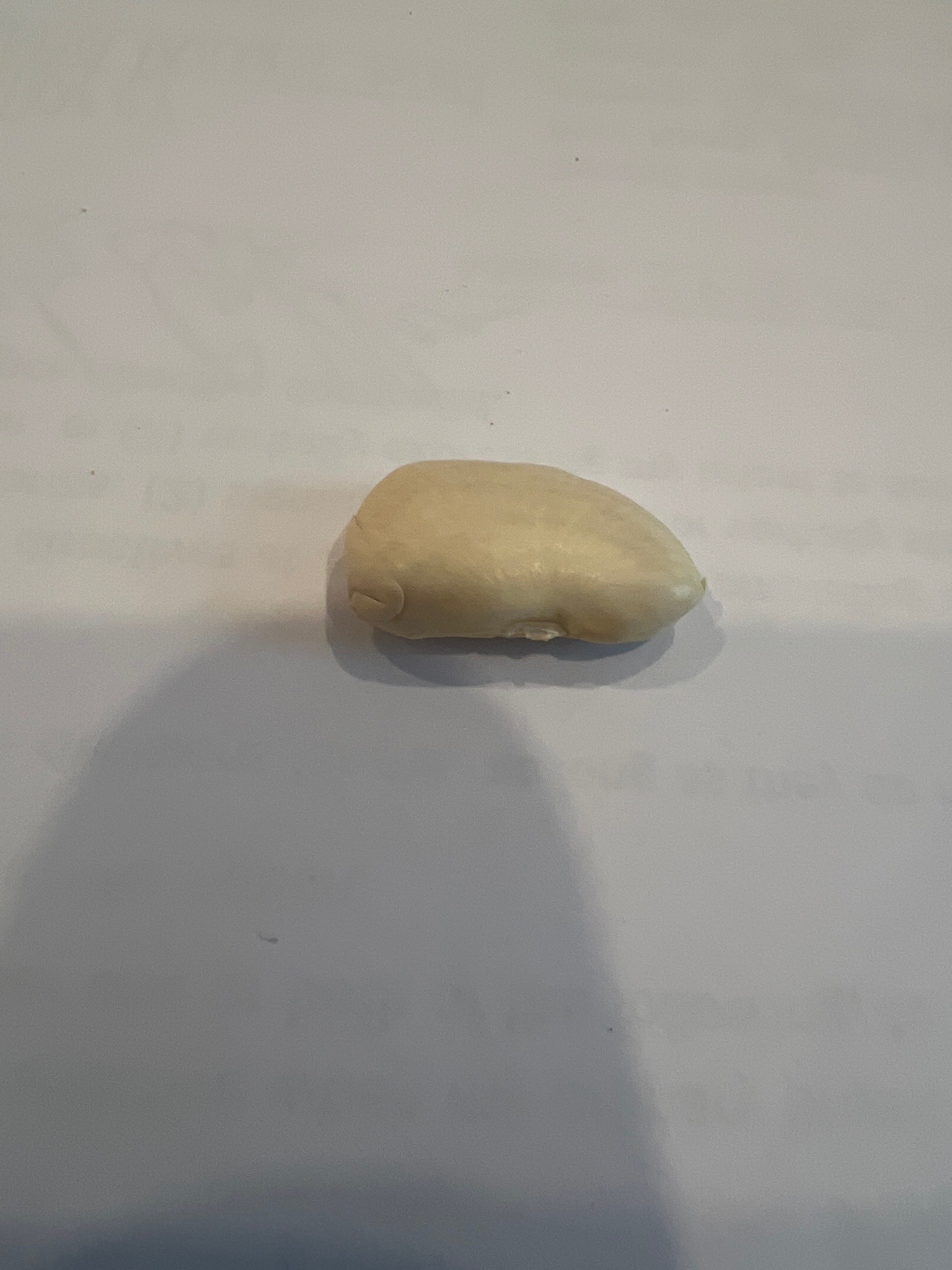
The item depicted in the image is a single, dried legume seed, closely resembling a white bean or a lima bean. The seed exhibits an off-white to pale yellowish-cream color with a smooth, matte surface texture. It has an elongated, kidney-like bean shape with a slightly flattened profile and a small, visible hilum along the concave edge, which is consistent with the botanical characteristics of a legume. There are no visible maker's marks, stamps, signatures, or brand identifiers present on the object, as it is a natural agricultural product. The item appears dry, whole, and largely intact, showing minor surface variations and natural contours typical of dried produce. Due to the lack of specific contextual markers, labeling, or packaging, the exact species, harvest date, and geographical origin remain unverified from visual evidence alone. The object is presented resting on a plain white paper surface, casting a soft shadow to its lower left under ambient indoor lighting. This description is based purely on the physical characteristics observed in the photograph and does not imply any specific commercial brand or processed status.
AI Appraisal Report
Based on what I can see in the photograph, the item is a single dried legume seed, exhibiting an off-white to pale yellowish-cream color, smooth matte surface, and a typical kidney-like bean shape with a small visible hilum. I cannot verify from a photo the exact species, botanical variety, harvest date, agricultural origin, or viability of the seed, as these factors would need physical inspection and botanical testing to establish. The basis for the value estimate considers the item strictly as a common agricultural commodity intended for culinary or agricultural use rather than a collectible artifact. General market conditions and demand for bulk dried legume seeds are governed by commodity pricing, where individual seeds hold nominal utility value. If this item were evaluated as a decorative replica, artistic model, or stylized representation rather than an actual dried bean, its value could vary slightly based on materials, but as a standard organic seed, its practical value remains tied to bulk food markets. To assess this item thoroughly, physical examination, moisture content analysis, and agricultural grading would be required. Given that this is a natural, unbranded agricultural product lacking provenance, unique artistry, or historic markers, an unauthenticated or generic specimen of this type trades at fractional commodity rates, typically a fraction of a cent per single unit, though a retail handful might command a nominal pocket change amount.