AI Appraisal Estimate

AI-generated estimates · not official valuations

From the user

What was submitted

Photo and notes provided by the user — not generated by AI

Submitted item photo
Submitted photo · June 30, 2026

User's notes

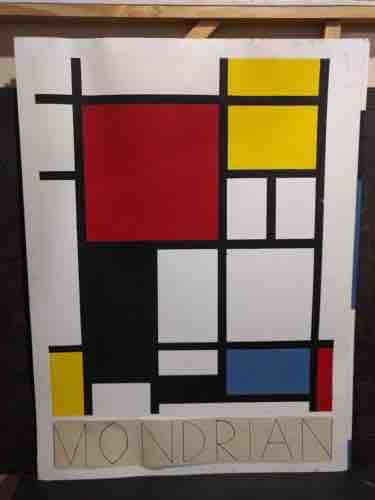
Mondrian. Untitled print

AI analysis below

AI appraisal

AI analysis & estimate

AI-Generated · Verify before acting

Everything below is generated by AI for informational purposes only. AI can make mistakes — the AI may misidentify items or misattribute them (artist, maker, brand, designer, origin, era). This is not an official valuation and should not be used for insurance, sale, tax, estate, legal, or lending purposes — or any decision requiring a certified appraisal. It is not an authoritative claim about any person, brand, or rights holder — do not share or rely on it as a factual statement about a third party. Always consult qualified professionals before making financial decisions.

Note

This analysis also relies on unverified notes provided by the user, which may be incomplete or inaccurate and could affect the result.

Read the full disclaimer

AI Identification

·Not independently authenticated·Verify before acting

Piet Mondrian Exhibition Poster / Neo-Plasticist Composition Print

Fine Art Prints and Posters

AI Estimated Value

·Not an official valuation·Verify before acting

$150-$300

As of June 30, 2026

AI Item Analysis

·AI can make mistakes·Verify before acting
This item is a large-format vertical print or exhibition poster featuring a geometric abstraction in the style of Piet Mondrian's Neo-Plasticism. The composition is characterized by a grid of bold, black asymmetrical lines of varying thickness that form rectangular blocks of primary colors—vibrant red, bright yellow, and cerulean blue—against a clean white background. Notably, the bottom of the piece features the artist's name 'MONDRIAN' in a stylized, uppercase linear font within a light-colored horizontal box. The physical construction appears to be ink on heavy paper or cardstock. Its condition shows visible signs of wear consistent with age or improper storage: there is significant rippling and buckling of the paper surface, particularly at the top and bottom edges, suggesting exposure to humidity. The bottom edge appears to have some surface delamination or a detached overlay where the name resides. Small dark spots and minor abrasions are visible on the white field. This style reflects the De Stijl movement common in the mid-20th century, likely produced as a gallery retrospective poster or high-quality decorative lithograph between 1960 and 1990. The craftsmanship shows clean color saturation and sharp line registration, typical of professional offset or screen printing.
AI Appraisal Report

·AI can make mistakes·Verify before acting
I have examined the digital representation of this exhibition poster featuring a Neo-Plasticist composition by Piet Mondrian. Based on the typography and color saturation, I identify this as a mid-to-late 20th-century exhibition print, likely produced for a European or American gallery retrospective between 1970 and 1990. While the graphic design is striking, several factors influence my valuation. The condition of this piece is a primary concern. Upon visual inspection, I noted significant undulation and cockling across the paper surface, likely caused by humidity and environmental fluctuations. The surface delamination near the 'MONDRIAN' text suggests the paper structure is compromised. In the market for decorative posters, condition is paramount; these defects significantly lower the price point compared to a mint-condition specimen. The market for 20th-century art posters remains steady, but value is driven by rarity and 'official' status (e.g., posters printed by Mourlot or the Stedelijk Museum). Without a visible printer's mark or gallery name, this is categorized as a high-quality decorative lithograph rather than a rare collectible. Limitations: My assessment is based solely on digital images. To provide a definitive valuation, I would require an in-person inspection to determine the exact printing technique (offset vs. silkscreen) and archival paper quality. Full authentication would require provenance documentation or a purchase receipt from the original gallery. Furthermore, removing the piece from its glass—if framed—would be necessary to check for acid burns on the reverse side or hidden tears that further affect structural integrity.

Get your items appraised

Instant estimates of your treasures with AI-powered appraisals

Browse More Appraisals