Period art picturing African American Women Cook. No signature Reminiscent of each to early mid 20th centuries advertising work
These notes were written by the person who submitted this item. Appraiser.AI has not verified them, and the AI's identification and estimate may rely on them.
AI Estimated Value
Not an official valuation
$30-75
AI estimate as of August 4, 2025 · verify with a professional before acting
AI-Generated · Verify before acting
Everything on this page is generated by AI for informational purposes only. AI can make mistakes — the AI may misidentify items or misattribute them (artist, maker, brand, designer, origin, era). This is not an official valuation and should not be used for insurance, sale, tax, estate, legal, or lending purposes — or any decision requiring a certified appraisal. It is not an authoritative claim about any person, brand, or rights holder — do not share or rely on it as a factual statement about a third party. Always consult qualified professionals before making financial decisions.
This analysis also relies on unverified notes provided by the user, which may be incomplete or inaccurate and could affect the result.
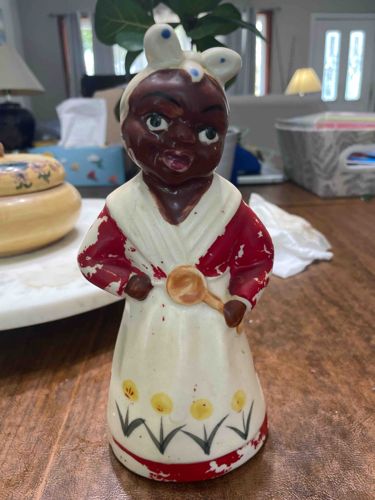
This item is a ceramic figurine, likely a salt and pepper shaker or a small jar/container, depicting a caricatured African American woman, commonly referred to as an 'Aunt Jemima' or 'Mammy' figure. The figure is made of ceramic with hand-painted details. It stands upright, portraying a woman in a cooking stance, holding a spoon. Her skin tone is a dark brown, with facial features including large eyes with discernible pupils (white around light blue/green), a vibrant red mouth with full lips, and a broad nose. She wears a white headwrap with two prominent, rounded protrusions on top, each adorned with a blue dot. Her attire consists of a white dress or apron with a red bodice or shawl-like element and red trim along the bottom hem. The red paint shows significant chipping and flaking, revealing the white ceramic underneath, particularly on the sleeves and the base. The white area of her dress features yellow floral or abstract designs with green stems, adding a decorative touch. Her hands are depicted in brown, holding a yellow or light brown spoon. There are no visible manufacturer's marks or signatures on the exterior. The craftsmanship appears to be folk art or mass-produced novelty item quality, typical of kitchenware or decorative pieces from the early to mid-20th century. The significant paint loss indicates considerable wear and age, consistent with an item of its estimated period. These types of figures were widely produced, often as advertising mascots or household items, and their style is reminiscent of early 20th-century advertising work featuring African American women in domestic roles.
AI Appraisal Report
Upon examining the provided images of this 'Aunt Jemima' style ceramic figurine/jar, I can offer a professional appraisal. The item appears to be made of ceramic with hand-painted details, consistent with its description. The significant paint loss, particularly on the red areas, confirms its age and use, aligning with the early to mid-20th century period it evokes. While the general style and wear patterns suggest authenticity for its type, definitive authentication without physical examination is limited. I would need to inspect for internal cracks, firing marks, and the specific texture of the ceramic and glazes to confirm its material integrity and age. The lack of manufacturer's marks is common for such novelty or folk art items, but an in-person inspection might reveal a faint, unreadable mark or previous repairs.
From a market perspective, these 'Aunt Jemima' figures are part of a complex collecting niche. While some collectors value them for their historical context as examples of American advertising and cultural memorabilia, there's also a strong sentiment regarding their problematic racial caricatures, which can suppress demand among mainstream collectors. Comparables on the market for similar mass-produced ceramic pieces in this condition typically range from low-end decorative items to moderately collectible Americana. The condition, with significant paint chipping, negatively impacts its aesthetic appeal and, consequently, its value. Rarity is not a significant factor here; these figures were mass-produced. Factors significantly impacting value include condition, the absence of distinguishing marks, and the controversial nature of the imagery, which limits its broad appeal. To fully authenticate, I would require a physical examination to test the ceramic composition, assess the types of paints used, and check for any hidden repairs or restorations. Provenance, if available (e.g., original purchase receipts, family history), would also be immensely valuable for historical context, if not monetary value.