AI estimate as of July 30, 2025 · verify with a professional before acting
AI-Generated · Verify before acting
Everything on this page is generated by AI for informational purposes only. AI can make mistakes — the AI may misidentify items or misattribute them (artist, maker, brand, designer, origin, era). This is not an official valuation and should not be used for insurance, sale, tax, estate, legal, or lending purposes — or any decision requiring a certified appraisal. It is not an authoritative claim about any person, brand, or rights holder — do not share or rely on it as a factual statement about a third party. Always consult qualified professionals before making financial decisions.
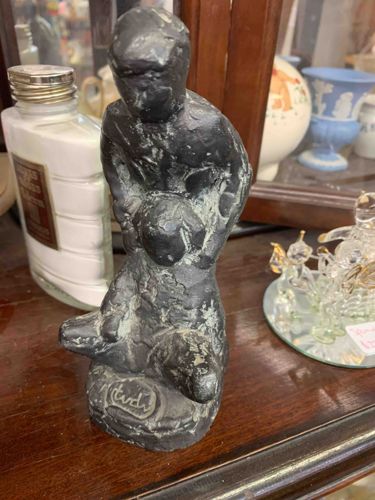
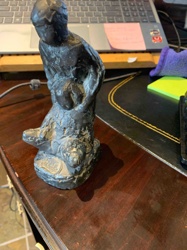
This is a small, darkly patinated cast sculpture, likely made from bronze or a similar metal alloy, possibly a cold-cast material given the slightly rough texture. The color is a deep, almost black, charcoal hue, with visible areas of lighter green or grayish-white patina, suggesting age, exposure, or a purposeful aged finish to mimic natural oxidation. The sculpture depicts a stylized human figure, likely female, in a seated or crouching position, holding or embracing a smaller, amorphous form which could represent a child or an object held closely. The forms are abstract and minimalist, with a focus on capturing the essence of the posture and interaction rather than realistic anatomical detail. The surface is uneven and textured, showing intentional roughness, which contributes to its artisanal or modernist aesthetic. There are no sharp edges; rather, the forms are rounded and organic. A notable feature is a distinct, carved or cast signature or mark visible on the base of the sculpture, which appears to read 'tudi' in a stylized, almost handwritten script. The base itself is integrated into the figure's lower body, creating a stable foundation. The overall condition appears to be good for its age, with the visible patina contributing to its character rather than indicating damage. The craftsmanship suggests a deliberate artistic choice to create a piece with significant textural interest and an emotionally resonant, albeit abstract, narrative.
AI Appraisal Report
Based on my visual examination of the provided images, this abstract figural sculpture, signed 'tudi', presents as a well-executed piece of modern or contemporary art. The work is likely a cast metal, possibly bronze or a cold-cast resin with a heavy bronze powder, finished with a dark, artificially aged patina. The stylized, emotive form of a mother-like figure embracing a smaller form is compelling, and the rough, tactile surface is a deliberate artistic choice that adds to its character. The signature 'tudi' is clearly visible and is the primary factor in determining potential value.
Without a clear artist attribution or provenance, the work must be appraised as a decorative piece by an unlisted or regional artist. The market for such sculptures is broad but generally modest. Comparables would be other signed but unidentified studio sculptures from the mid-to-late 20th century. Demand is present for interesting, well-crafted abstract works, but value is limited without a known artist biography and sales record. The primary positive value factors are the clear signature and the quality of the casting and finish. The main negative factor is the artist's obscurity.
It is crucial to note the limitations of this appraisal. Without physical inspection, I cannot definitively determine the material (solid bronze vs. cold-cast resin), which significantly impacts value. Full authentication would require in-person examination to assess weight and material properties. Furthermore, art historical research into the signature 'tudi', along with any provenance documentation (receipts, gallery history), would be essential to potentially identify the artist and establish a higher market value.