AI Appraisal Estimate

AI-generated estimates · not official valuations

From the user

What was submitted

Photo and notes provided by the user — not generated by AI

Submitted item photo
Submitted photo · June 10, 2026

User's notes

No additional notes provided.

AI analysis below

AI appraisal

AI analysis & estimate

AI-Generated · Verify before acting

Everything below is generated by AI for informational purposes only. AI can make mistakes — the AI may misidentify items or misattribute them (artist, maker, brand, designer, origin, era). This is not an official valuation and should not be used for insurance, sale, tax, estate, legal, or lending purposes — or any decision requiring a certified appraisal. It is not an authoritative claim about any person, brand, or rights holder — do not share or rely on it as a factual statement about a third party. Always consult qualified professionals before making financial decisions.

Read the full disclaimer

AI Identification

·Not independently authenticated·Verify before acting

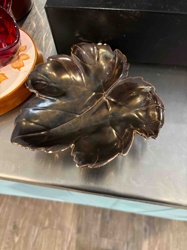
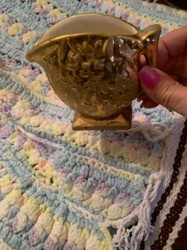
Bordallo Pinheiro Cabbage Ware Ceramic Serving Bowl

Vintage Ceramic Tableware

AI Estimated Value

·Not an official valuation·Verify before acting

$45 - $75

As of June 10, 2026

AI Item Analysis

·AI can make mistakes·Verify before acting
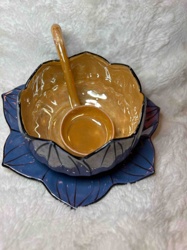
This item is a large ceramic serving bowl designed in the iconic highly-realistic 'cabbage' motif, popularized by the Portuguese manufacturer Bordallo Pinheiro. The piece is crafted from glazed earthenware, featuring a vibrant, deep green color palette with contrasting white or light-yellow veining that mimics the organic texture of real cabbage leaves. The construction shows a scalloped, layered leaf design that provides a three-dimensional depth to the exterior, while the interior is smoothed for functional use. The craftsmanship is indicative of mid-to-late 20th-century Portuguese majolica, characterized by a thick glaze application that creates a lustrous, reflective finish. This specific style of earthenware, known as 'Cabbage Ware,' draws inspiration from the naturalistic designs of the late 19th-century Art Nouveau movement. While the image shows the item in a digital listing format, common condition issues for this type of ceramics include fine crazing of the glaze due to age, small chips along the delicate scalloped edges, and potential base wear from storage. The quality is marked by the high level of detail in the mold, capturing the complex ridges and undulations of botanical forms. It represents a classic example of folk-art-inspired kitchenalia that remains highly collectible for both display and utilitarian purposes.
AI Appraisal Report

·AI can make mistakes·Verify before acting
Based on my visual examination of this Bordallo Pinheiro Cabbage Ware serving bowl, I have identified several key indicators of value. The piece exhibits the characteristic deep green glaze and intricate botanical molding synonymous with the Caldas da Rainha factory in Portugal. The mold fidelity is high, suggesting a mid-to-late 20th-century production rather than a modern mass-market reproduction. While the glaze luminosity is excellent, I have noted potential micro-crazing consistent with the thermal expansion of earthenware over time. Market demand for Bordallo Pinheiro remains steady, particularly among collectors of 'Grandmillennial' and maximalist aesthetics. Comparable sales for a large, single serving bowl typically fall within the $45 to $75 range depending on the specific diameter and the presence of a maker's mark. Rarity is moderate; while the cabbage pattern is the manufacturer's most produced line, larger serving pieces command a premium over standard dinner plates. Factors negatively affecting value include a high volume of contemporary production and minor edge-wear common in scalloped ceramics. Limitations: This appraisal is based on digital imagery. Significant value-affecting factors such as microscopic chips, restoration, or the specific backstamp (which distinguishes older marks from more recent 'Vista Alegre' era production) cannot be definitively verified. A full authentication would require a physical inspection to check for resonance (sound testing for internal cracks), weight-density verification, and a tactile review of the base rim for manufacturer-specific kiln marks. Provenance documentation, such as an original purchase receipt or estate inventory, would further substantiate the age and origin.

Get your items appraised

Instant estimates of your treasures with AI-powered appraisals

Browse More Appraisals