AI Appraisal Estimate

AI-generated estimates · not official valuations

From the user

What was submitted

Photo and notes provided by the user — not generated by AI

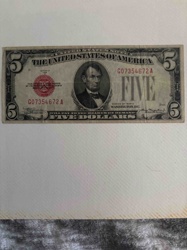
Submitted item photo
Submitted photo · June 22, 2026

User's notes

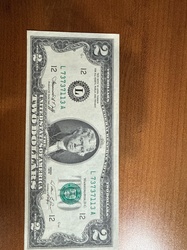
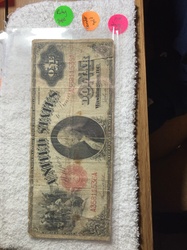
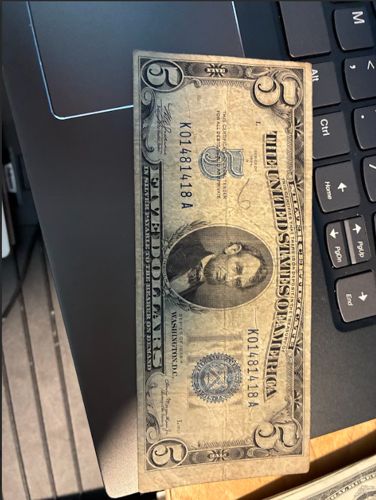
1934A, Blue seal, fancy serial and low serial 01481418, slightly missaligned

AI analysis below

AI appraisal

AI analysis & estimate

AI-Generated · Verify before acting

Everything below is generated by AI for informational purposes only. AI can make mistakes — the AI may misidentify items or misattribute them (artist, maker, brand, designer, origin, era). This is not an official valuation and should not be used for insurance, sale, tax, estate, legal, or lending purposes — or any decision requiring a certified appraisal. It is not an authoritative claim about any person, brand, or rights holder — do not share or rely on it as a factual statement about a third party. Always consult qualified professionals before making financial decisions.

Note

This analysis also relies on unverified notes provided by the user, which may be incomplete or inaccurate and could affect the result.

Read the full disclaimer

AI Identification

·Not independently authenticated·Verify before acting

Series 1934A $5 Silver Certificate (Blue Seal)

Numismatics / United States Paper Money

AI Estimated Value

·Not an official valuation·Verify before acting

$10.00 - $18.00

As of June 22, 2026

AI Item Analysis

·AI can make mistakes·Verify before acting
This is a Series 1934A United States $5 Silver Certificate, characterized by its distinct blue Treasury seal and matching blue serial numbers. The front of the note features the portrait of Abraham Lincoln centered in an oval frame. The serial number shown is K01481418A, which presents an interesting 'near-repeater' or 'trinary' sequence (consisting only of digits 0, 1, 4, 8) that collectors of fancy serial numbers may find appealing. The note is physically composed of a linen-cotton fiber paper, typical of mid-20th-century U.S. currency. It bears the signatures of Julian and Morgenthau, signifying its production period. Regarding condition, the bill exhibits significant circulatory wear, including heavy vertical and horizontal creasing, overall toning/soiling that has darkened the original paper color to a brownish hue, and rounded corners. There is a visible ink mark—a '6' or similar squiggle—handwritten in the right-center field, which is a common form of 'bank teller' graffiti. Additionally, the note demonstrates a slight misalignment error where the portrait and inner border are shifted slightly toward the top-right relative to the paper cut, though not severe enough to be classified as a major 'cutting error'. The margins appear tight, and the paper shows general softening from handling over several decades. Despite the heavy weathering, the blue ink of the seal and serial numbers remains clearly legible against the aged paper.
AI Appraisal Report

·AI can make mistakes·Verify before acting
I have examined the digital representation of this Series 1934A $5 Silver Certificate (Julian-Morgenthau). Physically, the note is in 'Very Good' to 'Fine' condition, heavily impacted by circulation. The presence of secondary ink marks (graffiti), deep vertical/horizontal creasing, and significant 'soiling' or toning—likely from skin oils and environmental exposure—reduces its appeal to high-grade collectors. While you noted a 'fancy serial' and 'misalignment,' these do not significantly elevate the value in this case. The serial K01481418A is a 'trinary' note (using four digits: 0, 1, 4, 8), which carries a negligible premium compared to 'true' fancy numbers like radars or solid repeats. The misalignment is within the standard USBEP tolerance for the era and does not qualify as a numismatic 'error.' Market demand for this series is steady but primarily driven by condition; millions were printed, making circulated examples very common. Current comparables for circulated 1934A fives consistently sell in the $10–$15 range. Authenticity is likely based on the correct 'blue' saturation of the seal and fiber structure, but I must state that image-based appraisals are limited. A physical inspection is required to confirm the paper's 'snap' and ensure the toning isn't masking a chemical wash or counterfeit substrate. To fully authenticate this item and potentially increase its liquid value, I recommend an in-person viewing or submission to a third-party grading service like PMG or PCGS, though the cost of grading may exceed the note's current market value.

Get your items appraised

Instant estimates of your treasures with AI-powered appraisals

Browse More Appraisals