AI Appraisal Estimate

AI-generated estimates · not official valuations

From the user

What was submitted

Photo and notes provided by the user — not generated by AI

Submitted item photo
Submitted photo · June 15, 2026

User's notes

Tapestry

AI analysis below

AI appraisal

AI analysis & estimate

AI-Generated · Verify before acting

Everything below is generated by AI for informational purposes only. AI can make mistakes — the AI may misidentify items or misattribute them (artist, maker, brand, designer, origin, era). This is not an official valuation and should not be used for insurance, sale, tax, estate, legal, or lending purposes — or any decision requiring a certified appraisal. It is not an authoritative claim about any person, brand, or rights holder — do not share or rely on it as a factual statement about a third party. Always consult qualified professionals before making financial decisions.

Note

This analysis also relies on unverified notes provided by the user, which may be incomplete or inaccurate and could affect the result.

Read the full disclaimer

AI Identification

·Not independently authenticated·Verify before acting

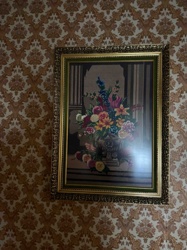
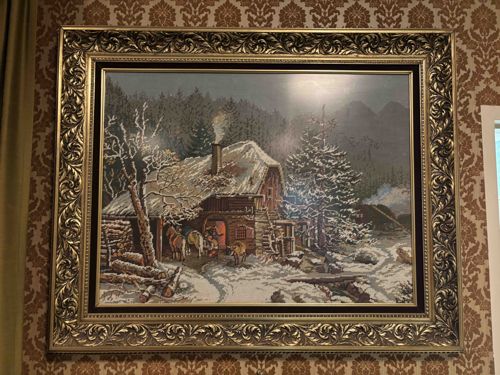
Framed Jacquard Winter Scene Tapestry

Decorative Arts / Textiles

AI Estimated Value

·Not an official valuation·Verify before acting

$450 - $700

As of June 15, 2026

AI Item Analysis

·AI can make mistakes·Verify before acting
This item is a large-format textile tapestry, likely a machine-woven Jacquard piece, depicting a rustic European winter landscape. The scene features a central timber-framed cottage or stable with snow-laden roofs, smoke rising from a chimney, and figures gathered near an open doorway alongside horses. The composition is set against a dense coniferous forest and mountainous background under a overcast sky. The color palette is dominated by muted earthy tones, including browns, greens, and grays, contrasted with the stark white of the snow. The textile appears to be made from a blend of cotton or synthetic fibers, common for mid-to-late 20th-century decorative wall hangings. It is housed in a prominent, ornate gilt-finished frame featuring heavy acanthus leaf scrollwork and a dark inner fillet that provides a classic, traditional aesthetic. The craftsmanship suggests a mass-produced but high-quality decorative piece, popular in the 1960s through the 1980s. The condition appears well-preserved with no visible fraying or significant fading of the threads, though the frame shows some standard age-related patina and minor dust accumulation in the crevices of the molding. The scale of the frame relative to the wall indicates a substantial size, typical for a formal living or dining room statement piece.
AI Appraisal Report

·AI can make mistakes·Verify before acting
I have conducted a visual analysis of this large-format Jacquard winter scene tapestry. The piece exhibits the classic hallmarks of mid-to-late 20th-century European machine-weaving, likely produced in Belgium or France, which were hubs for high-quality decorative wall hangings during this era. The textile remains in very good condition with no visible pulled threads or significant UV-related fading. The ornate gilt-finished frame is a significant value driver here; it appears structurally sound with minor age-appropriate patina, acting as a substantial 'statement' housing that elevates the textile from a simple hanging to a formal piece of art. The market for mid-century Jacquard tapestries remains steady but is primarily driven by interior design trends rather than collector rarity. While these pieces were mass-produced, findinfg one in this specific scale and well-preserved framing is relatively common but still desirable for traditional residential decor. Comparables in antique malls and secondary markets typically fluctuate based on the quality of the frame and the complexity of the weave. A significant limitation of this appraisal is the inability to inspect the back of the textile for original manufacturer labels or to determine the exact fiber content (cotton vs. synthetic) through a burn test. To provide a definitive authentication and valuation, an in-person inspection would be required to verify the frame's material (wood vs. resin) and to check for hidden pest damage or dry rot within the textile fibers. No specific provenance was provided, which suggests the value is purely decorative rather than historical.

Get your items appraised

Instant estimates of your treasures with AI-powered appraisals

Browse More Appraisals