AI estimate as of December 11, 2025 · verify with a professional before acting
AI-Generated · Verify before acting
Everything on this page is generated by AI for informational purposes only. AI can make mistakes — the AI may misidentify items or misattribute them (artist, maker, brand, designer, origin, era). This is not an official valuation and should not be used for insurance, sale, tax, estate, legal, or lending purposes — or any decision requiring a certified appraisal. It is not an authoritative claim about any person, brand, or rights holder — do not share or rely on it as a factual statement about a third party. Always consult qualified professionals before making financial decisions.
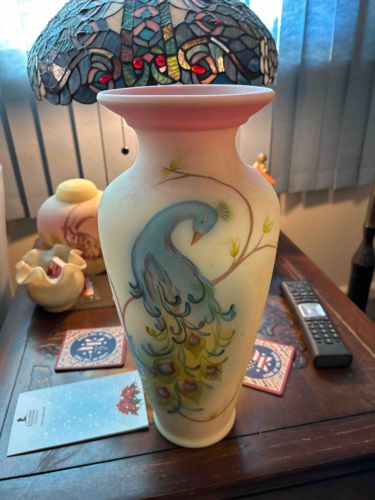
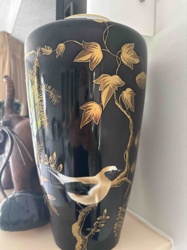
This item is a decorative vase crafted from satin glass, characterized by its soft, matte, and slightly iridescent finish. The primary color of the vase body is a creamy off-white or very pale yellow, providing a gentle backdrop for the painted decoration. The rim, however, features a distinct contrast, being a lovely, delicate shade of pink, which gently fades into the lighter body color, suggesting a cased glass construction or a careful application of color to the lip. The vase has a classic, elongated ovoid shape that tapers slightly towards the foot and a flared, rolled rim. The most prominent feature is the hand-painted depiction of a peacock, elegantly rendered with its head gracefully turned downwards. The peacock's body is colored in shades of blue-gray, while its elaborate tail feathers burst forth in vibrant hues of blues, greens, and yellows, with hints of red-brown or maroon outlining some of the 'eyes' of the feathers. Delicate green and brown branches or stems with small yellow leaves are painted around the peacock, conveying a natural setting. The painting style appears to be freehand, possibly achieved through enameling or cold painting, showcasing a degree of artistic skill. The surface texture of the satin glass suggests a smooth, soft touch, often achieved through an acid etch or sandblasting process. There are no obvious signs of significant damage such as cracks or chips visible from the given image, and the paintwork appears largely intact, though a closer inspection would be needed to ascertain any potential wear or abrasions to the painted details. The base of the vase is not clearly visible, so any maker's marks or signatures cannot be discerned. Given the style, particularly the satin glass and hand-painted decor, it likely dates to the late 19th to early 20th century (Art Nouveau/Art Deco transitional period), or could be a later revival piece from the mid-20th century, consistent with decorative glass trends. The craftsmanship suggests a moderately good quality item, intended for decorative display.
AI Appraisal Report
Based on my visual examination of the Hand-Painted Satin Glass Peacock Vase, I assess its condition to be quite good, with no overt cracks or chips visible on the satin glass body. The hand-painted peacock and floral motifs appear largely intact, though a precise evaluation of paint wear, especially enameling, is impossible from an image alone. The satin glass finish and hand-painted decoration strongly suggest a late 19th to early 20th-century origin, fitting within the Art Nouveau aesthetic, or potentially a mid-20th-century revival piece. Authenticity of period is difficult to definitively confirm without physical inspection; specific details in the glass composition, painting technique, and presence of any manufacturer's marks (e.g., acid stamps or pontil marks) would be crucial for precise dating and attribution.
The market for decorative satin glass, particularly with attractive hand-painted scenes, remains steady. Comparable items of this quality and artistic merit, especially those featuring popular motifs like peacocks, typically fetch values in the mid-hundreds. Demand for these pieces is driven by collectors of antique art glass and those seeking period decorative items. While not exceedingly rare, a well-preserved example with appealing artistry is always desirable. Factors impacting value positively include the intricate, well-executed artwork and the good apparent condition. Potential negative impacts could be significant paint loss or hidden damage not visible in the photo. An in-person examination would be required to verify the exact painting technique (e.g., enameled vs. cold painted), assess the texture of the satin glass, check for abrasions, and locate any manufacturer's marks that would confirm origin and age, thus solidifying authenticity and value.