AI Appraisal Estimate

AI-generated estimates · not official valuations

From the user

What was submitted

Photo and notes provided by the user — not generated by AI

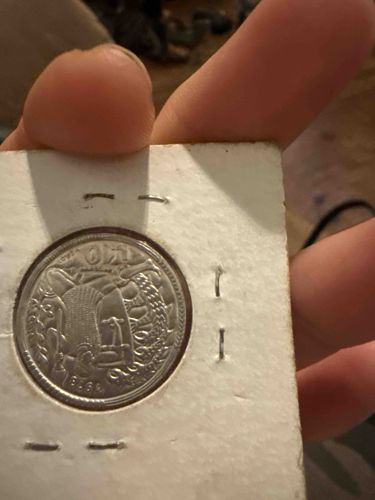
Submitted item photo
Submitted photo · June 12, 2026

User's notes

No additional notes provided.

AI analysis below

AI appraisal

AI analysis & estimate

AI-Generated · Verify before acting

Everything below is generated by AI for informational purposes only. AI can make mistakes — the AI may misidentify items or misattribute them (artist, maker, brand, designer, origin, era). This is not an official valuation and should not be used for insurance, sale, tax, estate, legal, or lending purposes — or any decision requiring a certified appraisal. It is not an authoritative claim about any person, brand, or rights holder — do not share or rely on it as a factual statement about a third party. Always consult qualified professionals before making financial decisions.

Read the full disclaimer

AI Identification

·Not independently authenticated·Verify before acting

Saudi Arabia 10 Halalas Coin, 1976 (1396 AH)

Coin

AI Estimated Value

·Not an official valuation·Verify before acting

$0.50 - $2.00

As of June 12, 2026

AI Item Analysis

·AI can make mistakes·Verify before acting
This item is a 10 Halalas coin from Saudi Arabia, dated 1976, which corresponds to 1396 AH in the Islamic calendar. The coin is presented in a white cardboard '2x2' coin holder, which is a common method for numismatists to store and display individual coins, stapled around the edges to secure the coin within a transparent window. The coin itself appears to be made of a silver-colored metal, likely a copper-nickel alloy or stainless steel, given the denomination and era. The visible side (likely the obverse) features highly stylized Arabic calligraphy at the top, indicating the denomination '10 Halalas'. Below this, there is an intricate design that includes palm trees and possibly crossed swords or similar national emblems, which are characteristic of Saudi Arabian coinage. The Islamic date '1396' is clearly discernible near the bottom, with '1976' below it, indicating the Gregorian calendar year. The craftsmanship appears to be typical of mass-produced coinage, exhibiting clear lines and relief, though the exact condition (e.g., presence of luster, detail of fine lines) cannot be fully assessed from the image. There are no major visible condition issues such as heavy scratches, dents, or significant discoloration on the coin itself from this view, suggesting it may be in a circulated but relatively well-preserved state. The cardboard holder shows minor signs of handling and the staples are intact, serving their purpose of protecting the coin.

AI Appraisal Report

·AI can make mistakes·Verify before acting
I have examined the provided image of this Saudi Arabia 10 Halalas coin, dated 1976 (1396 AH). Visually, the coin appears authentic, consistent with known examples of this denomination and year. The Arabic calligraphy, design featuring palm trees and crossed swords, and dual dating (1396 AH / 1976 AD) are all characteristic elements. The coin is housed in a standard 2x2 cardboard holder, which is suitable for storage. Based on the image, the coin's condition appears to be Extra Fine (XF) to About Uncirculated (AU). I observe clear lines and good relief in the design, with minimal wear discernible. There are no significant scratches, dents, or heavy discoloration that would substantially detract from its value. However, this is a very common coin in numismatic circles. Produced in large quantities, its rarity is extremely low. Market conditions for modern Saudi Arabian coinage of this denomination are generally soft, reflecting its commonality. Demand is primarily from beginner collectors or those completing world coin sets. Factors impacting value for such a common coin mostly revolve around its grade. While this example is in good condition, even uncirculated examples typically command only a few dollars. Therefore, its intrinsic value as a collectible is modest. It is crucial to note that detailed authenticity verification and a precise grade assessment would require an in-person examination. This would allow for inspection of edge details, full luster assessment, and examination for any potential alterations or environmental damage not visible in the image. Although highly unlikely for such a common and low-value coin, a physical inspection would also rule out counterfeiting, and provide a definitive assessment of its surface characteristics under magnification.

Get your items appraised

Instant estimates of your treasures with AI-powered appraisals

Browse More Appraisals