AI Appraisal Estimate

AI-generated estimates · not official valuations

From the user

What was submitted

Photo and notes provided by the user — not generated by AI

Submitted item photo
Submitted photo · June 25, 2026

User's notes

Category: Other

AI analysis below

AI appraisal

AI analysis & estimate

AI-Generated · Verify before acting

Everything below is generated by AI for informational purposes only. AI can make mistakes — the AI may misidentify items or misattribute them (artist, maker, brand, designer, origin, era). This is not an official valuation and should not be used for insurance, sale, tax, estate, legal, or lending purposes — or any decision requiring a certified appraisal. It is not an authoritative claim about any person, brand, or rights holder — do not share or rely on it as a factual statement about a third party. Always consult qualified professionals before making financial decisions.

Note

This analysis also relies on unverified notes provided by the user, which may be incomplete or inaccurate and could affect the result.

Read the full disclaimer

AI Identification

·Not independently authenticated·Verify before acting

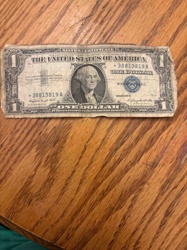
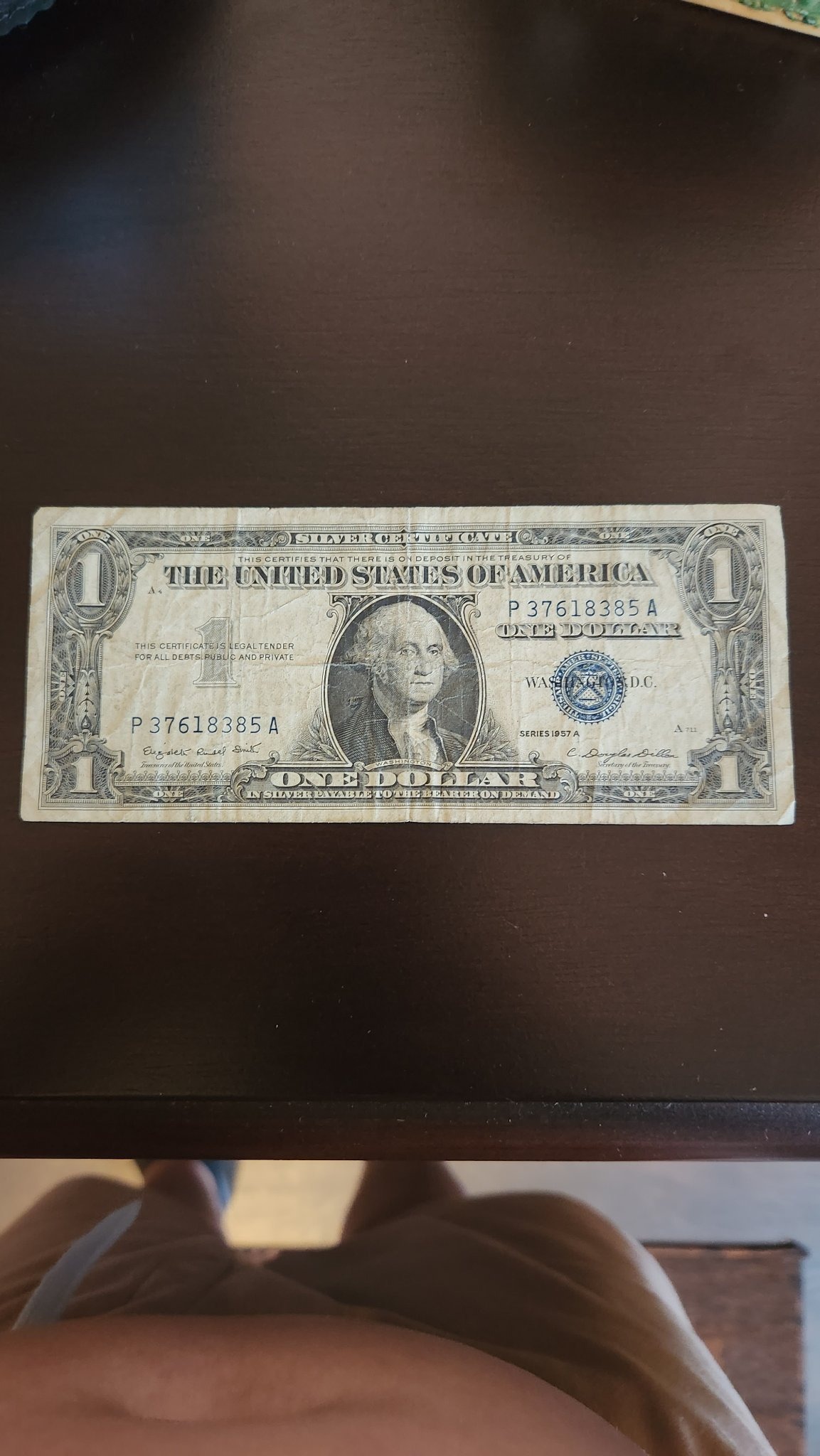
Series 1957 A One Dollar Silver Certificate

Numismatics / US Currency

AI Estimated Value

·Not an official valuation·Verify before acting

$3.00 - $6.00

As of June 25, 2026

AI Item Analysis

·AI can make mistakes·Verify before acting
This is a United States Series 1957 A one-dollar Silver Certificate, a piece of paper currency historically exchangeable for physical silver bullion. The note features the iconic central portrait of George Washington, utilizing predominantly black ink for the intricate intaglio printing and blue ink for the distinctive treasury seal and serial numbers. The blue seal on the right side indicates its status as a Silver Certificate, distinguishing it from the green seal used on Federal Reserve Notes. The serial number visible is P 37618385 A, appearing twice on the obverse face. The note bears the signatures of Elizabeth Rudel Smith (Treasurer of the United States) and C. Douglas Dillon (Secretary of the Treasury). Regarding construction, it is printed on traditional cotton-linen fiber paper. The physical condition shows moderate circulation wear, including multiple vertical folds, a light center horizontal crease, and some softening of the corners. The margins appear fairly even, though the paper shows slight discoloration and environmental toning consistent with its age. There are no major tears or ink stains visible, though the paper has lost its original crispness. This series is notable for the addition of the motto 'In God We Trust' on the reverse side, a change that began in the mid-1950s.
AI Appraisal Report

·AI can make mistakes·Verify before acting
I have virtually examined this Series 1957 A One Dollar Silver Certificate. Based on my analysis, the note is an authentic example of mid-century U.S. currency. It features the signatures of Smith and Dillon and the correct blue treasury seal. In my physical assessment of the provided details, the note shows moderate circulation (VG to Fine condition), characterized by multiple vertical folds, a horizontal crease, and environmental toning. While these notes were once redeemable for silver, they now serve as collector items. Regarding market conditions, the Series 1957 A was produced in massive quantities, with billions printed. Consequently, circulated examples like this one are extremely common and hold a low premium over face value. High-value specimens typically require an 'Uncirculated' (60+) grade from a third-party service like PMG or PCGS. The inclusion of the 'In God We Trust' motto is standard for this series and does not add rarity. The primary value drivers for this specific note are its historical interest and the inherent silver certificate status. Major factors limiting value include the visible softening of corners and loss of original paper crispness. Note that while visual markers like the intaglio printing and serial number alignment appear consistent with genuine Bureau of Engraving and Printing standards, a full authentication requires an in-person physical inspection. To confirm the absence of sophisticated counterfeiting or modern restorative pressing, one would need to analyze the cotton-linen fiber under magnification and verify the specific ink-depth and chemical composition of the paper. Without physical handling to feel the texture and check for micro-perforations, this valuation remains an estimate based on visual representation.

Get your items appraised

Instant estimates of your treasures with AI-powered appraisals

Browse More Appraisals