AI Appraisal Estimate

AI-generated estimates · not official valuations

From the user

What was submitted

Photo and notes provided by the user — not generated by AI

Submitted item photo
Submitted photo · June 12, 2026

User's notes

Maid in the Philippines

AI analysis below

AI appraisal

AI analysis & estimate

AI-Generated · Verify before acting

Everything below is generated by AI for informational purposes only. AI can make mistakes — the AI may misidentify items or misattribute them (artist, maker, brand, designer, origin, era). This is not an official valuation and should not be used for insurance, sale, tax, estate, legal, or lending purposes — or any decision requiring a certified appraisal. It is not an authoritative claim about any person, brand, or rights holder — do not share or rely on it as a factual statement about a third party. Always consult qualified professionals before making financial decisions.

Note

This analysis also relies on unverified notes provided by the user, which may be incomplete or inaccurate and could affect the result.

Read the full disclaimer

AI Identification

·Not independently authenticated·Verify before acting

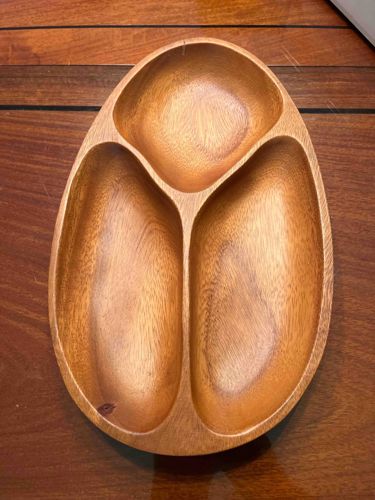
Mid-Century Monkey Pod Wood 3-Compartment Divided Serving Tray

Vintage Tableware / Kitchenware

AI Estimated Value

·Not an official valuation·Verify before acting

$45.00 - $65.00

As of June 12, 2026

AI Item Analysis

·AI can make mistakes·Verify before acting
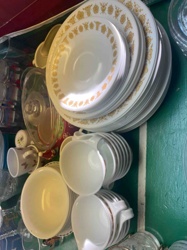
This is a vintage three-section divided serving tray carved from monkey pod wood, a material traditionally utilized in the Philippines for high-quality souvenir and household wares. The tray features a distinctive ovoid or egg-shaped silhouette, measuring approximately 10 to 12 inches in length. It is hand-carved with three deep wells separated by integrated wooden dividers in a Y-configuration, perfectly suited for serving nuts, candies, or hors d'oeuvres. The wood displays a warm, golden-brown hue with a vibrant, interlocking grain pattern characteristic of the rain tree (Albizia saman). The craftsmanship exhibits smooth, rounded contours and a semi-matte finish that highlights the natural chatoyancy of the timber. Notable condition indicators include light surface scratches on the interior wells, typical of moderate utility, and a small dark knot or inclusion visible in the lower-left compartment. No major structural cracks or repairs are evident from the top view. Based on the Mid-Century Modern style and manufacturing context, this piece likely dates to the 1960s or 1970s, a peak period for Philippine wood export craft. The overall quality is excellent, showing uniform wall thickness and expert hand-finishing.
AI Appraisal Report

·AI can make mistakes·Verify before acting
I have completed a visual assessment of this mid-century three-compartment serving tray. Carved from solid monkey pod wood (Albizia saman) and originating from the Philippines, this piece is a classic example of the high-quality woodcraft produced for the export market during the 1960s and 1970s. The interlocking grain and rich golden-brown chatoyancy are hallmarks of the species, and the hand-carved Y-divider configuration displays excellent wall uniformity. Regarding condition, the 'Made in the Philippines' designation is consistent with period branding. I observe minor surface scuffing and a natural knot inclusion in the lower-left well; however, the absence of radial cracks or warping—common issues with tropical hardwoods in drier climates—is a positive indicator of preservation. The market for Mid-Century Modern kitchenware remains robust, though generic monkey pod items are abundant, keeping prices accessible. Comparables for signed or expertly carved Philippine trays of this size typically sell within the $40 to $70 range at boutique vintage retailers. Value is driven by the organic, sculptural aesthetic favored in MCM decor. Please note that this appraisal is based on photographic evidence. A tactile inspection is necessary to verify the integrity of the finish and ensure no wood filler has been used to mask structural fissures. Full authentication would benefit from the original foil manufacturer's sticker, though the 'Made in the Philippines' imprint is a strong secondary indicator of authenticity.

Get your items appraised

Instant estimates of your treasures with AI-powered appraisals

Browse More Appraisals