AI Appraisal Estimate

AI-generated estimates · not official valuations

From the user

What was submitted

Photo and notes provided by the user — not generated by AI

Submitted item photo
Submitted photo · June 23, 2026

User's notes

No additional notes provided.

AI analysis below

AI appraisal

AI analysis & estimate

AI-Generated · Verify before acting

Everything below is generated by AI for informational purposes only. AI can make mistakes — the AI may misidentify items or misattribute them (artist, maker, brand, designer, origin, era). This is not an official valuation and should not be used for insurance, sale, tax, estate, legal, or lending purposes — or any decision requiring a certified appraisal. It is not an authoritative claim about any person, brand, or rights holder — do not share or rely on it as a factual statement about a third party. Always consult qualified professionals before making financial decisions.

Read the full disclaimer

AI Identification

·Not independently authenticated·Verify before acting

Vintage Majolica Deviled Egg Platter

Vintage Tableware / Kitchenware

AI Estimated Value

·Not an official valuation·Verify before acting

$45.00 - $65.00

As of June 23, 2026

AI Item Analysis

·AI can make mistakes·Verify before acting
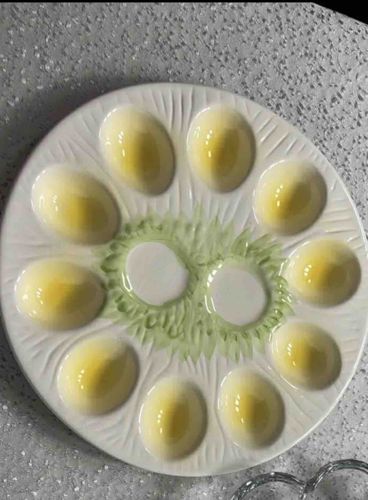
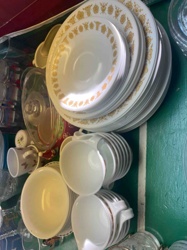
This is a circular, ceramic egg-serving platter, commonly referred to as a deviled egg plate. The item is crafted from glazed earthenware or majolica with a molded, relief-texture design. The platter features ten perimeter indentations specifically shaped to hold halved hard-boiled eggs. These egg wells are decorated with yellowish-gold centers, creating a trompe-l'oeil effect that mimics the look of egg yolks. The center of the plate features two additional larger indentations surrounded by a green, grass-like textured motif, likely intended for salt, pepper, or garnish. The overall background of the plate is off-white with fine, radiating vertical striations that add a feathered or petal-like texture to the surface. The glaze appears bright and reflective, indicating it is likely from the mid-20th century (circa 1950s-1970s). In terms of condition, the item shows a high-gloss finish with no immediate visible chips or cracks from this angle, though fine crazing (minute surface cracks in the glaze) is often typical for this style and age. There are no visible maker's marks on the face, though such pieces are frequently associated with manufacturers like Shafford or various Japanese ceramic exporters of the postwar era. The craftsmanship is characterized by mass-produced kitsch appeal popular in mid-century American kitchens.
AI Appraisal Report

·AI can make mistakes·Verify before acting
I have carefully examined the provided images of this vintage ceramic egg-serving platter. The piece is a classic example of mid-century majolica-style kitchenware, most likely produced in Japan during the 1950s or 1960s for the American export market. The craftsmanship features the era's signature molded relief and vibrant, high-gloss glazes. Based on visual inspection, the item appears to be in very good vintage condition; the 'yolk' yellow and 'grass' green pigments remain saturated, and the glaze retains a high reflectivity. While I observe minor surface wear consistent with age, there are no structural fractures visible from this angle. The market for mid-century kitsch remains stable, though this specific design is relatively common compared to more sought-after 'leaf' or 'animal' majolica patterns. Similar pieces by manufacturers like Shafford or Napco frequently appear in the $40 to $70 range. Its value is driven primarily by its functional utility for collectors of retro tableware rather than rarity. A significant limitation of this remote appraisal is the inability to inspect the underside for maker’s marks or 'Japan' ink stamps, which would definitively confirm the manufacturer. Furthermore, visual analysis cannot detect micro-chips hidden in the textured 'grass' areas or internal 'tink' sounds that indicate deep-seated structural stress. For a full authentication and valuation, a physical inspection is required to check for professional restorations and to verify the absence of heavy lead leaching, which is common in some glazes of this period. Provenance documentation, such as the original box or a dated sales receipt, would also provide a more precise historical context.

Get your items appraised

Instant estimates of your treasures with AI-powered appraisals

Browse More Appraisals