AI estimate as of December 4, 2025 · verify with a professional before acting
AI-Generated · Verify before acting
Everything on this page is generated by AI for informational purposes only. AI can make mistakes — the AI may misidentify items or misattribute them (artist, maker, brand, designer, origin, era). This is not an official valuation and should not be used for insurance, sale, tax, estate, legal, or lending purposes — or any decision requiring a certified appraisal. It is not an authoritative claim about any person, brand, or rights holder — do not share or rely on it as a factual statement about a third party. Always consult qualified professionals before making financial decisions.
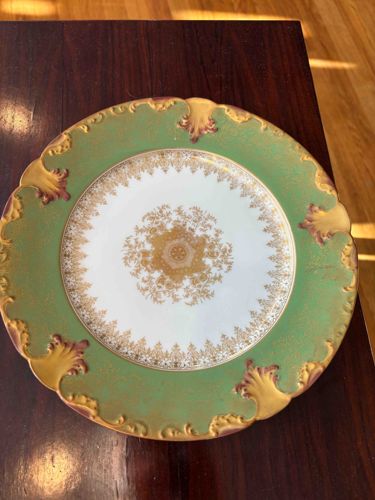
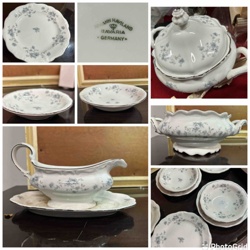
This exquisite dinner plate features a prominent central well of pristine white porcelain, encircled by an elaborate field of rich, deep green. The plate's design is characterized by a high degree of ornamentation, particularly through its use of extensive gilding. The central white section is adorned with a complex, circular medallion pattern in gold, featuring rococo-inspired scrolls, floral motifs, and possibly a central rosette or starburst. This central motif is further framed by a dense border of similar gilded scrollwork and delicate foliage, creating a luxurious and intricate focal point. The outer green rim is broad and deeply colored, exhibiting a slightly mottled or textured appearance that adds depth to the surface. This green band is punctuated by regularly spaced, raised gilded cartouches or escutcheons with stylized acanthus leaf forms, rendered in a lustrous gold with subtle red-brown accents in their recesses, giving a faux-patina or antique effect. The edge of the plate features a scalloped or undulating shape, each peak and trough highlighted by additional gilding that follows the contour, enhancing its decorative quality. The materials are evident as ceramic, likely fine porcelain, given the smooth white surface and intricate decoration. While no manufacturer's marks are visible, the craftsmanship suggests a European origin, possibly late 19th to early 20th century, consistent with Belle Époque or Art Nouveau period preferences for highly decorated tableware. The overall condition appears good from the image, with gilding intact, though closer inspection would be needed to detect any chips, cracks, or significant wear to the transferred decoration or hand-painted elements. The meticulous detailing and multi-layered decoration indicate a piece of high-quality production, likely intended for formal dining.
AI Appraisal Report
Based on my visual examination of the provided image, this Gilded Green and White Dinner Plate presents as a high-quality decorative piece, likely European, from the late 19th to early 20th century, consistent with Belle Époque or early Art Nouveau styles. The elaborate gilding, intricate rococo-inspired motifs, and multi-layered decoration suggest fine porcelain and skilled craftsmanship. The overall condition appears good, with the gilding seemingly intact, which is a significant factor in value for such ornate items. There are no visible chips, cracks, or significant wear to the decorations from the image provided.
Market conditions for highly decorative antique dinnerware can be variable. While there is a steady demand for unique, aesthetically pleasing pieces, full dinner services fetch higher values than individual plates unless the plate is exceptionally rare or historically significant. Comparables would include similar pieces from noted European porcelain manufacturers like Limoges, Minton, or Dresden, especially those with extensive hand-gilded elements. The lack of visible manufacturer's marks limits direct comparison to specific makers, which can impact value. Rarity is difficult to ascertain without seeing other pieces from a potential service or knowing the production numbers. The detailed ornamentation and apparent quality contribute positively to demand.
Factors significantly impacting value include the intricate hand-painting versus transferware (which is difficult to discern definitively from an image), the actual material (fine bone china vs. hard-paste porcelain), and the extent of wear to the delicate gilding. My primary limitation in authenticity verification from images alone is the inability to physically inspect the piece. For full authentication and a more precise valuation, an in-person examination would be needed to assess the true condition, detect hairline cracks or repairs not visible in photos, and identify manufacturer's marks. Microscopic analysis could differentiate hand-painting from transfer decals and assess material composition. Provenance documentation, if available, would significantly enhance value by confirming its history and origin.