AI estimate as of December 4, 2025 · verify with a professional before acting
AI-Generated · Verify before acting
Everything on this page is generated by AI for informational purposes only. AI can make mistakes — the AI may misidentify items or misattribute them (artist, maker, brand, designer, origin, era). This is not an official valuation and should not be used for insurance, sale, tax, estate, legal, or lending purposes — or any decision requiring a certified appraisal. It is not an authoritative claim about any person, brand, or rights holder — do not share or rely on it as a factual statement about a third party. Always consult qualified professionals before making financial decisions.
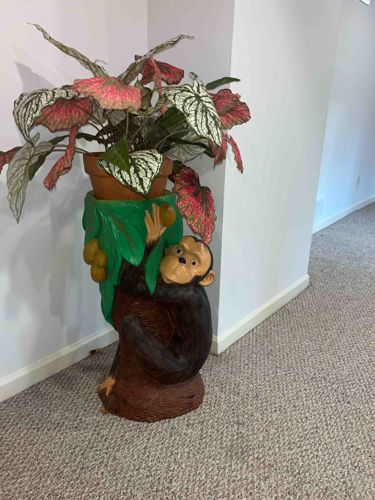
This item is a decorative plant stand designed in the form of a monkey climbing a tree trunk, topped with a terracotta-colored pot containing artificial or living foliage. The plant stand appears to be made from a composite material, likely resin or a similar molded plastic, given its smooth finish and painted details. The monkey itself is depicted in a playful pose, with a light brown face, hands, and feet, contrasting with its dark brown fur. It is shown clinging to a tree trunk element, which is also dark brown with visible texture simulating bark. Attached to the trunk, above the monkey's head, are green leaves and several yellow or orange round 'fruits' or nuts, adding to the tropical or jungle theme. The overall height appears to be approximately 2 to 3 feet, supporting a standard-sized planter. The colors are vibrant and somewhat cartoonish, indicative of a decorative, whimsical style rather than a realistic rendering. There are no obvious signs of significant damage like cracks or chips visible from the image, but some minor wear to the paint or scuffs might be present upon closer inspection. The potted plant features large, variegated leaves with patterns of pink, red, white, and dark green, possibly a Caladium or similar ornamental plant, enhancing the jungle aesthetic. The base of the stand is integrated with the tree trunk, providing stability. This piece likely dates from the late 20th century to early 21st century, consistent with mass-produced decorative items for home and garden. Its quality indicates it is a novelty accent piece rather than a fine art sculpture, but it serves its aesthetic and functional purpose well.
AI Appraisal Report
Based on my visual examination of the provided image, this Monkey Plant Stand with Decorative Foliage appears to be in good, used condition. The composite material, likely resin, suggests a durable but mass-produced item. While no significant damage like cracks or chips are evident, I would need an in-person inspection to confirm the absence of minor scuffs, paint loss, or repairs that are common with decorative garden items of this type. Visual examination alone limits my ability to definitively assess the precise material composition, internal integrity, and stability.
From a market perspective, comparable decorative plant stands or garden statues made of resin, particularly those with a whimsical or novelty theme, typically retail in the $50-$150 range when new. Used items typically fetch significantly less, depending on condition and availability. Demand for such items is generally steady within the home and garden decor market, but they are not considered rare or highly collectible. Their value is primarily functional and decorative rather than intrinsic or artistic.
Factors impacting value include its good apparent condition, quirky aesthetic, and functionality. However, its mass-produced nature, likely composite material, and lack of maker's marks or artistic significance prevent it from achieving a higher valuation. Rarity is low, as similar novelty items are readily available.
For full authentication of material and to rule out repairs or hidden defects, a physical examination, including tactile assessment and potentially chemical testing, would be required. Provenance documentation could provide insights into its manufacturing origin or designer, but for an item of this type, it's unlikely to significantly impact value. My appraisal reflects its current market value as a decorative, used accent piece, assuming the good condition observed in the image.