AI Appraisal Estimate

AI-generated estimates · not official valuations

From the user

What was submitted

Photo and notes provided by the user — not generated by AI

Submitted item photo
Submitted photo · June 17, 2026

User's notes

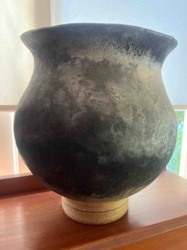
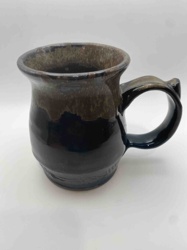
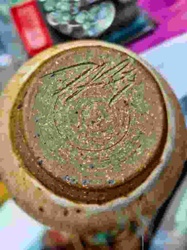
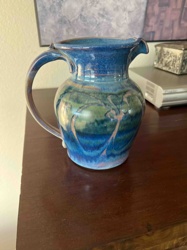
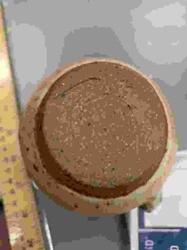
This is Salt Marsh Pottery from Dartmouth MA signed 1980

AI analysis below

AI appraisal

AI analysis & estimate

AI-Generated · Verify before acting

Everything below is generated by AI for informational purposes only. AI can make mistakes — the AI may misidentify items or misattribute them (artist, maker, brand, designer, origin, era). This is not an official valuation and should not be used for insurance, sale, tax, estate, legal, or lending purposes — or any decision requiring a certified appraisal. It is not an authoritative claim about any person, brand, or rights holder — do not share or rely on it as a factual statement about a third party. Always consult qualified professionals before making financial decisions.

Note

This analysis also relies on unverified notes provided by the user, which may be incomplete or inaccurate and could affect the result.

Read the full disclaimer

AI Identification

·Not independently authenticated·Verify before acting

Salt Marsh Pottery Flounder Platter (1980)

Studio Pottery / Collectible Ceramics

AI Estimated Value

·Not an official valuation·Verify before acting

$150 - $225

As of June 17, 2026

AI Item Analysis

·AI can make mistakes·Verify before acting
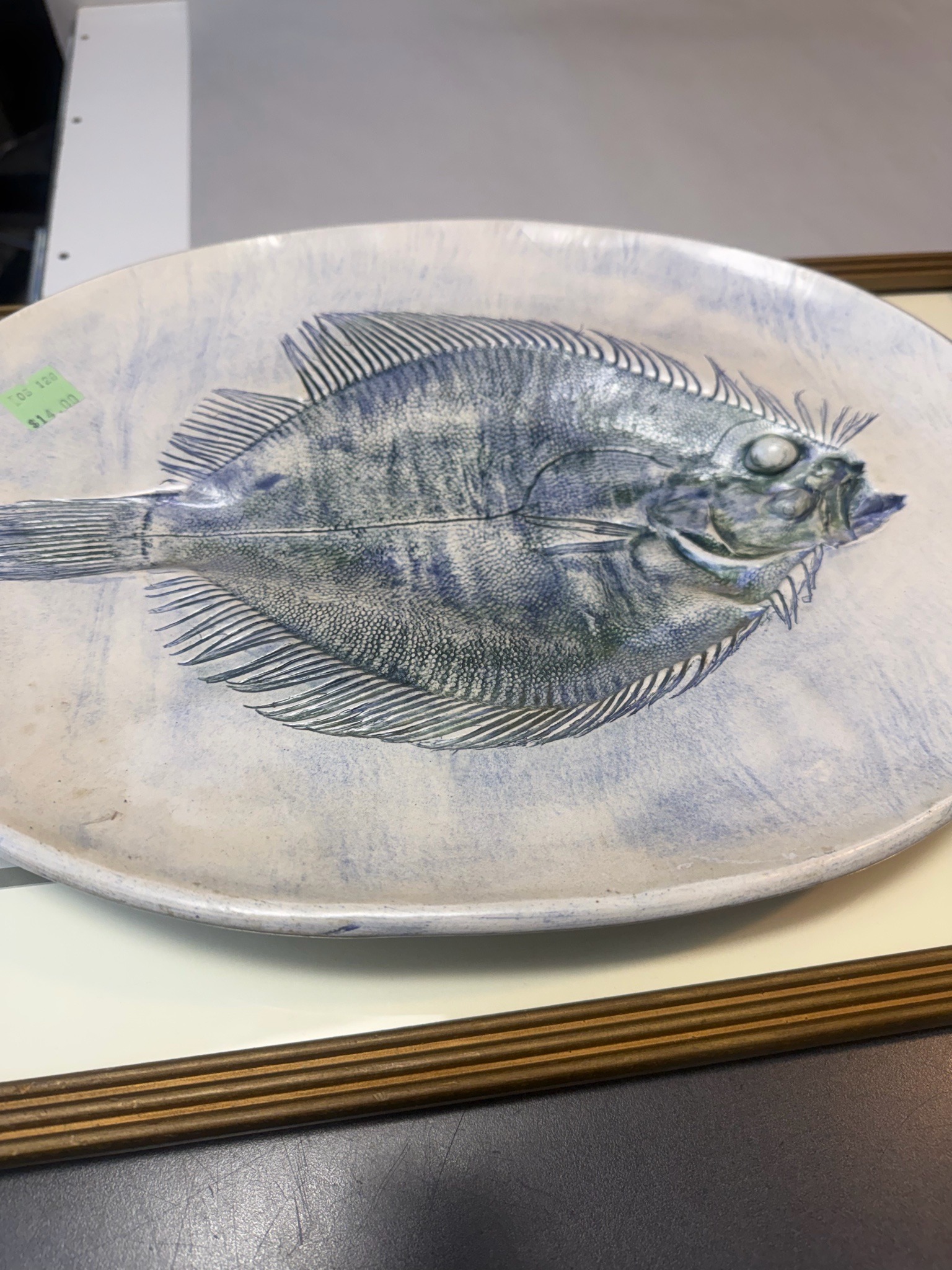
This is a vintage earthenware platter created by Joy Iulo at Salt Marsh Pottery in Dartmouth, Massachusetts, dated 1980. The piece is an oval platter featuring a highly detailed, relief-molded impression of a flounder or scale fish, a hallmark of the studio's nature-inspired aesthetic. The body is constructed from a light-colored clay with a matte, off-white background glaze that exhibits subtle blue wiping or sponges textures to suggest movement and water. The central fish motif is rendered with exceptional detail, showcasing individual scales, fins, and the distinct anatomical structure of a flatfish. The color palette of the impression is dominated by cool tones of slate blue, grey, and hints of muted green, applied in a way that highlights the three-dimensional texture. In terms of condition, there is a visible green price tag in the upper left corner and minor surface grime or shelf wear consistent with its age, but no major chips or cracks are apparent in the photo. The craftsmanship reflects the specialized 'nature printing' technique where actual organic specimens are often used to create the mould. The item carries the historical weight of 1980s American studio pottery and is signed on the reverse as indicated by the provided context.

AI Appraisal Report

·AI can make mistakes·Verify before acting
I have performed a visual examination of the 1980 Salt Marsh Pottery Flounder Platter by Joy Iulo. The piece displays the studio’s characteristic nature-printing technique, which meticulously captures the organic texture of the specimen. The 1980 date places this as an early, highly desirable example of Iulo’s work from the Dartmouth, Massachusetts studio. The condition appears excellent with no visible crazing, chips, or restoration. The glaze remains crisp, and the blue-grey oxide wash effectively highlights the relief. The market for Salt Marsh Pottery remains stable among New England regional collectors and enthusiasts of marine-themed studio ceramics. While smaller botanical tiles are common, large, early-period fish platters command a premium. Comparables for mid-sized platters typically hammer between $125 and $175, with early signed pieces reaching the upper end of the range. The provenance of being an early 1980s piece increases its collectible value over contemporary production. Limitation of Appraisal: This valuation is based on digital images. A definitive assessment of authenticity and value requires physical inspection to verify the signature on the reverse and to check for internal structural stress or professional repairs hidden by the glaze. Full authentication would involve a tactile check for rim chips and the removal of the adhesive price tag to ensure no surface pitting exists underneath. Documentation such as the original gallery purchase receipt would further solidify this valuation.

Get your items appraised

Instant estimates of your treasures with AI-powered appraisals

Browse More Appraisals