AI Appraisal Estimate

AI-generated estimates · not official valuations

From the user

What was submitted

Photo and notes provided by the user — not generated by AI

Submitted item photo
Submitted photo · June 15, 2026

User's notes

No additional notes provided.

AI analysis below

AI appraisal

AI analysis & estimate

AI-Generated · Verify before acting

Everything below is generated by AI for informational purposes only. AI can make mistakes — the AI may misidentify items or misattribute them (artist, maker, brand, designer, origin, era). This is not an official valuation and should not be used for insurance, sale, tax, estate, legal, or lending purposes — or any decision requiring a certified appraisal. It is not an authoritative claim about any person, brand, or rights holder — do not share or rely on it as a factual statement about a third party. Always consult qualified professionals before making financial decisions.

Read the full disclaimer

AI Identification

·Not independently authenticated·Verify before acting

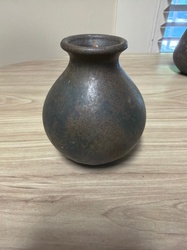
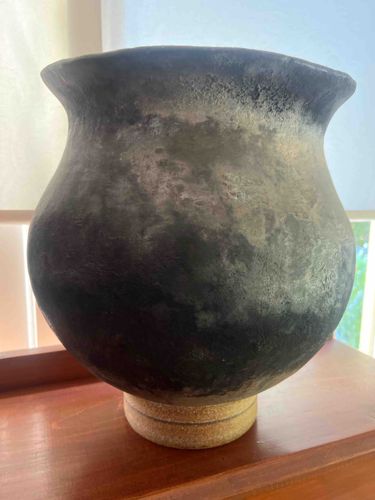
Pit-Fired Hand-Built Studio Pottery Vessel

Art Pottery / Ceramics

AI Estimated Value

·Not an official valuation·Verify before acting

$450.00 - $650.00

As of June 15, 2026

AI Item Analysis

·AI can make mistakes·Verify before acting
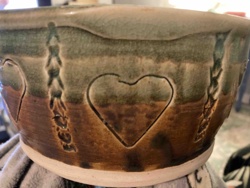
This is a globular stoneware vessel featuring a classic organic silhouette with a flared rim and a narrow, unglazed cylindrical foot. The piece demonstrates a high degree of craftsmanship through its thin-walled construction and balanced proportions. The most striking feature is its surface decoration, which appears to be the result of a pit-firing or saggar-firing process. This technique has yielded a dramatic, variegated patina ranging from deep charcoal blacks and char hues to earthy grays and subtle hints of oxidized oranges. These 'fire clouds' are caused by direct contact with combustible materials like sawdust or salt during the oxygen-deprived firing stage. The texture of the clay body is slightly granular, particularly visible at the base, which features a light buff-colored stoneware with minor horizontal striations from the pottery wheel or hand-turning. The overall aesthetic suggests a contemporary studio pottery piece, likely mid to late 20th century, inspired by traditional Native American or African pit-firing methods. The condition appears sound, with no visible major cracks or chips, though the intentional surface irregularities and carbon trapping are central to its artisanal value. There are no readily visible maker's marks on the exterior body, though a signature might be present on the underside of the foot.
AI Appraisal Report

·AI can make mistakes·Verify before acting
Upon visual examination of this pit-fired stoneware vessel, I find it to be a high-quality example of contemporary studio pottery, likely dating from the 1970s to the 1990s. The piece exhibits excellent technical mastery; the thinness of the walls and the delicate flare of the rim suggest a professional hand. The carbonization and 'fire-clouding' achieved through the pit-firing process are well-distributed, creating a sophisticated, painterly surface that mimics natural geological formations. The condition appears excellent with no structural fractures or rim chips visible, and the surface patination remains vibrant. Currently, the market for mid-century and contemporary organic studio ceramics remains strong, particularly for pieces that bridge the gap between traditional primitive techniques and modern aesthetic forms. Comparables by recognized American studio potters often realize mid-triple figures at auction, though a specific maker’s mark would significantly elevate this value. The primary limitation of this appraisal is the inability to physically inspect the base for a signature or 'chop' mark, which is often obscured by the firing process or placed discreetly on the foot-ring. Without a confirmed maker, the value rests on its aesthetic merit and technical execution. For a definitive authentication, an in-person examination is required to verify the 'ring' of the clay body and to scrutinize the foot under magnification for faint signatures. Provenance regarding the kiln site or purchase history from a specific gallery would also act as a primary value-add for this specimen.

Get your items appraised

Instant estimates of your treasures with AI-powered appraisals

Browse More Appraisals