Blanc de Chine Guanyin Figurine
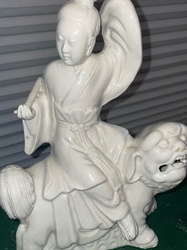
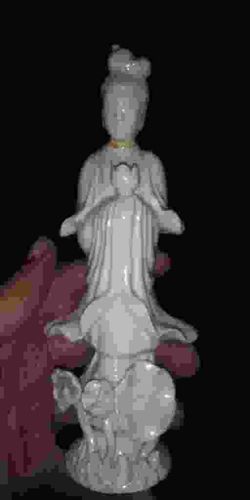
This item is a Blanc de Chine (Dehua) porcelain figurine depicting Guanyin, the Bodhisattva of Compassion. The figurine stands approximately 8 to 10 inches tall and is constructed from a fine-grained, creamy white vitreous porcelain known for its translucent quality. The figure is shown in a standing posture atop an integrated pedestal featuring stylized lotus blossoms and waves, symbolizing purity. Guanyin is draped in traditional flowing robes with intricate rhythmic folds that demonstrate skilled hand-modeling and assembly. Her hair is arranged in a high chignon adorned with a small figure of Amitabha Buddha or a decorative crown. The facial expression is serene and contemplative with downcast eyes. There appears to be a faint discoloration or perhaps a visible repair line around the neck area, possibly indicating an old break that has been reglued. The overall condition shows some surface grime consistent with age, but the high-gloss glaze remains largely intact. This style of porcelain originated in the Dehua kilns of Fujian province and appears to be in the late Qing Dynasty or early Republic period style (circa late 19th to early 20th century). The craftsmanship shows good attention to sculptural detail in the lotus base and the delicate fingers, though the photographic resolution limits the identification of specific potter marks on the reverse or underside.
AI-Generated Appraisal Disclaimer
Estimated Value
$400 - $600
Basic Information
Category
Asian Antiques - Porcelain
Appraised On
March 3, 2026
Estimated Value
$400 - $600
Item Description
This item is a Blanc de Chine (Dehua) porcelain figurine depicting Guanyin, the Bodhisattva of Compassion. The figurine stands approximately 8 to 10 inches tall and is constructed from a fine-grained, creamy white vitreous porcelain known for its translucent quality. The figure is shown in a standing posture atop an integrated pedestal featuring stylized lotus blossoms and waves, symbolizing purity. Guanyin is draped in traditional flowing robes with intricate rhythmic folds that demonstrate skilled hand-modeling and assembly. Her hair is arranged in a high chignon adorned with a small figure of Amitabha Buddha or a decorative crown. The facial expression is serene and contemplative with downcast eyes. There appears to be a faint discoloration or perhaps a visible repair line around the neck area, possibly indicating an old break that has been reglued. The overall condition shows some surface grime consistent with age, but the high-gloss glaze remains largely intact. This style of porcelain originated in the Dehua kilns of Fujian province and appears to be in the late Qing Dynasty or early Republic period style (circa late 19th to early 20th century). The craftsmanship shows good attention to sculptural detail in the lotus base and the delicate fingers, though the photographic resolution limits the identification of specific potter marks on the reverse or underside.
Get Your Items Appraised
Instant estimates of your treasures with AI-powered instant appraisals