Japanese Imari Octagonal Porcelain Bowl
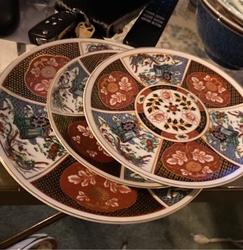
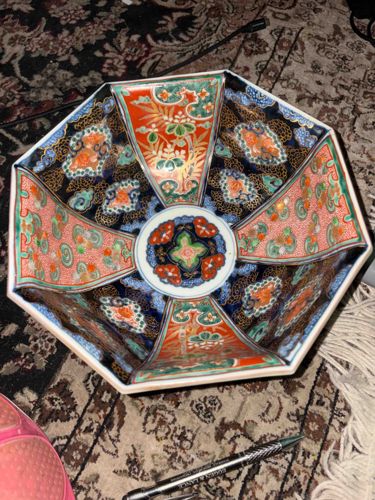
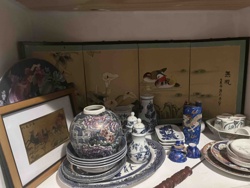
This is a fine example of a Japanese Imari-style porcelain bowl, characterized by its distinct octagonal shape and deep, steep-sided profile. The interior features a central circular medallion decorated with a quatrefoil floral motif in iron red, green, and blue. Radiating from this center are four large wedge-shaped panels divided by four alternating darker sections. The panels feature intricate 'Kinrande' style decorations, including floral sprays, bamboo, and diaper patterns executed in a palette of underglaze cobalt blue, overglaze iron red, and emerald green, with highlights of gilding. The craftsmanship demonstrates the typical Meiji period (late 19th to early 20th century) aesthetic, often produced in the Arita region for export. The exterior appears to be white porcelain, while the interior is densely packed with 'nishikide' (brocade) patterns. Condition-wise, the rim shows minor shelf wear and some rubbing to the gold leaf accents, which is common for its age. There are no immediate visible cracks or large chips, suggesting well-preserved glaze integrity. The geometric form combined with the traditional floral symbology makes it a highly decorative piece of Asian art.
AI-Generated Appraisal Disclaimer
Estimated Value
$600 - $850
Basic Information
Category
Asian Antiques - Porcelain & Ceramics
Appraised On
February 3, 2026
Estimated Value
$600 - $850
Additional Details Provided By Owner
User Provided Information
Bronze
Item Description
This is a fine example of a Japanese Imari-style porcelain bowl, characterized by its distinct octagonal shape and deep, steep-sided profile. The interior features a central circular medallion decorated with a quatrefoil floral motif in iron red, green, and blue. Radiating from this center are four large wedge-shaped panels divided by four alternating darker sections. The panels feature intricate 'Kinrande' style decorations, including floral sprays, bamboo, and diaper patterns executed in a palette of underglaze cobalt blue, overglaze iron red, and emerald green, with highlights of gilding. The craftsmanship demonstrates the typical Meiji period (late 19th to early 20th century) aesthetic, often produced in the Arita region for export. The exterior appears to be white porcelain, while the interior is densely packed with 'nishikide' (brocade) patterns. Condition-wise, the rim shows minor shelf wear and some rubbing to the gold leaf accents, which is common for its age. There are no immediate visible cracks or large chips, suggesting well-preserved glaze integrity. The geometric form combined with the traditional floral symbology makes it a highly decorative piece of Asian art.
Get Your Items Appraised
Instant estimates of your treasures with AI-powered instant appraisals