These notes were written by the person who submitted this item. Appraiser.AI has not verified them, and the AI's identification and estimate may rely on them.
AI Estimated Value
Not an official valuation
$2,000–$4,000
AI estimate as of August 7, 2026 · verify with a professional before acting
AI-Generated · Verify before acting
Everything on this page is generated by AI for informational purposes only. AI can make mistakes — the AI may misidentify items or misattribute them (artist, maker, brand, designer, origin, era). This is not an official valuation and should not be used for insurance, sale, tax, estate, legal, or lending purposes — or any decision requiring a certified appraisal. It is not an authoritative claim about any person, brand, or rights holder — do not share or rely on it as a factual statement about a third party. Always consult qualified professionals before making financial decisions.
This analysis also relies on unverified notes provided by the user, which may be incomplete or inaccurate and could affect the result.
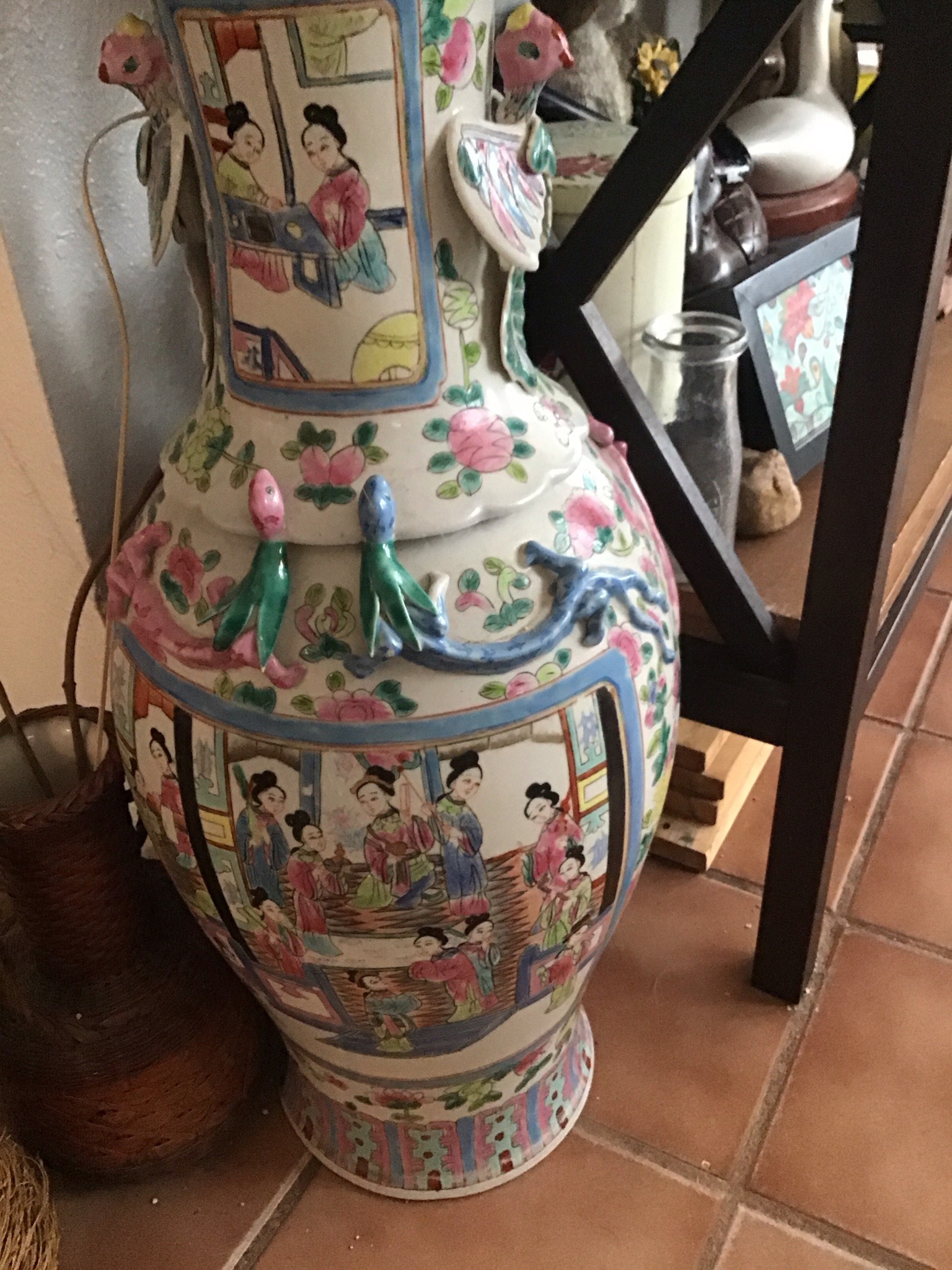
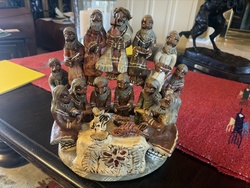
This large, elaborately decorated ceramic vessel displays a multitude of physical characteristics typical of traditional Chinese porcelain production. The piece is constructed from a heavy white-glazed ceramic body, heavily adorned with overglaze enamels in the characteristic palette of pinks, greens, blues, and yellows. The surface features intricately painted figurative panels depicting groups of female figures in traditional scholar or pavilion settings, enclosed within vibrant blue and black borders. Surrounding these figurative cartouches are dense botanical motifs featuring floral sprays, peaches, and scrolling foliage. Notably, the neck and shoulder sections are embellished with applied, molded sculptural elements, including stylized animal-like handles and protruding floral or tassel-like appliques projecting from the surface in high relief. The colors appear vibrant, though minor surface dust and standard wear are visible upon close inspection, consistent with display and handling over time. There are no clearly visible maker's marks, reign marks, or stamps legible from the provided photographic angle, leaving the exact production period and kiln unverified. The owner attributes this object as a Qing dynasty rose famille piece, but this user-supplied claim remains unverified and should be treated as an unauthenticated attribution. The style and palette are visually consistent with nineteenth or twentieth-century export ware produced in the Famille Rose tradition, displaying a high level of decorative detail, hand-painted precision, and applied relief work, though physical inspection, weight testing, and a search for base markings would be required to evaluate its age and origin further.
AI Appraisal Report
Based on what I can see in the provided image, this large ceramic vessel displays visual characteristics commonly associated with nineteenth or twentieth-century Famille Rose export porcelain, featuring overglaze enamels, figurative panels, and applied relief work. Per user submission: attributed to a Qing dynasty rose famille piece. I must note that this owner-supplied claim remains an unverified hypothesis, as I can't verify age, composition, or kiln origin from a photo alone. The value range of $2,000–$4,000 assumes that the owner's attribution is correct and that the piece dates to the Qing dynasty in good condition with standard wear. However, because this is an unauthenticated item lacking visible base markings in the photograph, a physical inspection would be required to evaluate its true age and production period. General market demand for 19th-century export porcelain remains steady among collectors of decorative Asian arts, though prices fluctuate based on condition, quality of hand-painting, and presence of any damage. If physical inspection reveals this piece to be a later twentieth-century reproduction, a replica, or simply made 'in the style of' the Famille Rose tradition rather than a period piece, the value would decrease significantly, typically dropping to the $300–$800 range. To establish a higher level of certainty regarding its value and attribution, in-person examination by a qualified ceramic specialist, hallmark verification, and potentially scientific testing would be necessary.