AI estimate as of November 4, 2025 · verify with a professional before acting
AI-Generated · Verify before acting
Everything on this page is generated by AI for informational purposes only. AI can make mistakes — the AI may misidentify items or misattribute them (artist, maker, brand, designer, origin, era). This is not an official valuation and should not be used for insurance, sale, tax, estate, legal, or lending purposes — or any decision requiring a certified appraisal. It is not an authoritative claim about any person, brand, or rights holder — do not share or rely on it as a factual statement about a third party. Always consult qualified professionals before making financial decisions.
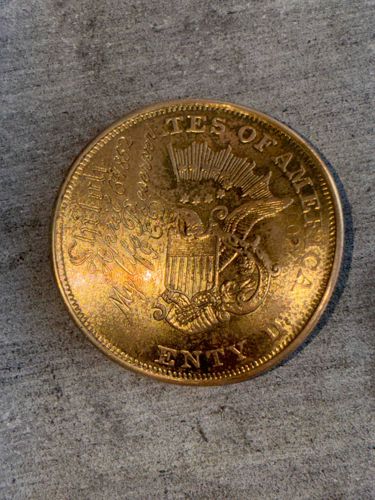
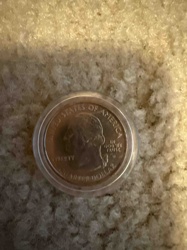
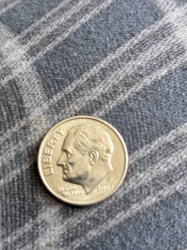
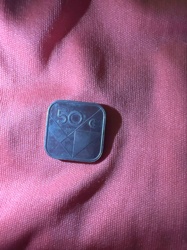
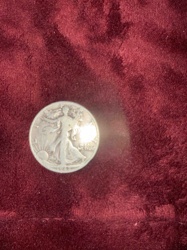
The item is a circular metallic coin, appearing to be made of gold or a gold-colored alloy, with a prominent luster that suggests either high polish or a significant gold content. The visible side of the coin displays what is known as the reverse design of a United States twenty-dollar gold coin, commonly referred to as a Double Eagle. The central motif features a majestic eagle with outstretched wings, clutching an olive branch in its right talon and arrows in its left, emblematic of peace and war. A shield with vertical stripes is positioned in front of the eagle's body. Above the eagle's head, an array of thirteen stars is set within a sunburst or glory, signifying the original thirteen states. Curved around the top rim of the coin are the words 'UNITED STATES OF AMERICA'. Below the eagle, partially visible, are the letters 'ENTY', which are part of the denomination 'TWENTY DOLLARS'. The outer edge of the coin features a series of small, raised dots forming a bead-like border, and an intricately reeded edge is also discernible, indicating a high level of minting quality. The overall color is a rich golden hue, fairly consistent across the surface, though some areas show slight variations in sheen due to lighting or minor surface abrasions. There are no readily apparent significant damages such as deep scratches or gouges, but minor surface wear consistent with handling and age is visible, particularly on the raised elements of the design, which show a slight softening of detail. The coin appears to be authentic based on the details visible, indicating a classic U.S. coinage style from the mid-19th to early 20th century.
AI Appraisal Report
Upon examining the provided image of this United States Twenty Dollar Gold Coin (Reverse), I can confirm that it appears to be an authentic Double Eagle, likely from the Liberty Head or Saint-Gaudens series based on the described design elements. The central motif of the eagle with outstretched wings, olive branch, arrows, and shield, along with the ‘UNITED STATES OF AMERICA’ inscription and partially visible ‘TWENTY DOLLARS’ denomination, are consistent with these classic issues. The rich golden hue, visible luster, beaded border, and reeded edge all point to a genuine gold coin and a high standard of minting.
Regarding condition, I assess this coin as appearing to be in a Very Fine (VF) to Extra Fine (XF) state. There is minor surface wear, particularly on the raised elements, which is expected for a coin of this age and consistent with handling, but no significant damages like deep scratches or gouges are apparent. The details, while softened, are largely intact. This level of preservation is favorable, as it retains much of the original design integrity.
Market conditions for U.S. gold coinage, especially Double Eagles, generally remain strong, driven by both intrinsic gold value and collector demand. Rarity varies significantly by year and mint mark, which are not discernible from the reverse-only image. However, even common date Double Eagles in this condition range command substantial prices. The primary factor impacting its value, beyond its intrinsic gold content, is its specific year and mint mark, followed by its exact grade.
It is crucial to state that my authentication and condition assessment are based solely on visual examination of the provided image. While the details strongly suggest authenticity, a definitive determination requires in-person examination. Physical inspection would allow me to verify weight, diameter, thickness, and edge reeding patterns precisely. Furthermore, a detailed examination under magnification could reveal mint marks, hidden flaws, or alterations not visible in the image. Scientific testing, such as specific gravity or XRF analysis, could confirm metallic composition. Finally, any available provenance documentation would greatly enhance confidence in its authenticity and history.