AI estimate as of October 7, 2025 · verify with a professional before acting
AI-Generated · Verify before acting
Everything on this page is generated by AI for informational purposes only. AI can make mistakes — the AI may misidentify items or misattribute them (artist, maker, brand, designer, origin, era). This is not an official valuation and should not be used for insurance, sale, tax, estate, legal, or lending purposes — or any decision requiring a certified appraisal. It is not an authoritative claim about any person, brand, or rights holder — do not share or rely on it as a factual statement about a third party. Always consult qualified professionals before making financial decisions.
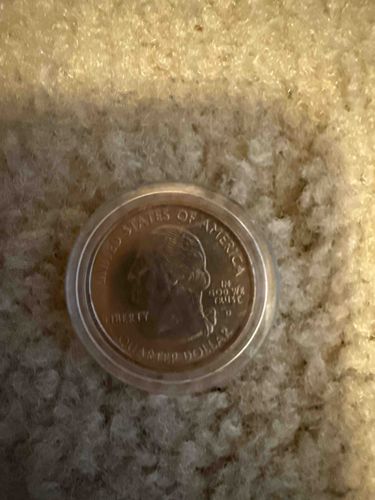
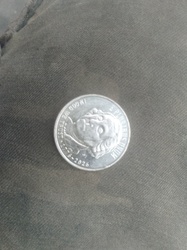
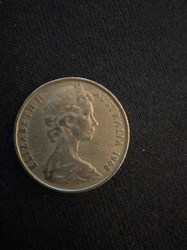
The item is a United States quarter dollar coin, specifically featuring the obverse (heads side) design of George Washington. The coin is encased within a translucent, circular plastic protective capsule, which appears to be designed to safeguard the coin from environmental factors and physical damage. The visible side of the coin displays the left-facing profile of George Washington, accompanied by the word 'LIBERTY' to his left. Above his head, the inscription 'UNITED STATES OF AMERICA' is clearly visible, arcing along the upper rim of the coin. To the right of Washington's profile, the motto 'IN GOD WE TRUST' is partially legible, composed of small, stacked text. Below Washington's bust, the phrase 'QUARTER DOLLAR' is inscribed along the lower rim. The coin itself exhibits a metallic, likely copper-nickel, silvery-brownish color, possibly indicating some toning or just being represented by the lighting conditions. The details of Washington's portrait and the inscriptions appear relatively sharp, suggesting the coin is in at least uncirculated or lightly circulated condition, enhanced by the protection of its capsule. No specific mint mark or date is discernible from this image. The protective capsule itself shows no apparent cracks or significant scratches, maintaining a clear view of the coin within. The overall presentation suggests a collectible item, preserved to maintain its condition and value.
AI Appraisal Report
Upon examining the provided image of this United States Washington Quarter, my assessment is based on the visible details of the obverse encapsulated in a protective holder. The coin presents as a standard issue, likely a copper-nickel clad piece post-1964, exhibiting sharp details which suggest it is in uncirculated or lightly circulated condition. The protective capsule, while offering good protection, is a generic type and not a third-party grading service holder, which limits any value premium.
The most significant factors impacting the value of a Washington Quarter are its date, mint mark, metal composition (e.g., pre-1965 90% silver), and certified grade. These critical details are not discernible from the image provided. Most modern, common-date Washington quarters, even in uncirculated condition, carry very little premium over their face value. The market for such raw, ungraded modern coins is saturated, and demand is primarily from beginner collectors. Rare dates, specific mint marks (like the 1932-D or 1932-S), or error coins can command significant value, but there is no evidence to suggest this coin is one of those rarities.
Therefore, based on the assumption that this is a common-date clad quarter, its value is minimal. The capsule adds perhaps a dollar to the overall value. My appraisal is primarily at face value to a slight premium for its uncirculated appearance.
It is crucial to note that this appraisal is severely limited by the photographic medium. A definitive determination of authenticity, specific date, mint mark, or potential errors is impossible without in-person physical examination. A full authentication would require removing the coin from its capsule to weigh it, inspect its edge, and examine it under magnification to verify its date, mint mark, and surface characteristics. Without this direct inspection, the coin can only be appraised as a common example.