AI Appraisal Estimate

AI-generated estimates · not official valuations

From the user

What was submitted

Photo and notes provided by the user — not generated by AI

Submitted item photo
Submitted photo · June 12, 2026

User's notes

No additional notes provided.

AI analysis below

AI appraisal

AI analysis & estimate

AI-Generated · Verify before acting

Everything below is generated by AI for informational purposes only. AI can make mistakes — the AI may misidentify items or misattribute them (artist, maker, brand, designer, origin, era). This is not an official valuation and should not be used for insurance, sale, tax, estate, legal, or lending purposes — or any decision requiring a certified appraisal. It is not an authoritative claim about any person, brand, or rights holder — do not share or rely on it as a factual statement about a third party. Always consult qualified professionals before making financial decisions.

Read the full disclaimer

AI Identification

·Not independently authenticated·Verify before acting

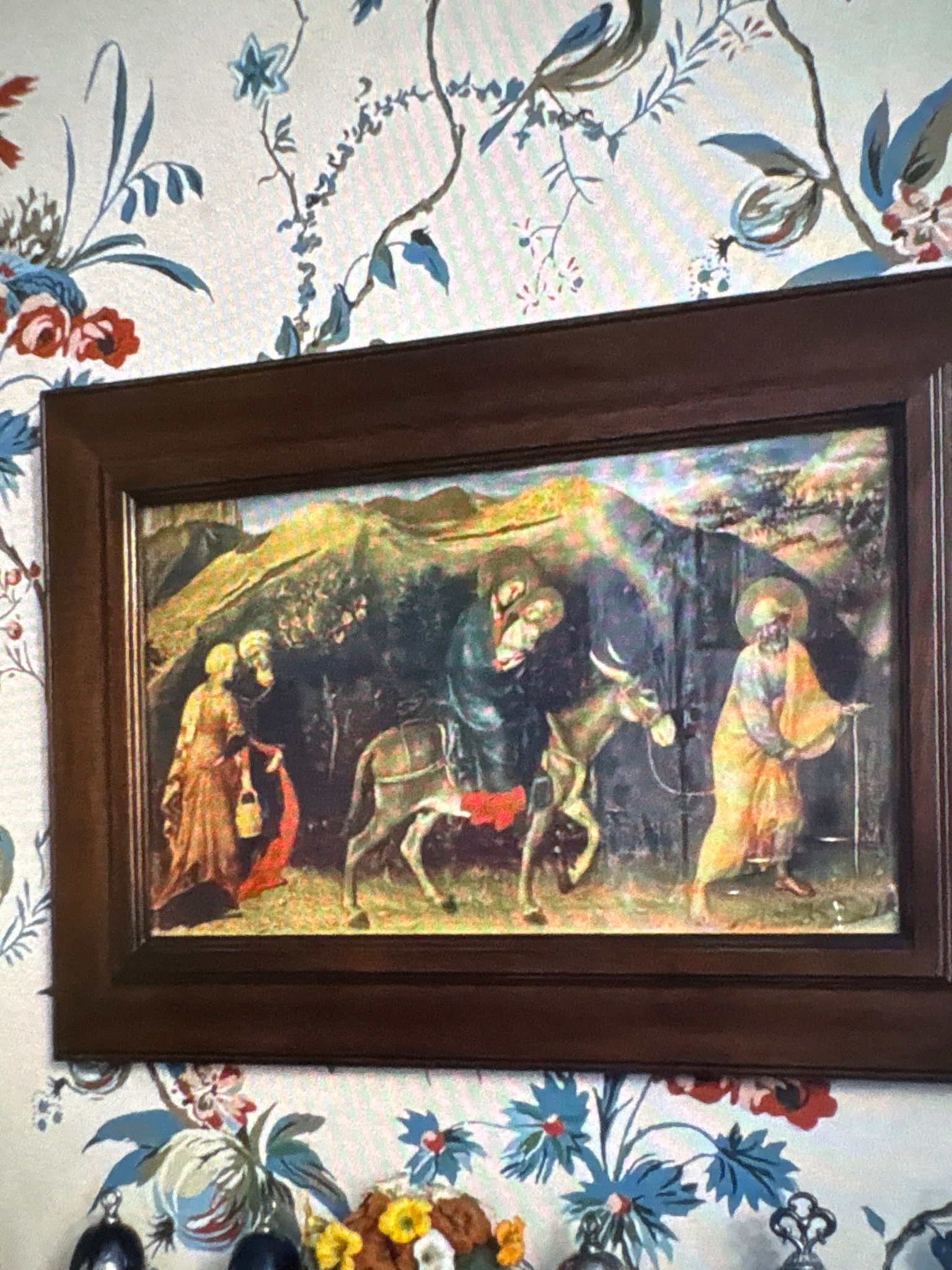
Flight into Egypt Religious Tapestry

Religious Decorative Art / Textile Wall Hanging

AI Estimated Value

·Not an official valuation·Verify before acting

$150 - $250

As of June 12, 2026

AI Item Analysis

·AI can make mistakes·Verify before acting
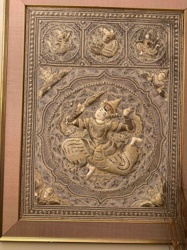
This item is a framed textile artwork, likely a machine-woven jacquard tapestry or a printed fabric panel, depicting the biblical scene of the 'Flight into Egypt.' The composition features Joseph leading a donkey carrying the Virgin Mary and the Christ Child, accompanied by a female figure, possibly an angel or attendant. The color palette is dominated by earthy tones including ochre, deep greens, and browns, with a notable pops of crimson red and saffron yellow in the garments. The style seeks to emulate the aesthetic of late Medieval or early Renaissance frescoes, characterized by stylized rock formations in the background and haloed figures. The physical construction consists of a soft textile surface mounted within a substantial, modern dark-stained wooden frame with a beveled profile. The texture of the image appears somewhat granular, suggesting a woven relief rather than a smooth paint surface. While no maker's marks are visible on the front, this type of decor was popular in the mid-to-late 20th century as affordable liturgical or domestic devotional art. The condition appears fair; however, there is a visible 'moire pattern' or digital interference in the photograph which may obscure fine details of the weave. There are no obvious signs of tearing or moisture damage, though the colors show some general muting that could be intentional to create an 'antique' appearance or the result of light exposure over time. It is a mass-produced decorative piece rather than a hand-painted original work.

AI Appraisal Report

·AI can make mistakes·Verify before acting
I have examined the digital images of the 'Flight into Egypt' textile artwork. The piece is a machine-woven jacquard tapestry, characteristic of mid-to-late 20th-century decorative liturgical art. My assessment confirms that while the styling mimics late Gothic or Renaissance frescoes, the physical structure—specifically the granular weave and color saturation—identifies this as a mass-produced decorative item rather than an antique hand-woven textile or an original painting. The framing is modern, and the overall condition appears fair with some expected color muting. The market for mid-century religious textile panels is stable but modest. Comparable items from manufacturers such as those found in Belgium or Italy frequently appear in estate auctions and secondary markets, typically fetching between $100 and $300 depending on size and frame quality. Because this is a reproduction piece, rarity is low, and demand is driven primarily by its aesthetic and devotional value rather than historical significance. Factors impacting value include the 'moire pattern' visible in the documentation, which suggests potential limitations in the clarity of the weave, and the lack of maker’s marks. Limitations of this virtual appraisal include the inability to inspect the reverse side for original labels or to conduct a fiber burn test to determine the exact blend of synthetic or natural yarns. A full authentication would require an in-person examination to check for UV-light exposure damage, silk-rot, or pest infestation within the frame. Verification of provenance documentation would also be necessary to rule out any specific limited-edition artisanal origins which could marginally increase the valuation.

Get your items appraised

Instant estimates of your treasures with AI-powered appraisals

Browse More Appraisals