AI Appraisal Estimate

AI-generated estimates · not official valuations

From the user

What was submitted

Photo and notes provided by the user — not generated by AI

Submitted item photo
Submitted photo · June 15, 2026

User's notes

Tapestry

AI analysis below

AI appraisal

AI analysis & estimate

AI-Generated · Verify before acting

Everything below is generated by AI for informational purposes only. AI can make mistakes — the AI may misidentify items or misattribute them (artist, maker, brand, designer, origin, era). This is not an official valuation and should not be used for insurance, sale, tax, estate, legal, or lending purposes — or any decision requiring a certified appraisal. It is not an authoritative claim about any person, brand, or rights holder — do not share or rely on it as a factual statement about a third party. Always consult qualified professionals before making financial decisions.

Note

This analysis also relies on unverified notes provided by the user, which may be incomplete or inaccurate and could affect the result.

Read the full disclaimer

AI Identification

·Not independently authenticated·Verify before acting

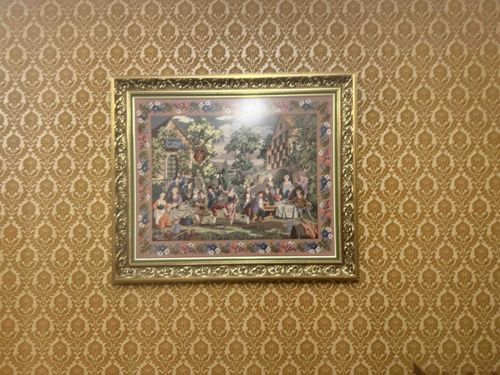
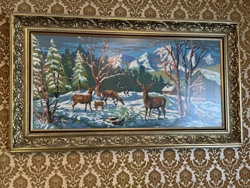
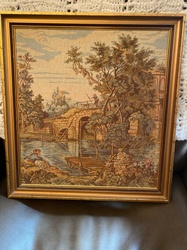
Framed Jacquard Tapestry of a Village Fête Study

Decorative Arts / Textiles

AI Estimated Value

·Not an official valuation·Verify before acting

$250 - $450

As of June 15, 2026

AI Item Analysis

·AI can make mistakes·Verify before acting
This item is a machine-woven Jacquard tapestry depicting a bustling European village scene, likely inspired by 18th-century genre paintings or the 'Village Fête' style of David Teniers the Younger. The scene illustrates a group of figures in period-appropriate rustic attire engaged in dancing, drinking, and socializing outside a rural tavern and half-timbered buildings. The color palette is composed of muted earth tones, forest greens, and touches of rose and blue in the floral border. The tapestry is characterized by a dense weave that creates a pixelated effect upon close inspection, typical of mid-to-late 20th-century wall hangings. It is housed in an ornate, deep-profile gilded composition or wood frame featuring scrolling acanthus leaf motifs and a beaded inner lip. The frame shows a bright gold finish which appears well-preserved, though there is a noticeable overhead glare reflecting off the protective glass or the surface of the textile. The construction suggests a decorative reproduction rather than an antique hand-woven textile. The condition appears excellent with no visible fraying, sun-bleaching, or significant damage to the textile fibers or the frame's molding, indicating it has been kept in a controlled indoor environment. The wide floral-patterned border serves as an integral part of the textile design, transitioning the central narrative into the rigid constraints of the heavy gold frame.
AI Appraisal Report

·AI can make mistakes·Verify before acting
I have conducted a visual examination of the framed Jacquard tapestry depicting a village fête. The piece is a mid-to-late 20th-century machine-woven textile, commercially produced to emulate the rustic genre scenes popularized by 17th and 18th-century Flemish masters such as David Teniers the Younger. My assessment of the dense, uniform weave and pixelated color transitions confirms this is a decorative reproduction rather than a hand-loomed antique. The condition is excellent; the textile shows no signs of atmospheric oxidation, sun-bleaching, or sagging, and the ornate gilded frame remains structurally sound with its finish intact. The market for mid-century decorative tapestries is stable but primarily driven by interior design utility rather than fine art investment. Comparables found in estate auctions and high-end antique malls typically achieve prices in the mid-hundreds, with the value often heavily weighted toward the quality and size of the framing. While the scene is charming and the 'Teniers' style remains a staple of traditional decor, the item is not rare, as these were produced in significant quantities throughout Europe and the United States. Limitations: My conclusions are based on digital imagery. A physical inspection would be required to verify the backing and check for hidden dry rot or insect damage. Full authentication would involve examining the reverse side to confirm machine-weaving patterns versus hand-finishing and checking for manufacturer labels (such as those from Flanders or France). Documentation of provenance would further clarify its age but is unlikely to significantly alter the valuation of this specific decorative-grade textile.

Get your items appraised

Instant estimates of your treasures with AI-powered appraisals

Browse More Appraisals