AI Appraisal Estimate

AI-generated estimates · not official valuations

From the user

What was submitted

Photo and notes provided by the user — not generated by AI

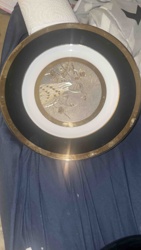
Submitted item photo
Submitted photo · June 17, 2026

User's notes

No additional notes provided.

AI analysis below

AI appraisal

AI analysis & estimate

AI-Generated · Verify before acting

Everything below is generated by AI for informational purposes only. AI can make mistakes — the AI may misidentify items or misattribute them (artist, maker, brand, designer, origin, era). This is not an official valuation and should not be used for insurance, sale, tax, estate, legal, or lending purposes — or any decision requiring a certified appraisal. It is not an authoritative claim about any person, brand, or rights holder — do not share or rely on it as a factual statement about a third party. Always consult qualified professionals before making financial decisions.

Read the full disclaimer

AI Identification

·Not independently authenticated·Verify before acting

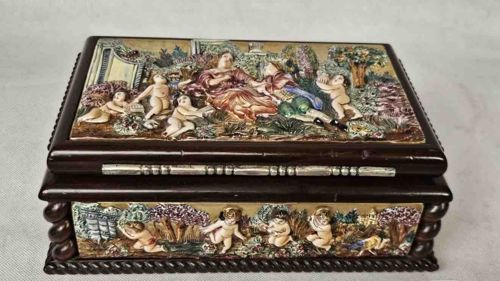
Capodimonte Style Relief Jewelry Box

Decorative Arts / Vintage Collectibles

AI Estimated Value

·Not an official valuation·Verify before acting

$125.00 - $175.00

As of June 17, 2026

AI Item Analysis

·AI can make mistakes·Verify before acting
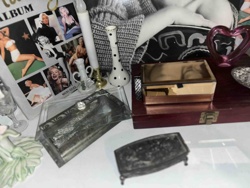
This rectangular jewelry or trinket box is a mid-20th-century decorative piece executed in the distinctive Capodimonte style. The box is constructed primarily from a dark, stained wood or possibly a heavy resin composite, featuring deep brown tones and architectural molding details, including twisted barley-twist columns at the corners and a gadrooned base. The most prominent feature is the series of highly detailed, polychrome relief panels set into the lid and sides. These panels are likely made of biscuit porcelain or cold-cast resin, depicting a lush Neoclassical or Rococo-inspired garden scene. The lid showcases a central female figure in a flowing reddish gown Relaxing among multiple cherubs (putti) and a male companion, all set against a backdrop of classical ruins and vibrant flora. The side panel depicts further cherubic figures engaged in playful activities. The color palette of the relief is rich, utilizing greens, blues, reds, and flesh tones against a golden-beige background. The box features a metal piano hinge at the rear, appearing in a silver-toned finish. Condition-wise, there are visible surface scuffs and minor nicks to the dark wood finish on the front edge of the lid and base, typical of age and use. The relief panels appear intact without significant chipping, though there is a natural buildup of dust in the deep recesses which adds to the antique appearance. This item represents the popular revivals of Italian 18th-century porcelain styles produced throughout the 1900s.
AI Appraisal Report

·AI can make mistakes·Verify before acting
Based on my visual examination of this Capodimonte-style relief jewelry box, I have assessed it as a mid-20th-century decorative revival piece. The item exhibits the characteristic aesthetic of Italian Neoclassical porcelain, featuring high-relief polychrome panels depicting pastoral scenes with putti and classical figures. The use of barley-twist columns and gadrooned molding indicates a mass-market production intended to capture the grandeur of 18th-century originals. The condition is fair to good; while the panels remain remarkably intact, the significant scuffing and finish loss on the dark wood or resin substrate slightly diminish the secondary market value. The market for mid-century Capodimonte reproductions is currently stable but saturated. Comparable pieces sold recently at auction and through vintage retailers typically range between $100 and $250 depending on size and detail. The value is driven by the internal 'maximalist' decor trend rather than rarity as a fine art object. Significantly, I must note that from the image alone, it is difficult to determine if the panels are genuine biscuit porcelain or a more modern cold-cast resin composite. Furthermore, the base material (wood vs. resin) cannot be definitively verified without a tactile inspection of weight and thermal density. For a formal authentication, an in-person examination would be required to look for maker's marks on the underside or behind the panels, such as the crowned 'N' mark often associated with Capodimonte. Provenance documentation or original purchase receipts would also assist in Narrowing the specific manufacturer.

Get your items appraised

Instant estimates of your treasures with AI-powered appraisals

Browse More Appraisals