AI Appraisal Estimate

AI-generated estimates · not official valuations

From the user

What was submitted

Photo and notes provided by the user — not generated by AI

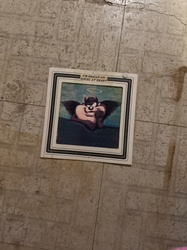
Submitted item photo
Submitted photo · June 10, 2026

User's notes

The art of chokin, made in Japan, vintage, porcelain plate

AI analysis below

AI appraisal

AI analysis & estimate

AI-Generated · Verify before acting

Everything below is generated by AI for informational purposes only. AI can make mistakes — the AI may misidentify items or misattribute them (artist, maker, brand, designer, origin, era). This is not an official valuation and should not be used for insurance, sale, tax, estate, legal, or lending purposes — or any decision requiring a certified appraisal. It is not an authoritative claim about any person, brand, or rights holder — do not share or rely on it as a factual statement about a third party. Always consult qualified professionals before making financial decisions.

Note

This analysis also relies on unverified notes provided by the user, which may be incomplete or inaccurate and could affect the result.

Read the full disclaimer

AI Identification

·Not independently authenticated·Verify before acting

Vintage Japanese Chokin Peacocks Porcelain Collector Plate

Decorative Arts / Vintage Collectibles

AI Estimated Value

·Not an official valuation·Verify before acting

$25.00 - $45.00

As of June 10, 2026

AI Item Analysis

·AI can make mistakes·Verify before acting
This is a vintage Japanese porcelain decorative plate featuring the ancient Art of Chokin, which involves engraving copper and gilding it with gold and silver. This specific piece depicts two peacocks amidst floral elements, a classic motif symbolizing beauty and integrity. The central metal medallion is set within a circular white porcelain well, surrounded by a wide, striking black border. The outer rim and the inner medallion border are finished with a functional 24K gold gilding. Physically, the plate is likely approximately 6 to 9 inches in diameter with a smooth, glazed porcelain finish. The craftsmanship is indicative of late 20th-century Japanese souvenir and giftware manufacturing, characterized by the juxtaposition of the matte-to-reflective metal engraving and the high-gloss black and white ceramic. Regarding condition, there is visible wear to the gold gilding on the outer rim, specifically some thinning and potential chipping or surface loss on the right-hand side. The central metalwork shows a slight patina consistent with age. Such pieces often featured a stamp on the reverse side reading 'The Art of Chokin' with details about the origin and materials, typically dating from the 1970s or 1980s.
AI Appraisal Report

·AI can make mistakes·Verify before acting
I have completed a visual assessment of this vintage Japanese Chokin plate. This piece utilizes the 'Art of Chokin' technique—engraved copper with gold and silver gilding—likely produced during the late 20th century (circa 1970s–1980s). The peacock motif is a classic of the era, catering to the souvenir and global export market. My examination reveals the central medallion retains its detail, though a natural patina is developing on the metal. The high-gloss black border remains vibrant; however, there is notable thinning and loss of the 24K gold gilding on the outer rim, particularly at the 3 o'clock position. Such wear significantly affects the 'Near Mint' status typical of high-value collectibles. Market conditions for Japanese Chokin ware currently show high supply and stable, yet low, demand. These items were mass-produced as giftware, meaning rarity is low. Comparables on the secondary market frequently sell within the $20 to $50 range depending on size and condition. The visible gilding loss places this specific example toward the lower-to-mid end of that spectrum. Limitations: This appraisal is based on digital images and descriptions. Without physical inspection, I cannot verify the integrity of the porcelain body for hairline cracks or the depth of the metal engraving. Full authentication would require an in-person examination of the backstamp to confirm the specific kiln or manufacturer, and provenance documentation to verify original purchase. Scientific testing, such as an X-ray fluorescence (XRF) test, would be required to definitively confirm the 24K gold content of the gilding.

Get your items appraised

Instant estimates of your treasures with AI-powered appraisals

Browse More Appraisals