AI Appraisal Estimate

AI-generated estimates · not official valuations

From the user

What was submitted

Photo and notes provided by the user — not generated by AI

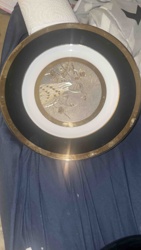
Submitted item photo
Submitted photo · June 17, 2026

User's notes

No additional notes provided.

AI analysis below

AI appraisal

AI analysis & estimate

AI-Generated · Verify before acting

Everything below is generated by AI for informational purposes only. AI can make mistakes — the AI may misidentify items or misattribute them (artist, maker, brand, designer, origin, era). This is not an official valuation and should not be used for insurance, sale, tax, estate, legal, or lending purposes — or any decision requiring a certified appraisal. It is not an authoritative claim about any person, brand, or rights holder — do not share or rely on it as a factual statement about a third party. Always consult qualified professionals before making financial decisions.

Read the full disclaimer

AI Identification

·Not independently authenticated·Verify before acting

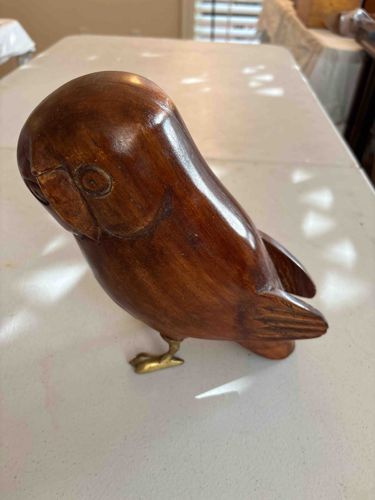
Mid-Century Modern Hand-Carved Wood and Brass Owl Figurine

Decorative Arts / Vintage Collectibles

AI Estimated Value

·Not an official valuation·Verify before acting

$150 - $250

As of June 17, 2026

AI Item Analysis

·AI can make mistakes·Verify before acting
This is a hand-carved wooden figurine of an owl, likely crafted from a solid block of walnut or teak, exhibiting the sleek, stylized forms characteristic of Mid-Century Modern design from the 1950s to 1970s. The sculpture stands approximately 6 to 8 inches in height. The wood features a warm, medium-to-dark brown finish with a noticeable luster, highlighting a tight, attractive grain pattern. The owl is depicted in a hunched, attentive posture with minimalist facial features, including carved concentric circles for eyes and a subtle, recessed beak area. A primary distinguishing feature is the set of cast brass or bronze feet, which provide a metallic contrast to the organic wood body. The wings and tail are rendered with simple, incised horizontal grooves to suggest feathers. Regarding condition, the piece shows a well-developed patina and minor surface wear consistent with age, including a few small scuffs on the head and a visible seam or hairline crack near the facial area, which may be a natural wood grain separation or an old repair. The craftsmanship is high, utilizing smooth transitions and polished surfaces. It bears a stylistic resemblance to the works produced by Scandinavian or American decorative artists of the era, such as those by Zoo-Line or similar boutique giftware manufacturers.
AI Appraisal Report

·AI can make mistakes·Verify before acting
This Mid-Century Modern owl figurine, standing approximately 7 inches tall, reflects the high-quality craftsmanship of 1950s-1960s decorative arts. Upon visual inspection, the solid wood—likely walnut—shows a rich patina and high-luster finish consistent with Scandinavian design sensibilities or boutique American manufacturers like Zoo-Line. The brass feet are a critical feature, adding textural contrast and structural stability, which is highly desirable among collectors of this period. Condition-wise, the piece presents honestly. The minor scuffs on the head are consistent with age-appropriate handling. However, the hairline crack near the facial area requires attention; if it is a natural wood separation due to dehydration, it is a minor vintage flaw, but if it is a failed glue joint from a previous repair, it slightly devalues the piece. Current market demand for MCM animalia remain steady. Comparables for unsigned wooden figurines with brass accents typically realize between $125 and $300 at specialized vintage auctions or high-end antique malls. The lack of a 'Japan' or maker's stamp prevents a premium valuation associated with specific designers like Kay Bojesen. LIMITATIONS: This analysis is based on digital imagery. A physical examination is required to confirm species of wood via grain density and to assess the brass for genuine aged oxidation versus modern chemical antiquing. To fully authenticate the piece as a period original, I would look for remnants of foil labels or specific machining marks on the underside of the feet. Scientific testing of the finish or provenance documentation would be necessary to distinguish this from a 1990s high-fidelity reproduction.

Get your items appraised

Instant estimates of your treasures with AI-powered appraisals

Browse More Appraisals