AI Appraisal Estimate

AI-generated estimates · not official valuations

From the user

What was submitted

Photo and notes provided by the user — not generated by AI

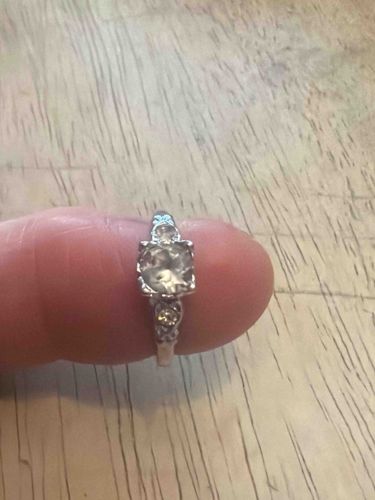
Submitted item photo
Submitted photo · June 3, 2026

User's notes

No additional notes provided.

AI analysis below

AI appraisal

AI analysis & estimate

AI-Generated · Verify before acting

Everything below is generated by AI for informational purposes only. AI can make mistakes — the AI may misidentify items or misattribute them (artist, maker, brand, designer, origin, era). This is not an official valuation and should not be used for insurance, sale, tax, estate, legal, or lending purposes — or any decision requiring a certified appraisal. It is not an authoritative claim about any person, brand, or rights holder — do not share or rely on it as a factual statement about a third party. Always consult qualified professionals before making financial decisions.

Read the full disclaimer

AI Identification

·Not independently authenticated·Verify before acting

Vintage Art Deco Three-Stone White Gold Diamond Engagement Ring

Fine Jewelry / Vintage Rings

AI Estimated Value

·Not an official valuation·Verify before acting

$1,800 - $2,400

As of June 3, 2026

AI Item Analysis

·AI can make mistakes·Verify before acting
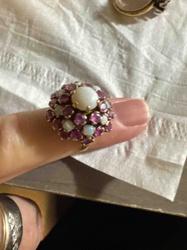
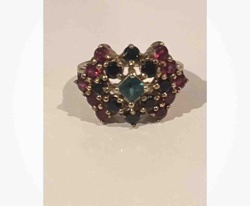
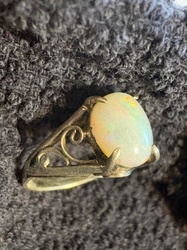
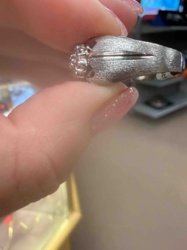
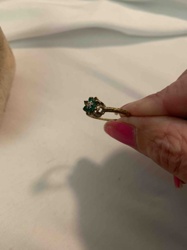
This is a vintage three-stone engagement ring, likely dating from the late Art Deco to early Retro period (circa 1930s-1940s). The ring is crafted from a white metal, likely 14k or 18k white gold or platinum, featuring a central round-cut clear gemstone—possibly an Old European cut diamond. The center stone is held in a square-shaped illusion setting, a popular design choice of the era intended to make the stone appear larger and more rectangular. On either side of the center stone are two smaller round accent stones, which appear to be single-cut or brilliant-cut diamonds. The band and gallery showcase ornate filigree and openwork detailing, characteristic of high-quality craftsmanship from the early 20th century. Notable features include fine milgrain edging and decorative engravings along the shoulders. Regarding condition, the metal shows signs of moderate wear with small surface scratches and a dulling of the polish, which is expected for an heirloom piece. The stones appear securely set, though the prongs show some rounding from use. There are no visible hallmarks in the image, but the construction suggests professional jewelry manufacturing. The overall aesthetic is romantic and delicate, representing the transition from geometric Art Deco styles to the softer lines of the mid-century.
AI Appraisal Report

·AI can make mistakes·Verify before acting
Upon visual inspection of this vintage three-stone engagement ring, I have identified it as a transitional piece dating from the late 1930s to the early 1940s. The central Old European cut diamond (estimated 0.35–0.45 carats) is elevated by a classic square-top illusion setting, flanked by two single-cut diamond accents. The presence of intricate hand-sawed filigree and milgrain edging suggests a high degree of craftsmanship consistent with the late Art Deco period. The metal exhibits a patina and wear pattern typical of 14k white gold from this era. The current market for 'true vintage' engagement rings remains robust, with high demand for authentic Art Deco filigree. Comparables for 14k white gold three-stone rings with similar carat weights typically hammer between $1,500 and $2,800 depending on diamond clarity and color. The primary value-adds here are the preservation of the delicate openwork and the historical charm of the Old European cut. However, this appraisal is subject to several limitations due to the nature of photographic examination. I cannot definitively verify the metal purity or the diamond's Four Cs without physical testing. To finalize this valuation, an in-person examination is required to check for 'die-struck' vs. 'cast' construction, perform a thermal conductivity test on the gemstones, and view hallmarks under 10x magnification. A GIA report for the center stone and a gold acid test or XRF analysis would be necessary to certify authenticity for insurance purposes. Value may be adjusted if the stones show significant crown chipping or if the shank has been thinned by previous resizing.

Get your items appraised

Instant estimates of your treasures with AI-powered appraisals

Browse More Appraisals