AI identification & appraisal estimate

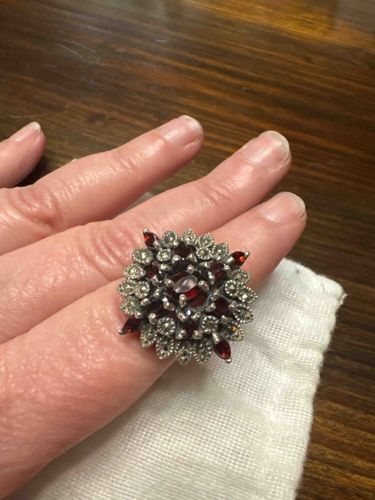
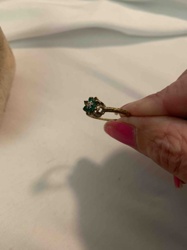
Vintage Italian Silver Cluster Ring with Rubies and Marcasite

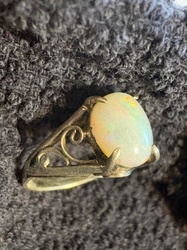
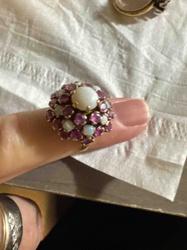
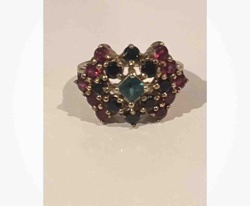
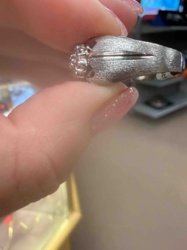
Submitted photo of Vintage Italian Silver Cluster Ring with Rubies and Marcasite
Photo submitted by the user — not generated by AI

User's notes

Silver large and heavy ring with rubies from Italy

These notes were written by the person who submitted this item. Appraiser.AI has not verified them, and the AI's identification and estimate may rely on them.

AI Estimated Value

Not an official valuation

$450 - $650

AI estimate as of February 14, 2026 · verify with a professional before acting

AI-Generated · Verify before acting

Everything on this page is generated by AI for informational purposes only. AI can make mistakes — the AI may misidentify items or misattribute them (artist, maker, brand, designer, origin, era). This is not an official valuation and should not be used for insurance, sale, tax, estate, legal, or lending purposes — or any decision requiring a certified appraisal. It is not an authoritative claim about any person, brand, or rights holder — do not share or rely on it as a factual statement about a third party. Always consult qualified professionals before making financial decisions.

This analysis also relies on unverified notes provided by the user, which may be incomplete or inaccurate and could affect the result.

Read the full disclaimer

AI Item Analysis

This is a substantial and ornate vintage cocktail ring, originating from Italy. The ring is constructed from sterling silver, featuring a tiered cluster or 'bloom' design that gives it significant height and presence on the hand. The central motif consists of several round and marquise-cut deep red rubies, which are set amongst a dense arrangement of pyritic marcasite stones. The marcasite stones are bead-set into stylized leaf and floral petal silver forms, providing a metallic, glittery contrast to the saturated red of the gemstones. The construction is heavy and robust, suggesting a mid-20th-century aesthetic influenced by Victorian or Art Deco revival styles. Notably, the rubies exhibit a rich, pigeons-blood hue, though their clarity would require microscopic inspection to confirm natural or lab-grown origin. The silver shows a dark, intentional tarnish or patina in the recessed areas (oxidation), which enhances the textural depth of the floral pattern. While no specific maker's mark is visible in the photograph, the craftsmanship indicates a high-quality Italian workshop. The condition appears fair to good; while the stones seem secure, there is visible surface wear on the silver and some dulling of the marcasite, which is common for antique-style silver jewelry of this age. The ring serves as a bold example of traditional Italian silversmithing techniques combined with multi-stone cluster setting work.
AI Appraisal Report

Based on my visual examination of this vintage Sterling Silver Ruby and Marcasite cocktail ring, I find it to be a robust example of mid-20th-century Italian silversmithing. The ‘bloom’ design and tiered cluster construction reflect a sophisticated Art Deco revival style. The silver weight is substantial, and the oxidation is consistent with authentic vintage patina, which highlights the intricate floral metalwork. In the current secondary market, vintage Italian silver jewelry remains in steady demand, although the value is significantly moderated by the materials. While the rubies possess a desirable 'pigeon's blood' hue, in rings of this specific Victorian-revival era, rubies are frequently glass-filled or synthetic; the marcasite also shows typical surface dulling common with age. Compared to similar sold lots of heavy Italian silver, the value resides more in the craftsmanship and aesthetic 'statement' than in the intrinsic gemstone value. Crucial limitations: This appraisal assumes the metal is .925 sterling silver and the primary stones are rubies. I cannot definitively distinguish between natural, lab-grown, or treated rubies via photography. To finalize a formal insurance valuation, in-person gemological testing (refractive index and microscopic inclusion analysis) would be required to determine stone origin. A physical inspection would also verify if any marcasite stones are missing or have been replaced with adhesive-only repairs. Provenance documentation or an Italian ‘800’ or ‘925’ hallmark would further solidify the origin.

Keep exploring

More fine jewelry / vintage rings appraisals

Get your items appraised

Instant AI-powered appraisal estimates from a photo

Browse More Appraisals