AI estimate as of October 6, 2025 · verify with a professional before acting
AI-Generated · Verify before acting
Everything on this page is generated by AI for informational purposes only. AI can make mistakes — the AI may misidentify items or misattribute them (artist, maker, brand, designer, origin, era). This is not an official valuation and should not be used for insurance, sale, tax, estate, legal, or lending purposes — or any decision requiring a certified appraisal. It is not an authoritative claim about any person, brand, or rights holder — do not share or rely on it as a factual statement about a third party. Always consult qualified professionals before making financial decisions.
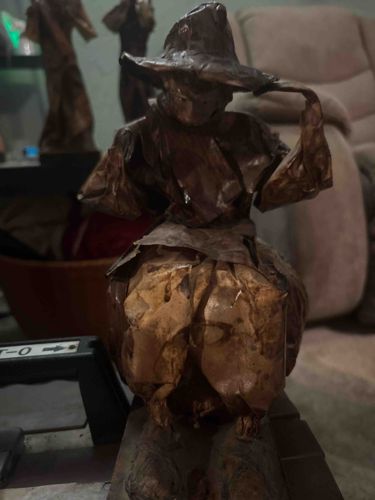
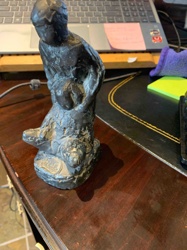
This appears to be a folk art sculpture depicting a kneeling or squatting figure, possibly a farmer or harvester, holding what resembles a wide-brimmed straw hat. The overall construction suggests papier-mâché or a similar natural fiber material, likely combined with a binding agent. The predominant color is a rustic, earthy brown, with variations in tone from lighter tan to darker, almost burnt umber shades, suggesting the natural coloration of the materials used or intentional patination. The surface has a textured, uneven quality, characteristic of handcrafted items. The figure is rendered in a somewhat abstract or stylized manner, with large, rounded forms for the lower body, resembling an abundant harvest (perhaps a pumpkin or gourd-like shape), and a more defined, though still abstracted, upper torso, arms, and head. The hat is prominent, with one hand seemingly adjusting or holding it. Visible condition issues include potential flaking or small tears in the material, consistent with age and the nature of pliable materials; however, without closer inspection, it's hard to distinguish intentional distressing from actual damage. The craftsmanship speaks to a traditional or vernacular artistic style, focusing on expression and form rather than precise anatomical detail. The base appears to be integrated into the figure, possibly suggesting it is designed to sit directly on a surface. The style suggests an early to mid-20th-century folk art piece, or a more contemporary piece created in a traditional folk art aesthetic. The unique aspect lies in its expressive form and the use of seemingly organic, possibly recycled, materials.
AI Appraisal Report
Based on my visual examination of the provided image, this Folk Art Harvest Figure Sculpture appears to be a charming and expressive piece, likely crafted from papier-mâché or a similar natural fiber medium. The earthy tones and textured surface are consistent with traditional folk art techniques. The condition, from what I can discern, shows the expected wear for a piece of this type and age; visible flaking or small tears would be common. Authenticity as a genuine folk art piece from the early to mid-20th century versus a contemporary folk art aesthetic is difficult to definitively confirm without physical inspection. The stylized form, prioritizing expression over anatomical accuracy, is characteristic of vernacular art. I assess the market for such pieces as steady, with a niche but dedicated collector base for authentic, well-preserved folk art. Comparable sales for similar-sized, expressive folk art sculptures in papier-mâché or natural materials typically fall within this range, influenced heavily by condition and provenance. Demand for unique, hand-crafted folk art remains consistent. Rarity is moderate, as many pieces exist, but unique expressions like this one can command a premium. Factors impacting value include overall preservation, the artistic merit of the carving/sculpting, and the origin. A significant limitation is the inability to perform a tactile inspection for material verification, assess structural integrity, or identify artist signatures/marks. For full authentication and to establish a more precise dating, an in-person examination, analysis of materials for age (e.g., fiber analysis, binder composition), and documented provenance would be crucial.